In my more pessimistic moods, I have sometimes caught myself speculating whether we might all be better off if an alien race took over the Earth. The same question has apparently been on the mind of Vince Gilligan, the creator of Breaking Bad and Better Call Saul, whose newest show, Pluribus, came out at the end of last year.
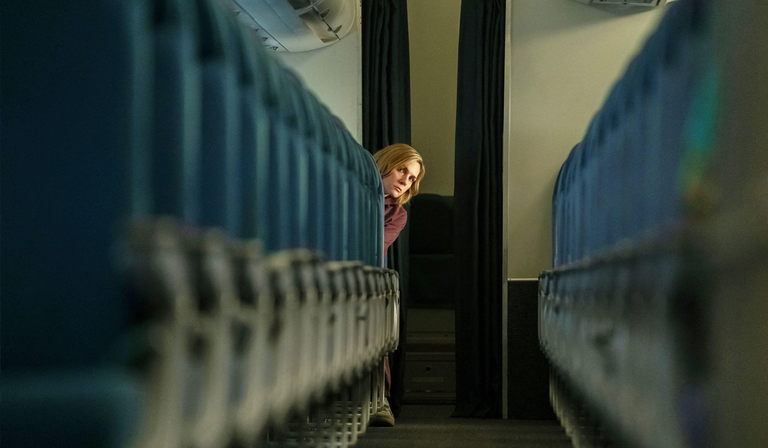
We’re back in Albuquerque, where his previous two shows are set, but the roots of this show for Gilligan reach even deeper. He cut his teeth writing episodes of The X Files more than 20 years ago, and there is a conceit here worthy of Mulder and Scully’s attention. Carol Sturka is a successful but self-loathing romantasy novelist whose life is rudely interrupted by the end of the world as she knows it. As she and her agent and partner Helen are on their way home from a bookstore event, Helen—and, indeed, everybody besides Carol—collapses. It turns out an alien signal has caused every person on Earth to share a single hive mind, except those who, like Helen, are killed by the shock of the conversion, and a dozen human beings who are, for some reason, immune. This number includes Carol. Unlike many other Invasion of the Body Snatchers-type stories, the hive mind, which Carol regards as “the others”, aren’t turned into brainless drones. They’re just… happy.
It’s good, not least because its makers clearly had fun with exploring what would happen if everyone in the world shared the same knowledge. The others present Carol with a dessert she enjoyed on holiday a decade ago, prepared with the combined expertise of every chef on earth.
It’s unabashedly and appealingly slow-moving, too. Long stretches pass in silence as Carol does things like poke around an empty grocery store. The effect of such scenes is to make us understand that, for all the outlandishness of the sci-fi setup, Carol needs to simply fill her hours with something now that everyone else is placidly getting on with things and, at her request, leaving her alone. It’s a show that’s confident enough in its concept to know that the audience will stay with it, however leisurely the pacing, to find out more about the others and how Carol intends to deal with them. Indeed, it takes almost the entire duration of the season for the only other unconverted human being with any interest in undoing the joining, a Colombian man named Manousos living in Paraguay, to link up with Carol in person.
What I’ve found most interesting about Pluribus, however, is the conversations I’ve had about the show—particularly in a WhatsApp group, with three friends, established precisely to discuss theories about the series. Someone posed the question: if you were Carol, what would you do? And all three of them thought her situation wasn’t that bad, and that if given the opportunity—as Carol is—they would want to be joined. “I wouldn’t mind being the others,” my friend Amy said. “It’s just so functional! And everyone is so happy.” “I guess it’s not the world I want but I wouldn’t want to be left behind,” said Gaby.
I was shocked. An alien force takes over the world, and you’d be okay with it? But then I wondered whether I am at fault, as Carol herself starts to. Would it really be so bad? There’s no war, no poverty, no prejudice, no undue waste. You have all the world’s knowledge at your fingertips. You are happy. And all you have to sacrifice is your sense of individuality. Your ego. The elements of your humanity that keep you apart from others and keep the world a place where what’s yours is yours.
‘I guess it’s not the world I want but I wouldn’t want to be left behind,’ one friend told me. I was shocked. An alien force takes over the world, and you’d be okay with it?
It’s a hallmark of the best sci-fi concepts, this prompting of existential debate. Severance might be another recent example, but Severance makes it pretty clear that choosing to live severed only looks like a good move—and the reality is horrifying. In Pluribus, the situation is much less clearcut. To my mind, Carol’s predicament is terrible, and it is only natural that she wants to undo the joining and restore human beings to their individual identities. It’s a smart narrative detail that, as a teenager, she was sent to a conversion camp, another place where kindly-seeming people just wanted her to be “normal” and join everybody else.
But not everyone agrees with me, and for fair reasons. In one particularly memorable scene, a young woman in Peru is shown deciding to join with the others. She’s nervous, but mostly excited. And when the ceremony is complete, a smile stretches across her face. At last, it seems to say, peace.
It’s likely that season two of Pluribus will reveal something more sinister about the signal that has rendered all human beings as happy as Larry. But for now, at least, the situation is disturbingly serene. And if the conversation around the show is anything to go by, it’s been a success in asking the uncomfortable philosophical question of whether perfect global happiness at the cost of individual agency might, in fact, be worth it.