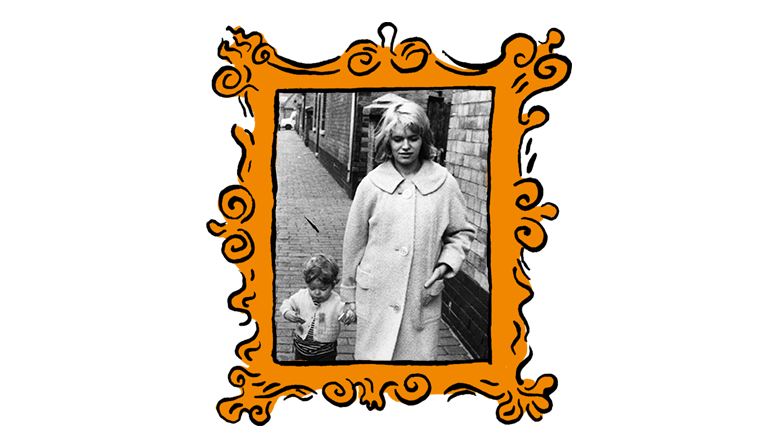
The most moving moment in the 1966 television play Cathy Come Home arrives as the drama reaches its crescendo, when it becomes clear to the audience that the protagonist’s descent into the abyss is now inevitable. Seeking a council house, a permanent home for her children, Cathy is turned away simply because she has already had too many addresses in recent months.
Of course she has; she’s homeless. But Cathy cannot secure a stable home for her family precisely because they do not already have one. From this point, the eventual unravelling of the household—the breakdown of her marriage, the loss of her three children into care—is a juggernaut that cannot be stopped.
It is 60 years this month since Cathy Come Home was first broadcast. Six decades on, too many of the themes remain directly relevant to today’s housing crisis. Do we need another Cathy Come Home moment?
Back in 1966, the shock of the real, as captured by Ken Loach in his singular style, led to a change in housing policy. It helped spark the creation of the homelessness charity Crisis and, later, after a long public debate and much anger at the government, the passing of the Housing (Homeless Persons) Act 1977. This placed a legal duty on councils to house unintentionally homeless people, with families with dependent children and pregnant women among the priority groups.
Creating a public mood that leads to political change through art is surely harder now than it was when the BBC held the country’s common attention. In our era of fragmented consumption and personalised channels, it’s almost impossible to bring the country together with one voice.
Even before the dominance of the algorithm, attempts to change the political conversation through art were already faltering. In 2016, Loach tried to repeat his previous success by taking aim at the multiple and devastating failings of the government’s austerity agenda. In I, Daniel Blake, he documented the desperation of sick and disabled people attempting to prove their unfitness to work in an increasingly inhumane, automated welfare system—a process that drove some of our most vulnerable citizens, just like Daniel, to an early grave.
You might be surprised to learn that this was Loach’s biggest box office hit in the UK, and it sparked a national debate about the dangers of aggressive, inflexible welfare reform. But austerity remained firmly in place. A decade on, some of the issues that film raised are still at the forefront of the debate about benefits—unresolved and still lacking political consensus.
For more than 20 years, David Attenborough has used his documentaries to warn about the dangers of climate change, cementing his status as a national treasure. His latest series, Blue Planet III, confronts the viewer with the realities of a warming ocean: before-and-after images of bleached coral reefs; sea urchins shielding themselves from UV rays with debris because the kelp that was their natural habitat has disappeared. Still, the government has just approved new gas production from the Jackdaw field in the North Sea. What use, after all, has his campaigning been?
Yet look elsewhere and there’s a different story to tell about the modern relationship between culture and politics. This month more than any, I will defend the value and importance of the fourth estate. But decades of investigative journalism, which laid bare the failings of government and state administration in the Post Office scandal, failed to achieve justice for the subpostmasters. That took a public outcry following the dramatisation of true events in Mr Bates vs The Post Office, the ITV drama broadcast in January 2024 that forced the government to show it took the issue seriously and to push through both compensation and the quashing of hundreds of convictions.
Exoneration for subpostmasters depended on the voting public learning about and understanding their story in a medium they found accessible, relatable and engaging—art. Reams of journalism on the matter had been consigned to the category of “worthy but dull”, available to the public yet overlooked by most.
Last year, the Netflix drama Adolescence became the focal point for a wider public debate about the “manosphere” and the culture of toxic masculinity spreading from social media into UK classrooms and youth culture.
A cultural figurehead attached to a project can sometimes inject it with a useful resonance. After his stunning turn in the drama, which he co-created and co-wrote, Stephen Graham became an unofficial spokesperson for positive masculinity. His diary became clogged with broadcast and podcast interviews, and he has recently published a book, Letters to our Sons, on the subject.
Behind the scenes, the government had been working on legislation to prevent online harms, but insiders had become frustrated at the slow pace of action on something so crucial to child safety. After the release of Adolescence, the voting public began to connect with the issue. Jess Phillips felt emboldened to speak publicly about her anger and stepped down from her job as minister for safeguarding, citing online violence against women and girls as an issue on which she felt her voice had been overlooked. Within weeks, the government announced a ban on social media for under-16s.
So what would a modern Cathy Come Home look like? Perhaps it wouldn’t focus on housing alone, but on the broader, desperate needs of Cathy’s children. If we’d had such a film, would the two-child benefit cap have been lifted years earlier?
Just as Alan Milburn released his report on young people not in education, employment or training (Neets) last week, another new film is already prompting questions in parliament. It is called Unauthorised Absence. In just over 15 minutes, it skewers the idea that children who miss school are the product of feckless parenting. It exposes the heartbreak and financial ruin often experienced by parents of children with special educational needs. It has the potential to spark a much bigger debate, asking why we so often treat our children as if they are not human.
If art can still change policy, the Department for Education should be paying close attention.