Few things are as good as the first time we experience them, except maybe sex. No one has ever said that the Sistine Chapel was more moving the third time around. And yet, who among us can resist the temptation to recapture the magic of those original experiences, even when we know we will be left disappointed? There is wisdom in doing heroin only once, and even more in never doing it at all. This is all an oblique way of justifying my decision to take an unspecified amount of time off, beginning this week, to play the newly released World of Warcraft: Forever, a re-release of the original 2004 multiplayer fantasy video game that consumed literal years of my life and very likely stunted my emotional and social development. This new legacy version allows players to re-experience the original game as though it were being released for the first time, with new content woven into the familiar world.
Over the past two decades, I have returned to World of Warcraft more times than I care to admit on print. But this time is slightly different, and as I climb aboard the Warcraft nostalgia machine for another spin cycle, I find myself wondering whether the pleasure of revisiting my adolescence is worth the risk of spoiling my memories of it.
We are all familiar with the evocative power of nostalgia. Today, the term generally describes a pleasant, if somewhat bittersweet, sentimental longing for the past. But when it was first coined in 1688 by Johannes Hofer, a young medical student, it described something far different: a debilitating form of homesickness suffered by Swiss mercenaries stationed abroad, which was believed to be capable of killing them. The word itself is a neologism that combines the Greek nóstos (“homecoming”) and álgos (“pain”), and I cannot think of a more fitting description of what it feels like to return to a familiar and perfectly preserved virtual world only to find that the player is unrecognisable. The pain comes not from the fact that the game has changed, but from the knowledge that a true homecoming is impossible, precisely because of how much I have changed.
It is almost trite at this point to observe that the exploitation of “nostalgia” has become a cornerstone of contemporary consumerism. We covet what we know, and our cultural landscape is saturated with remakes, reboots and sequels of stories and characters that have been around for decades. Mainstream film and theatre seems to be particularly exposed to this form of capitalization. As though 20 uninterrupted years of Wicked on the West End were not enough to satiate our appetite, it is reassuring to know that the musical has now spawned two blockbuster films, with further spinoffs likely in the pipeline. Indeed, of the 10 highest-grossing films of this decade, eight are sequels, while the remaining two are The Odyssey and Barbie, hardly unfamiliar cultural objects. If the continued hegemony of Marvel films has taught us anything, it is that the appetite to return to familiar fictional worlds may actually be unlimited.
But films are cultural artefacts we encounter from the outside. A multiplayer game, by contrast, is a world we inhabit, a place in which we spend time, establish routines and form relationships with other people. This restoration of preserved inhabitable worlds represents a unique development in our ability to manipulate nostalgia. After more than 20 years, I can walk the same road through Durotar (the Orc starting zone, if you’re not in the know), hear the same music, kill the same monsters and encounter the same characters I did as a teenager. Crucially, I can embark on this Proustian journey alongside thousands of other players attempting to recapture the joys of their youth, making for a peculiar form of collective regression.
There is a cruel paradox in this kind of preservation. The more faithfully the world (of Warcraft) is restored, the more clearly it reveals what has changed in our own lives. World of Warcraft may resist the ineluctable tides of change, but we, in stark contrast, cannot. Those who were 15 in 2004 are now approaching 40, with careers, families and rather less time to lose themselves. This is nowhere more poignantly illustrated than in the proliferation of YouTube videos advising “busy dads” which characters to play so that they can still get the most out of the game.
There is something stranger still about younger players entering these worlds for the first time. Many were children or not yet born when the original game was released, yet they can inhabit the object of somebody else’s nostalgia. Older and younger players therefore meet in the same preserved world, but the latter can experience a return for which there is no original. I look forward to the day I can force my children to play—and pretend to enjoy—the game that so completely enthralled their hopelessly out-of-touch father when he was their age.
The truth is that we’re always trying to recover a past that never truly existed. My romantic recollections of coming home from school on a Friday afternoon and sitting bug-eyed in front of the family computer until Monday morning conveniently obscure the fact that, for all the fun I had and the wonderful people I met playing this game, I was just a kid, and often an unhappy one. I certainly had no sense at the time that these rather ordinary experiences would come to occupy such a cherished place in my memory.
That doesn’t stop me from chasing the high of those embellished memories, though. Here I am, in a glorious state of arrested development, mining deposits of virtual iron so that I can craft new weapons and armour for my character. Maybe it’s a rather pathetic sort of comfort blanket, but it’s my comfort blanket, and it smells and feels just like my childhood. How long I can go on being borne ceaselessly back into the past is anyone’s guess. Will it be Forever, as the title of the game promises? Almost certainly not. But I suspect that I could spend forever trying to recover that kernel of childhood that only really came into existence once it was over.
The old World of Warcraft might be back, but my childhood isn’t
As the game that captured my adolescence returns in all its nostalgic glory, I find myself forced to reckon with how much the real world has changed
November 12, 2026
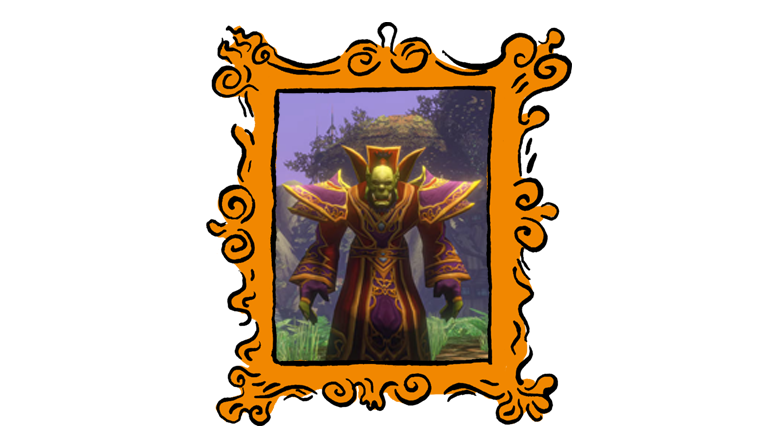
Image: Blizzard Entertainment