By the time he died, at the age of 84, in 2011, Ken Russell had become an almost forgotten director in this country. Occasionally, rather like his friend and sometimes-muse Oliver Reed, he would be wheeled on to chat show sofas where, bored and haughty, he would talk past his interviewers, who seemed to want him drunk and outrageous. He directed Mindbender, a hagiographic biopic of Uri Geller. He appeared on Celebrity Big Brother but left after a few days following a run-in with Jade Goody. “I think you’re slightly demented, darling,” he told her. “You should be put in a straitjacket.”
It hadn’t always been this way. His early run of documentaries for the BBC, on topics as varied as Old Battersea House, John Betjeman and the composer Béla Bartók, extended the possibilities of arts broadcasting and led a writer in Andy Warhol’s Interview magazine to describe him as “perhaps the greatest TV director of all time”. Women in Love, his 1969 version of DH Lawrence’s novel, featured incandescent performances by Glenda Jackson and Alan Bates, and was nominated for four Academy Awards, winning Jackson the Oscar for best actress. Tommy, Mahler, operas, a video for Elton John: Russell was always in the news. Fast-forward a few decades: his last two films were both shorts—A Kitten for Hitler and, made in four days with Welsh university students, Boudica Bites Back.
Perhaps this drift into the margins was inevitable. Russell was often attacked for being baroque, hysterical, melodramatic, vulgar. Pauline Kael, in The New Yorker, said his movies “cheapen everything they touch”. Dance of the Seven Veils (1970) was shown only once by the BBC and provoked 20 Conservative MPs, in a parliamentary motion, to denounce its “viciousness, savagery and brutality”. He preferred Fellini to Ealing, which he thought twee and bloodless. He had little time for the social realism of Mike Leigh and Ken Loach either, complaining to an interviewer in 1989 that “most British films these days are about people hitting each other over the head with bottles in Brixton”.
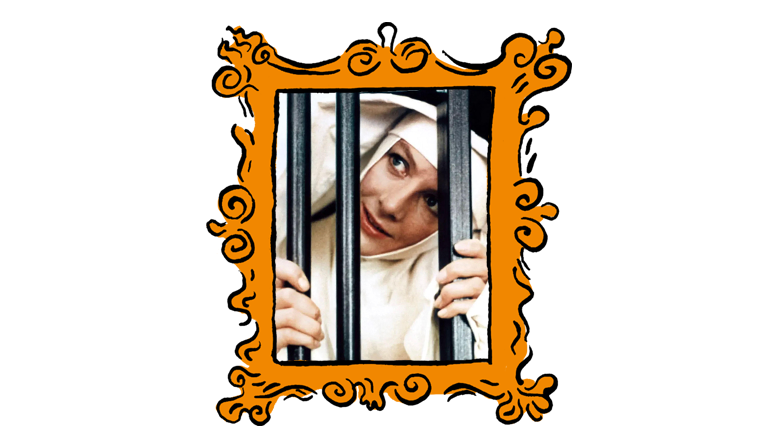
Russell’s most notorious film is The Devils (1971). Adapted from an Aldous Huxley book (and a 1961 John Whiting play) about a real-life 17th-century French priest, Urbain Grandier, who, for reasons mostly political, was executed for witchcraft, it’s a banquet of sex, religion and violence. Plague-sickened town-dwellers are thrown into pits. Young women judged too ugly or poor for marriage end up in a convent that is closer to a prison or a madhouse; they’re overseen by Sister Jeanne, a sexually repressed hunchback played by Vanessa Redgrave. Grandier (Reed) has his tongue skewered with needles and his knees smashed with a hammer. There are orgies, forced enemas, close-ups of pustular, sore-covered women being exorcised.
One sequence, known as “the Rape of Christ”, depicts the nuns masturbating with a life-sized statue of Christ. It was excised before the film’s release in 1971, and the American version was cut further still. Reviews there were scathing: “Degenerate and despicable”; “Russell has gone beyond extravagance to insanity”; Russell has “gone berserk”. In the UK, when Alexander Walker of the Evening Standard, who had already described it as “a garish glossary of sado-masochism”, damned it as “monstrously indecent” on TV, Russell leant forward and hit him with a rolled-up copy of Walkers’ own newspaper. The film was banned by several local councils, and in a number of countries abroad.
The charge of blasphemy often levelled at the film is silly. Russell was a Catholic convert, had his early shorts backed by the Catholic Film Institute, and made Catholic-themed films on Elgar and Lourdes. Not that he was pious: Lourdes, he told a biographer, “is a pretty grotty place, a sideshow of terror, like Belsen”. His faith, he felt, gave him aesthetic clarity: the Church of England, he believed, was “all vague, like Christ holding the lantern at the door in Holman Hunt’s The Light of the World, whereas in the Catholic church he’s shining a searchlight in your face. You can’t make excuses if you’re a Catholic.”
A new 4K restoration, returning the cut footage and in cinemas this Friday, gives us a chance to marvel at Derek Jarman’s set design, which owes a debt to the monstrous modernity of Fritz Lang’s Metropolis; the deliriously kling-klang soundtrack by Peter Maxwell Davies; the cinematography of David Watkin, which evokes both the paintings of Hieronymus Bosch and the psychedelic happenings and communal freak-outs of the counterculture. Reed is magnificent—a swarthy sensualist and happy hypocrite. Redgrave is fearless—flaying herself, licking Grandier’s stigmatic hands, assailed by visions and desperate longing.
“I am eaten up with the image, with the way things look,” Russell once claimed. So many images in The Devils scorch the eyeball: an effete King Louis XIII shooting a Protestant dressed as a blackbird, a duel involving a taxidermy crocodile. The film itself offers an image—dark, disinhibited—of how politicians can weaponise religion, how quickly civil society can be turned into rubble.