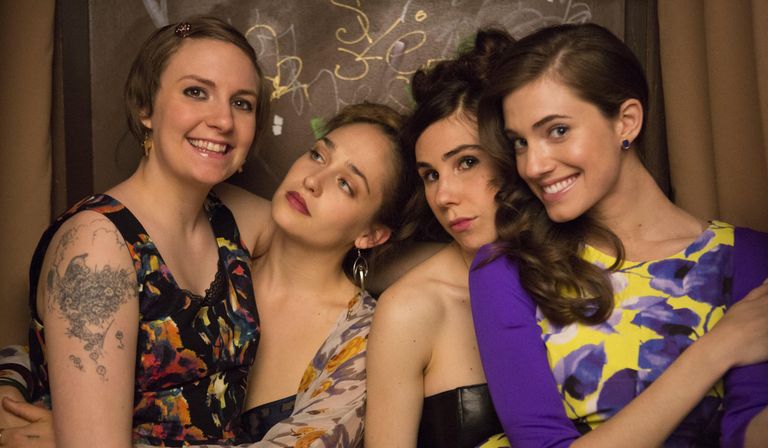
Christmas has come early this year for nostalgic millennials. In October, it was announced that Girls, Lena Dunham’s era-defining show about four young friends living in New York, will return with five new episodes, arriving 10 years after the show ended in 2017. Dunham and her three co-stars, Allison Williams, Jemima Kirke and Zosia Mamet, will all be coming back. Just a week later, news came out that another cult series would be making a return: Glee.
These were two quite different shows. Glee’s storylines beggar belief: Brittany suddenly discovering a propensity for maths, which turns out to be because her biological father is Stephen Hawking; Quinn hiding her recovery from paralysis after a car crash to win sympathy votes for prom queen; a supposed accidental hot-tub pregnancy arc. Girls was a better and less insane show. But both belong to a time that has now decidedly passed, the 2000s and 2010s, and were beloved by those who were young during those years. The generation that watched those shows is now pushing 40. What will they have to say to their core audience now, all these years later?
Reboots spring eternal, but the past 10 years seem to have brought countless returns to iconic series: Frasier, Sex and the City, Gilmore Girls and Will & Grace, to name but a few. You can even sense a reluctance in contemporary shows to close the door completely, leaving room for more instalments in future. Take the end of Hacks, the excellent intergenerational comedian buddy show, which flirted with the death of one of its main characters—only to pull back at the very end.
Plainly, reboots make good economic sense for TV executives: whether the audience turns out to love or hate them, there is a built-in guarantee that a healthy number of people will watch them out of curiosity. The Sex and the City follow-up, And Just Like That, meandered off into the dull concerns of ultra-wealthy, middle-aged New Yorkers; the Frasier reboot fell flat; the Gilmore Girls revival was sort of fine but not nearly as beloved as the original and made the depressing decision for Rory to have an affair with the worst of her ex-boyfriends, Logan.
Ten years on, many millennials are still in the same position: unable to buy homes, unable to settle down and have children
I feel confident enough about the Girls reboot. After a period away from the spotlight, Dunham has returned in recent years with a new TV show, Too Much, about an American girl trying to make her way in London—which sadly isn’t getting a second season and so won’t be given a chance to grow, something I think it could have benefitted from—and a blockbuster memoir, Famesick. So it makes sense that this is the moment to reboot Girls, when public feeling towards her has shifted towards both respect and interest in her frankly wild experiences making a hit television show at such a young age. Besides, she’s a great writer with the same keen eye for social absurdities that elevated Girls the first time around.
Glee I am much less sure about. It was just so utterly of its time. For LGBT+ young people, Glee was a mad clubhouse where people like them were accepted and celebrated, where Obama-era optimism seemed destined to usher in a new and permanent world. And Ryan Murphy, one of the show’s creators, who will return to mastermind the reboot, is about as capable of subtlety as a foghorn. This doesn’t preclude him from making a successful show in 2026—people still love a bonkers storyline—but it does make him unsuitable for producing a version of Glee that deftly handles the change in social attitudes since the show’s initial run.
Glee must adapt in order not to seem bafflingly out of step with the moment. Some kind of acknowledgement will have to be made that the world it previously showed us didn’t last—and that hopeful musical numbers, jazz hands and the power of friendship aren’t enough in Trump’s second term.
Whereas I would argue that Girls must not. Dunham’s characters were scrabbling their way through life, making rent or dealing with the kind of people who have their rent paid for them, finding their feet in their careers and making their dreams come true. Ten years on, many millennials are still unable to buy homes, unable to settle down and have children, unable to feel as though they’ve made it in jobs that provide long-term stability. And while Girls was born of the same era of millennial optimism, it was always a satire of what blind hope and ambition might translate into for young people.
Both shows will need to reckon with what it looks like for their characters to grow up in a worse world. One is much better positioned to do that than the other.