Muska* slept on a white, metal day bed in her home’s cemented backyard. She briefly opened her eyes, aware her mother was calling her to go inside. But not even fighting between the Taliban and Afghan forces could make the 19 year old, a school leaver awaiting her university entrance exam results, sleep indoors in the July heat in Lashkar Gah, Helmand.
In those days, in 2021, Muska would find bullet casings on the roof of her home, across from where she slept. In the five years since—five years of Taliban rule—she has picked up the pieces: making sense of a conflict that began before she was born, and in which the place she was born and raised has been violently fought over. All the while, she has been trying to build a life—to find work, help her family and get educated—in a province known as the Taliban’s heartland, in a country where, by law, she is barred from almost every aspect of public life.
A few weeks earlier, in June 2021, Muska was sitting outside with her brothers and mother. They ate watermelon, melon and nan-tar (bread in yoghurt). Things that would help cool them down in a province where the climate crisis is acute, with summers getting ever hotter, and drought spreading misery.
There was a rumour that the Taliban were coming to Lashkar Gah, but everyone agreed: the Taliban could not defeat the government. Muska and her teenage brothers half-considered it, then laughed.
As the family spoke and ate, the Taliban and Afghan government forces fought in Helmand’s districts, and there were red streaks in the black night sky: artillery fire. Its sounds were constant, but faint.
It was Madina, Muska’s mother, who called it. The fighting was getting closer and closer to the city, the red streaks stronger, the sound no longer faint. “Pack up and get inside before a bullet hits you in the face,” she said to her children. The four siblings, asleep outside, didn’t move.
The news arrived the next day after asr prayer. Warnings spread through phones like a virus: Taliban soldiers had been seen in Lashkar Gah. That day, Muska, her sister Noora and their mother had visited a friend’s home nearby, but they rushed home. It was dusty outside and the sky was red. Earlier in the day Muska’s father Hassan had closed his small shop; now, as they walked, she noticed the shops were all shuttered. Nobody was out in town. Everyone had fled inside.
Still, when her mother’s cousin went into labour in the morning, it seemed quiet enough—or so her mother thought—to go to the hospital. They brought the baby girl home that afternoon in the midst of fierce fighting.
Muska says she left her house again 18 days later, when she fled to Kabul three days before Helmand fell.
“Will Helmand be okay again, do you think?” asked Nasim, her 13-year-old brother, that August morning. Nasim and Muska spoke like that for a few minutes, reassuring each other, asking questions quietly, vaguely. Neither named the violence they had already witnessed. By then Lashkar Gah was ruined, its people in shock and the streets full of blood.
The fighting, at that time, had a rhythm, almost like a timetable. From two to three in the afternoon, the fighting paused; Muska thought it was so the fighters could eat. Whatever they were doing, they stopped: helicopters in the sky, government forces and Taliban soldiers on the ground. “At 2pm the world was quiet, so quiet. You’d be lying if you said there’s war. Then at three or four it would start again.” It continued like this, Muska explained, until night. “Then it would stop again, the world would stop again. I think they were going to pray. Then at eight until the morning azan (call to prayer), they would fight.”
The fighting was so close that ‘eating breakfast, you started to think the bullets were hitting your heart’.
There was maybe an hour of electricity, which they needed for the coolers and fridge; temperatures exceeded
40 degrees almost every day. They had little water or food. In the first week or so, Muska and her siblings still slept under the sky, despite the risks. “We are Afghan. It was hot and we couldn’t stay inside,” she said, explaining that it is hard to describe the impact of the extreme heat. But the fighting was so close that “eating breakfast, you started to think the bullets were hitting your heart”. When Muska did sleep inside, after those first days, she and her siblings “slept so it [bullets] wouldn’t come through the window and hit us from outside without us knowing. We tried to be safe”.
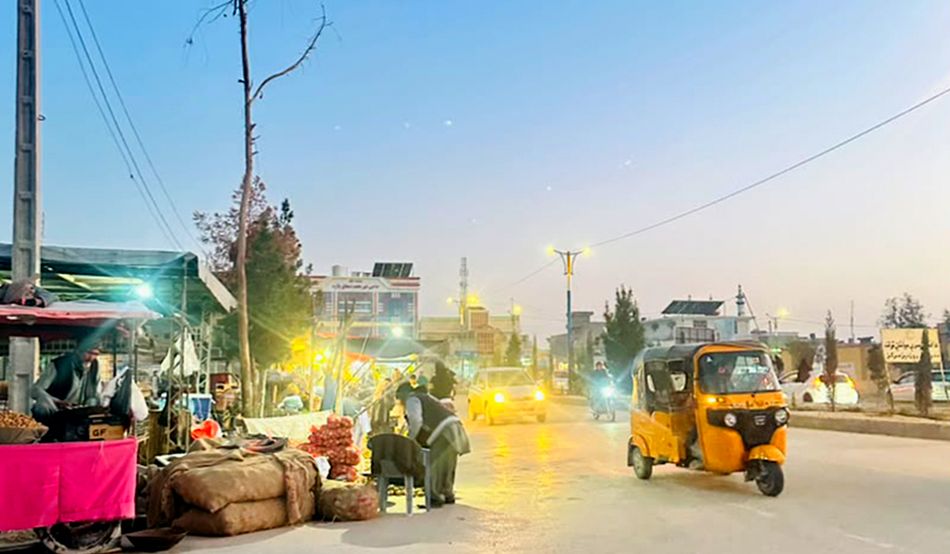
Only Muska’s father left home to buy food. One or two men sold dairy products, like milk and yoghurt, from makeshift stands; everywhere else was shut. Some others worked, too: an ice-seller came to people’s homes, and their neighbour drove a rickshaw transporting people to the bus stop so they could leave the city.
People fled almost immediately. Some to other districts in Helmand, some even to Kandahar, where there was also fighting, others to Kabul. The poorest stayed, their neighbours among them, along with the elderly.
Muska had seen the destruction first-hand. Their home was hit by shrapnel and their windows shattered. A rocket hit a mosque on their street. Mud houses were ruined. Police stations were hit. The good supermarket in town, with two floors, which had been a sign to Muska that the city was developing, was ruined. The fire wouldn’t go out, and she watched it burn. In moments when the fighting paused, she went up to the roof to collect the bullet casings that fell.
Whenever she could, Muska charged her phone to check social media and the news, witnessing the fighting again from different angles. Her family and friends shared videos and photos of the dead and the ruins. In the districts, there had always been fighting; now it had come to the city. The violence was unbearable. “The streets were full of blood. Everyone had to take care of themselves.”
“What kind of heart wouldn’t hurt?” she wondered.
Muska’s family didn’t want to leave. They didn’t have a car nor, as her mother said did they have money. Still, as the fighting worsened, their neighbour, a man of around 50 who had a daughter the same age as Muska, said he would drive them to the bus station, as he had the others. Muska’s father would stay to guard the house.
“Keep your heads down,” the man said, when Muska asked if a bullet might hit them in the open-topped rickshaw. He used it, in peacetime, to transport fruit and other goods to shops; that was his job. “I’ve taken others fine, and I’ll get you there,” he said.
At the station, Muska and her family got their tickets. Crowds of people waited to get on the buses, struggling with the extreme temperatures. The bus going to Kabul was old, with no AC or cooler, and the combination of the climate and the war brought people to breaking point. There were no seats, so everyone stood in the heat, including some who were not well. The Taliban had closed the usual route to Kabul, but the drivers found another way along unpaved roads. In the desert, Muska worried the bus would get stuck. “God don’t show anyone that day again,” she says.
The Taliban stopped the bus in Kandahar and Ghazni. “Where are you going?”, a soldier asked, during one stop. “Kabul? Why?” People explained that they couldn’t tolerate the fighting.
At another station, Taliban soldiers got in and looked at people, scrutinising their faces. They took some men without beards off the bus, and asked to see their tazkera (identity cards). They wanted to know if they worked for the government. Eventually, they sent the bus on and kept some people, those they suspected, behind.
Muska felt hopeless, more hopeless than she had felt in her life. “We were asking ourselves, all of us: if we go back to Helmand, will our houses be there or not? Will it be okay or not? We didn’t know what to do. We left everything to God. Whatever would happen, we had chosen our path.”
On the way, her brothers tried to lift their spirits. “We’re going to Kabul,” Nasim said, as if it was a trip. They asked other questions, too. “Will the city be rebuilt again?” But they didn’t want to think about the fighting. They left to save themselves from the war, reasoning that it was better than getting injured. But it hurt to leave home.
After 18 hours, they reached Kabul in the early morning, and went to an aunt’s house. Two days later, Helmand fell. It was 13th August.
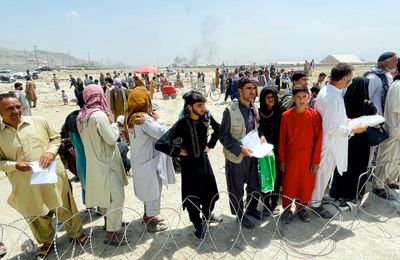
That day, she accompanied her cousin to Kabul airport; Zahra had a fellowship to study abroad. She had a visa and a flight out of the country. Muska observed the rush at the airport. There were armoured vehicles, she guessed of politicians. The scene stunned her. “They must have known Kabul was going to fall,” she says. After it had, in the chaos of the evacuation, Muska, her mother and her siblings headed to the airport again, thinking that if others were leaving, perhaps they ought to try to leave, too. But they had no papers or contacts, and quickly returned to her aunt’s house and relative safety.
With Kabul fallen to the Taliban, too, there was no reason for them to stay in the capital. Muska found Kabul hospitality wanting. Her aunt was kind for the first few days, but after that Muska didn’t feel comfortable eating and drinking in her home. Muska and her family in Kabul were Hazara—a minority in Afghanistan thas has historically faced severe discrimination—but they were ignorant about life in the south. “Are there Hazara in Helmand?” her cousins asked. The problem was that Muska and her family had no savings to return home. Finally, an uncle loaned them the money for their bus tickets.
When they arrived, Muska greeted her father and slept. Later, she helped her mother clear the shattered glass.
In Helmand, people were in a state of shock. The sight of the Taliban manning checkpoints and walking the streets filled Muska with dread. She didn’t leave home for two months—and when she eventually did, she hurried back.
Everyone had their story of the fighting. One friend told me how the Taliban ordered her to leave her home then took it over, using it as a hide for snipers. One woman found fatigues of Afghan forces, foil-wrapped kebabs, identity cards and bank cards in her apartment. Muska’s sister, who worked at a hospital treating fighters, described corridors of slain Taliban soldiers. As friends and family shared videos and photos on WhatsApp and Telegram, they understood that the number of civilians killed was far greater than they had thought.
What would they do now? Muska wondered. What would the women do, now that the Taliban were in power?
Slowly, she started to leave the house to attend an English class. But the Taliban ordered the women to stop going because their teacher was a man. “My depression went up—I didn’t know what to do,” Muska says.
Before that summer of ruin, Muska had spent eight months in Kabul taking university entrance prep classes, living in a damp room with three other girls from Helmand and the northern province of Kunduz. There, she was scammed by her landlord, a family friend, and her tuition centre was attacked by Islamic State Khorasan Province. It was in Dasht-e-Barchi, west Kabul, where Hazara have been relentlessly targeted in terrorist attacks on sites including schools and a hospital. She was not present during the attack on her tuition centre, but the violence stayed with her.
In September 2021, after the Taliban takeover, the results were published, determining whether she could study journalism at Kabul University, as she hoped. But when she logged in, she saw her score didn’t meet the threshold. She would have to resit the test. Others, especially women, reported being failed too, she said. Muska suspected this was part of a plan to decrease their presence in universities. But with her parents’ encouragement, she tried to put it behind her.
Muska knew there were online classes, but didn’t know anyone taking them. When her relatives came to Lashkar Gah for a family funeral, travelling from Kabul, Ghazni and Kandahar, she and the other women of the family spoke about their education, what they planned to do.
“Wait, are you studying online? There are online courses, you know,” said one in passing, as they took turns to attend to the other guests with tea and dates. With girls above the age of 12 banned from education, such online lessons had become a lifeline.
Muska took a WhatsApp number from her, which connected her with a teacher who once worked in Kabul at the American University of Afghanistan and was based in the United States. She began to study German and English on her smartphone. She joined WhatsApp groups and found the number of a girl, now in Islamabad, who had attended her school. She sent messages to others, most of whom were still in the city. What were they planning to do now?
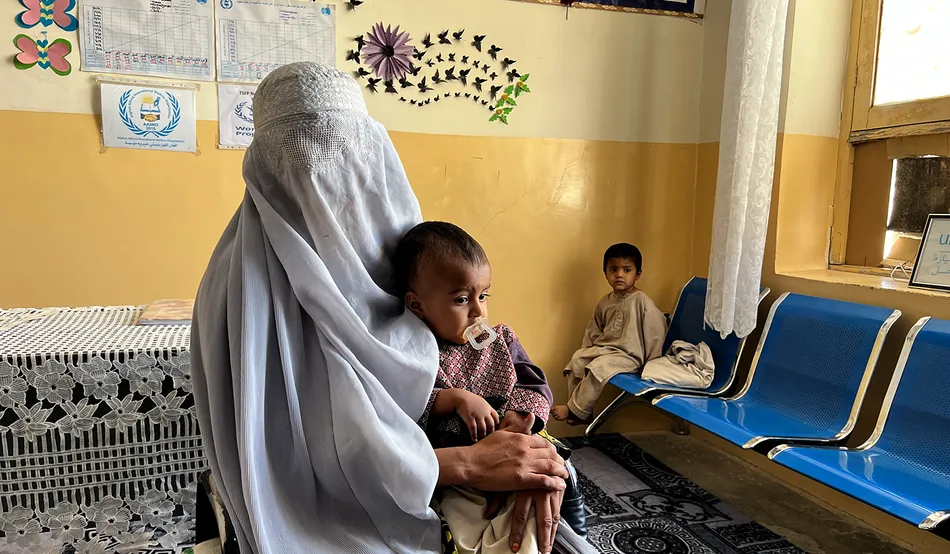
Her mother, too, was looking for opportunities. In April 2022, weeks after the Taliban reneged on their promise to re-open girls’ secondary schools, Muska and Madina went to the provincial education ministry office. While Muska and her sisters had finished school, Madina, who came of age in the years of civil war followed by Taliban rule in the 1990s, had been denied an education as a young woman, although in her case because of her family’s objections, she said. A year after Muska had enrolled in secondary school, Madina had followed; mother and daughter would go to school together. Now Madina sought a shahid nama, a document attesting that she had finished 11th grade and would have graduated in one year. It would enable her to work as a teacher: even a salary of $100 a month would help the family financially. But the Taliban official they met was unsympathetic. “Why are you studying at school at this age?”, the man asked, laughing. Her needs were little more than a joke to him.
Muska felt depressed but, at the same time, working towards becoming the person she wanted to be—educated, a professional, earning money to help her parents—gave her life meaning. She studied to resit the university entrance exam and decided to get a passport. Given the political uncertainty, is seemed like a good thing to have.
It was at the passport office, “busy like Kabul airport”, that she spoke with a Talib for the first time. He was in his early to mid-30s, she thought.
“Do you know who your leader is?” Muska asked. The man said he didn’t.
“Do you have a salary?”
“No, I’m working for God,” the soldier replied.
She asked him about their policies towards women. The soldier asked, “Aren’t you Muslims?”, saying that their policies were the same as those in
the Quran.
Muska argued with him: “No, it doesn’t say that [women should be so restricted] in the Quran. Show me,” she said.
Muska was born on the day Hamid Karzai, the country’s first democratically elected president, took office in 2002. Her father would tell the story of her birth again and again, seeing the date as serendipitous. At the time, Karzai, represented a new beginning in Afghanistan—the end of the Taliban and years of war; the beginning of an era when people could work and progress, Muska told me. But her father was later disappointed.
She has happy memories of her childhood in Helmand but at some point, she understood there was war. “I would ask my father… why isn’t there peace in our country? When I grew up and got to know myself better, I understood there was never peace here.”
With the Taliban back, she wanted to understand the past to get a sense of the present. She had heard stories of the regime in the 1990s, and the five years when girls couldn’t go to school. She listened to her parents enumerate the differences between the Taliban’s first regime and now.
“That time it was harder. We wouldn’t leave our homes. We’d wear burqas. Now you can go to the shops at least,” her mother would say. But, over time, Muska became a veteran of Taliban rule herself; she had her own experiences. She countered her mother: “There’s nothing good about the Taliban now. They’re the same Taliban, but the world has changed. The Taliban don’t accept progress—technology, that women work today. They haven’t changed… Their focus is on controlling women, not progress.”
When the Taliban banned women from universities in December 2022, Muska’s dreams of studying journalism were dashed. Women, some with only their final exams left, were stopped from entering university campuses.
At Nangarhar University, in the east of the country, women and men protested under the banner “All or none”. It was a moment of hope, but when the women had to leave campus, the protests ended, too. Taliban intelligence later interviewed and issued warnings to some people involved, one student told me at the time.
Days after the university ban, the Taliban issued a decree banning women aid-workers too. “I guessed the university ban would happen after they closed the schools to girls. But all that followed? That people would lose their jobs? No, I didn’t guess that,” Muska says. Across the country, 80 per cent of women between
18 and 29 years old would soon be cut out of education, employment or training.
Muska felt angry, comparing the destruction of Helmand with the relative stability in Kabul. She read reports that Ashraf Ghani, the country’s president, had fled with money and cars. “And the question here is: why was Helmand ruined? People lost everything in one-to-two weeks of war. A city where people hadn’t done anything, there wasn’t corruption. The people who did these things were all in Kabul.
“They should have gone and ruined the [presidential palace]. They should have ruined the people who took out their money from Kabul [banks]. Here, there was nothing and they just harmed the people—the government and the Taliban both.”
Speaking about the war, she says: “If the Taliban are killed, people and the government are happy. If the government is killed, Taliban are happy, people aren’t happy. But when civilians are killed, both the government and Taliban are indifferent.”
She worked in a beauty salon, studied makeup artistry, and midwifery and nursing at an institute: opportunities banned by Taliban edicts, one by one.
Against the backdrop of edicts targeting women and girls, Muska and her sister had to find ways to get out of the house. In the past five years, Muska has studied German and English online, having previously known no foreign language, and worked illegally as a teacher for girls in her home. She has also worked in a beauty salon, studied makeup artistry, and midwifery and nursing at an institute: opportunities banned by Taliban edicts, one by one. Like many others, she has depended on internet access and her smartphone—but these, too, are now restricted.
Every way she turned was blocked. “Depression has gone up. Not just me, all the girls around me. I try to give them motivation. Whatever we do, they ban us,” she told me.
All the while, it was getting more and more dangerous to go out: “Helmand girls want peace… [but] day and night, thieves come. Cars, motorbikes. You can’t say anything—they have guns. You can’t protect yourself. They kidnap girls. People just look. There’s no security, no peace. There’s just harassment,” she said.
Despite the dangers outside, life at home bored her. She taught seventh grade students for free, did housework, checked her phone. She applied for jobs for herself and her mother; for bursaries and scholarships to study in Iran, Turkey, the United Arab Emirates and elsewhere in Asia.
She had once been determined to use her smartphone to find a way to study outside the country—but the device was also a portal to other lives, those of the people apparently living her dream of studying abroad, in Germany, the US, France, posting photos of parks and cafes, appearing to enjoy carefree lives.
Among them was her cousin, Zahra, who was studying in the US. “She won’t say how she did it,” Muska says. “She says she didn’t pay, her family always says that. But how did she do it?” Muska was frustrated at what she saw as the secrecy over how they got there. Even family wouldn’t share information on the process: the application, the scholarship, the visa, the requirements. “Those on the outside, they think they’re better than us on the inside. They look down on us,” she tells me.
Then, one day in 2025, Muska received a call from the mother of one of her students. The mother told her that a girl of around 13 years old in her class planned to report her to the Taliban. Muska went to the child’s house, late at night—she stood in front of the mother and daughter, shaking. She confronted them. The girl thought it was funny and held back laughter.
Fear of informing was commonplace; early on, Taliban intelligence had asked one of Muska’s relatives if he would inform in exchange for money. Still, she could not have anticipated this, not from her own student.
She stayed home more and more. She often felt physically sick. Her family’s financial struggles were mounting, and every application for a job or university place was rejected. People hardly replied to messages she sent.
“Oh, it’s their fireworks,” Muska tells me. It was around nine o’clock in the evening in Helmand, on 15th August 2026. “It could be [the Taliban celebrating] or it could be a wedding.” Then, seemingly unconvinced of her own answer, adds, “yes, I guess they’re celebrating.”
In five years, the Taliban has issued more than 100 edicts targeting women and girls. Women protestors report torture, detention, harassment. From Badakhshan in the northeast to Helmand in the south, from the capital of Kabul to Herat in the west, women and girls face intolerable conditions. The economic crisis, bringing hunger and unemployment, is acute.
In March this year, Pakistan launched an airstrike on a drug rehab facility, killing hundreds of patients—an attack Amnesty International has said should be investigated as a possible war crime. In August, dozens of children were killed in an attack at a school in west Kabul, where Muska studied for her university entrance exams prior to the fall. All this, after the two decades of US-led war, in which 176,000 people, including 46,000 civilians, were killed.
“Many civilians have died. Did you know this?” Muska once asked me, recalling the fighting in Helmand. The International Criminal Court has not, so far, delivered on its promise of accountability for Afghanistan’s war victims; among the perpetrators are American, Taliban and Afghan forces. Nor have promises—made by Australia, Canada, Germany and the Netherlands—that the Taliban’s violations of the rights of women and girls would be taken to the International Court of Justice been fulfilled.
When I asked Muska what she wants, she said she wanted families to receive economic help. For women and girls to get educated, and to have their full right. For Hazaras to be protected by law. She didn’t want the Taliban to be officially recognised by other states, fearing it would entrench their path, not change it.
In January 2026, Muska and Madina secured jobs. Their monthly incomes—not high but stable, at a set amount— brought relief, for the moment.
Muska told me that though she wanted to always be with her mother and father, she may have to take her next step in life alone. She wanted to attend university, and to do that, she knew she’d one day have to leave Helmand and her country behind.
*Names have been changed to protect people’s identities