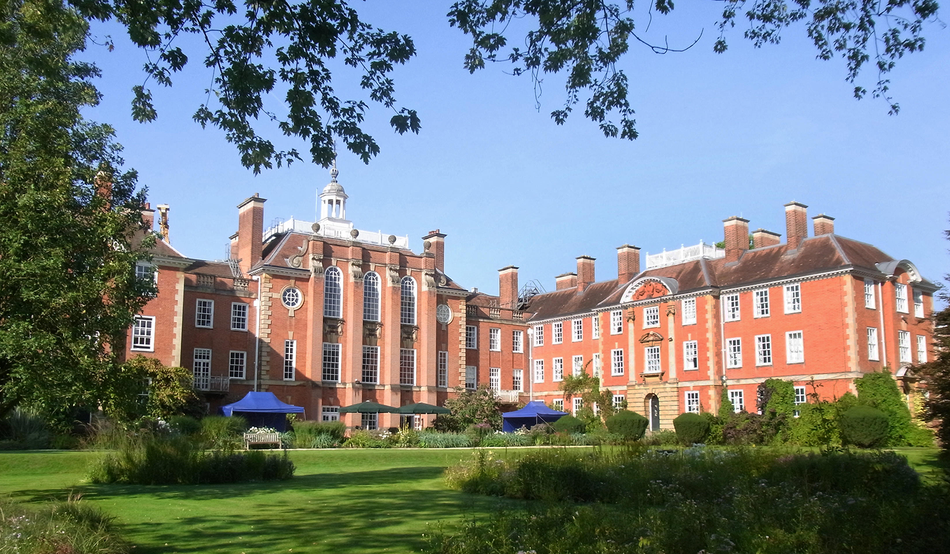
Should students from low economic backgrounds dare to imagine they’d be welcome at Oxford? The university would like you to believe the answer is an encouraging “Yes, of course!” But next Monday, the inner sanctum of Oxford’s decision-makers meets to consider a proposal to “pause” one of the main routes for poorer students to achieve what seems like an impossible goal.
Three years ago, Oxford followed similar schemes run by Cambridge and Trinity College Dublin (TCD) in launching the Astrophoria foundation year—a tacit acknowledgement that there is no such thing as a level playing field for trying to get into high-status universities.
Westminster School (fees £69k a year) sent no fewer than 48 students to Oxford last year while Eton College (£66k per year) sent 28. At the other end of the privilege scale, Oxford managed to fill 26 foundation year places, through philanthropic funding (still, I’m told, assured) which was originally intended to cover 50 students.
Twenty-six is not much, but it is something. And, in fact, the scheme provides about 10 per cent of all the students from free-school-meals backgrounds (one metric of poverty) who win a place at Oxford. Over three cohorts, 87.5 per cent of students have gone on to embark on a full degree course.
The intention is to recognise the provenly obvious: that it’s often unfair to expect young people from extremely disadvantaged backgrounds to compete with more privileged students through the traditional hurdles into Oxford. Give the most disadvantaged an extra year and see if they can then cope on level terms.
At TCD, where such a scheme has been running for 27 years, they’ve found that students who progress to a full degree end up with broadly the same results as the main cohort. We pioneered a similar initiative at Lady Margaret Hall (LMH), Oxford, when I was principal there. When I last checked, 46 students had progressed to complete a full degree at Oxford. Five obtained firsts and there were 35 2:1s. There was no problem with funding: alumni were extremely keen to help young people have the same advantages as they’d enjoyed.
I’ve kept in touch with many of the students as they’ve gone onto careers in law, science, finance, tech, the arts and public service. They are all incredibly appreciative of the life-changing chance that a foundation year gave them.
The Cambridge experiment has also worked, with 50 students a year and Chancellor [Lord] Chris Smith recently writing that it has been “remarkably successful in achieving its purpose”. He was echoing Oxford’s own vice chancellor, Irene Tracey, who acclaimed Oxford’s “landmark” scheme in her initial oration three years ago.
On paper Oxford’s scheme—though less able to attract the originally intended numbers (why?)—has also won glowing independent plaudits. An official review from an external source recently found it to be “a high-quality and impactful programme which can deliver transformative outcomes for its cohorts, substantial progress towards meeting specific [access] targets, and wider benefits both internally, in diversifying the University’s student profile and learning environment, and externally in terms of signalling Oxford’s commitment to widening access”.
It went further. The foundation year played an important role as one of two “flagship initiatives” in Oxford’s attempt to position itself as being committed to access and outreach.
Break open the vintage port! No, actually, wait.
I remember, when I first arrived at Oxford 11 years ago, having a conversation with a fellow college principal who had devised a not dissimilar scheme for helping students from underrepresented backgrounds into the university.
“I really thought it might happen,” he told me. “And then I learned that Oxford has a way of quietly applying chloroform to ideas that it doesn’t like. It took a couple of years of being bounced around various committees—and then quietly died.”
It looks like the same fate awaits the present foundation year.
On Monday Oxford’s Council—its supreme governing body—will meet to consider a one-year “pause” during which the university would suspend admissions and think about the scheme’s long-term sustainability, including funding and scale. A one-year “break” would incentivise the current programme staff to leave and stem the existing flow of applicants.
Improving the scheme may be desirable: it’s not clear why suspending it is considered necessary. Experienced Oxford-watchers recognise this as the first step to applying the chloroform.
The timing is awkward. You may remember Oxford’s embarrassment at hosting Nathan Cofnas, the weirdo anti-DEI eugenicist who thinks black people should stick to music and sport and not bother with academic careers because they are, on balance, stupider than white people.
I paraphrase, but only slightly.
On the eve of the meeting earlier this month, no fewer than seven college principals held a video seminar to talk about “how universities can protect and promote diversity and pluralism”. But it feels as if not enough people in Oxford actually care enough to put their backs into a programme that has worked brilliantly elsewhere, but has enjoyed only half-hearted support within their own university.
I met the type when we launched the LMH scheme. “They won’t fit in,” I was told. “We wouldn’t know how to teach them,” moaned one academic, more comfortable with coaching oven-ready middle-class students. “It’s social engineering,” complained another, apparently oblivious to the existing contours of the English secondary education system. “They’ll need too much extra support.” And so on.
The result: it was left to individual colleges to decide if they wanted to be part of Oxford’s programme. Only a third of undergraduate colleges are currently represented. It feels like a collective shrug.
I asked Lee Elliot Major for his opinion. He’s Britain’s first professor of social mobility, having run the Sutton Trust, which specialises in researching educational disadvantage. He told me that Oxford’s foundation year was one of the most significant recent attempts to level the playing field in elite university admissions.
“The true test of a great university is not whether it attracts those already trained to succeed, but whether it can recognise and cultivate potential wherever it exists,” he told me.
“Oxford should be building on the success of its internationally renowned foundation year, not putting its future in jeopardy. It would be a profoundly backward step for social mobility if this pioneering programme were allowed to disappear.
“It would send a damaging signal to the outside world that one of the few doors that have opened to talented young people facing additional barriers to accessing one of the world’s most prestigious academic institutions is now closing.”
Elliot Major’s recent co-authored book, Cracking the Class Code, found that institutions such as Oxford “too often operate as elite reproduction machines rather than engines of social mobility. Cultural and economic barriers impede equally talented young people from less advantaged backgrounds.”
I also spoke to Dr Vee Kativhu, girls’ education activist and young leader at the United Nations, who was one of the first foundation-year students at LMH. Now aged 28, she recently introduced the Pope at a Unesco session in Paris. She’s going places.
“The foundation year changed my life,” she said. “Pausing Oxford's university-wide foundation year after just three years, before it has even had the chance to grow, would be a tremendous waste of potential and more worryingly, it would send the wrong message to the young people who most need to believe that Oxford is for them.”
I sent Oxford a number of questions about why the “pause” option was even being considered. The university answered none of them, but offered bland assurances about its commitment to access and outreach etc.
So on Monday, council members have a choice. However they dress up a “pause” option, it will look like institutional indifference. Old Oxford hands will anticipate the next step: chloroform, and let’s hope no one notices.
But they will. The foundation year was a remarkable step into the unknown. Anything short of backing and nurturing it would be seen as a feeble concession to those who couldn’t really care less.