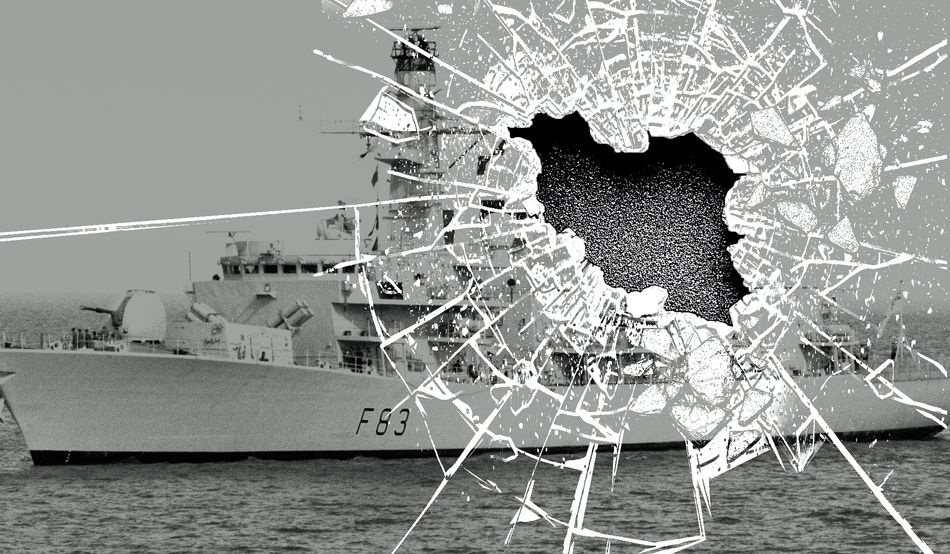
The Kremlin is once again threatening Nato, and the United Kingdom in particular, over ongoing British support of Ukrainian forces. Not for the first time, the question is how seriously we should take these threats.
For countries on the alliance’s eastern flank, Moscow’s growing long-range strike capability is clearly an immediate military concern. For the UK, its significance is different. The Kremlin’s latest warnings should be taken seriously, but not as evidence that Russian missiles or drones are about to strike our shores.
Since 2022, Moscow has repeatedly warned of grave consequences as western governments crossed supposed Russian “red lines” by, inter alia, supplying increasingly sophisticated weapons, allowing Ukraine to strike targets inside Russia and discussing the deployment of European troops to Ukraine.
While the tone of this week’s communiques might seem alarming, previous warnings have been more explicit. After the then foreign secretary David Cameron said in May 2024 that Ukraine could use British weapons against targets inside Russia, Moscow threatened British military facilities in Ukraine and “beyond”. That November, after Ukraine used British Storm Shadow and US short-range ballistic missiles inside Russia, Vladimir Putin said Russia was entitled to strike military facilities in countries whose weapons were being used against it. Moscow simultaneously demonstrated its new Oreshnik missile and revised its nuclear doctrine. Russia nevertheless stopped short of attacking Nato territory.
That record gives reason to be sceptical about interpreting the latest warning literally, but not to dismiss it as empty rhetoric. What has changed since 2022 is that the Kremlin has accumulated a wider range of capabilities and methods for imposing costs on western countries without starting a Nato-Russia war.
The UK has already experienced some of them. In 2024, a warehouse in Leyton, east London, belonging to a company supplying aid to Ukraine was set on fire in an operation organised on behalf of the Russian mercenary Wagner Group. And in 2025, two houses which had belonged to then-prime minister Keir Starmer were targeted by arson attacks led by men with links to Russia. Throughout the Ukraine invasion, Russian vessels and submarines have also probed critical undersea infrastructure around the UK.
This is the more credible route for Russian retaliation: sabotage, cyber operations, espionage, electronic interference, pressure on British interests overseas and increasingly aggressive military activity around British and Nato territory. These methods allow Moscow to inflict damage and create uncertainty while making attribution, proportionality and therefore the appropriate western response harder to determine.
The expansion of Russia’s drone infrastructure adds another dimension to this problem. It gives Moscow greater capacity to threaten Nato’s eastern members and to probe their defences at relatively low cost. A deliberate mass attack on Poland would be an extraordinary escalation. More plausible is a smaller incursion or provocation that leaves Nato allies debating whether it was accidental, deliberate, or serious enough to warrant a collective response.
That is where Nato’s deterrence problem increasingly lies. The alliance has formidable mechanisms for deterring an unmistakable armed attack, but Russia has incentives to operate precisely where those mechanisms become less automatic. The attraction of such grey-zone operations for Moscow is that they allow Russia to act at a level of aggression below which a major Nato response becomes politically straightforward. An arson attack can be confidently attributed to Moscow and still leave Nato member debating what response would be effective, proportionate and sufficiently costly to deter the next one.
Nato therefore needs to make activity below the Article 5 threshold more costly. That requires stronger protection of military logistics, ports, defence industries, communications and undersea infrastructure; better counterintelligence and faster attribution of Russian operations; and agreed, graduated responses to hostile activity. Nato’s eastern members also need layered and affordable counter-drone defences. Using expensive interceptor missiles against large numbers of cheap drones gives Russia an obvious economic advantage.
The difficult question is how to strengthen deterrence without accelerating a spiral towards direct confrontation. Avoiding escalation is not appeasement. Russia is a nuclear power, and the consequences of miscalculation are enormous. But there is an equally serious danger in allowing Russian threats to produce western self-deterrence.
The Kremlin wants governments supporting Ukraine to calculate not simply what assistance Ukraine needs, but what Russia might do to them in response. If threats alone persuade Nato countries to restrict their policies of support, coercion will have worked without Moscow having to lift a finger.
Nato should therefore neither catastrophise about Russian warnings nor shrug them off. Its members should deny Moscow the assumption on which its coercive strategy increasingly depends: that Russia can threaten overt escalation while conducting a quieter confrontation beneath the threshold of war at tolerable cost. Deterrence will work only when the Kremlin believes that there will be consequences for whichever mode of escalation it chooses.
The objective should be to deny Moscow both of the advantages it seeks: the freedom to operate below the threshold of war, and the power to use the threat of crossing that threshold to intimidate Nato. That is the balance between avoiding an unnecessary war with Russia and ensuring that fear of one does not become a weapon Russia can use against us.