On Friday (12th June), following John Healey’s resignation as defence secretary, the BBC’s usually solid Anna Foster pressured the hapless minister nominated by the government to put the best gloss on the mess: “We’ve heard from the ‘defence sector’ and they want you to go further and faster, and they want you to spend more.”
This, however, is surely no more surprising than Lord Astor denying he had a relationship with Mandy Rice-Davies amid the Profumo affair. When arms manufacturers want to manufacture more weapons, nobody makes the blunt observation that Rice-Davies made of Astor back then: well they would, wouldn’t they?
The main voices we hear in what passes for the defence “debate” are either generals and admirals who would like vastly more resources, or politicians protesting that—despite all the signs to the contrary—they are not going to disappoint the service chiefs in the end.
It’s precisely because I’m no expert in defence that I hanker to hear a more rigorous and sceptical discussion. A real case can certainly be made for spending considerably more on defence. If we are, as some fear, in a situation akin to 1937, with Vladimir Putin biding his time before unleashing blitzkrieg further west, then the expenditure hawks will soon be resoundingly vindicated. We absolutely need to hear that case, which Healey for one believes with palpable sincerity.
But what we also need, which is not yet happening, is to ensure that the rearmers’ case can withstand a sceptical interrogation—that the argument can, if you like, defend itself. While the comparison with the 1930s always feels natural because that precedent is so uniquely seared into British consciousness, it is not the only point of reference. If we are instead in the 1950s—another era in which we were squaring off against a totalitarian power—different lessons would suggest themselves. Patient containment rather than outright conflict would ultimately prevail in that struggle.
The centrality of the west’s heavy military expenditure to this slow victory can be debated, but what’s not seriously disputed is that the United Kingdom paid a price for shouldering a disproportionate share of that burden. Shelling out roughly twice as much national income as the West Germans on the armed services, and multiple times what the Japanese spent, did not reap the sort of “defence dividend” which Keir Starmer promises for the wider economy. Instead, it consumed resources that might have been more productively invested elsewhere, and it was the West German and Japanese economies, not ours, that surged ahead.
The sheer scale of the increase in defence expenditure being mooted warrants exceptionally rigorous scrutiny. In Labour’s first year in power, the total defence budget was £60bn. Addressing the most commonly quoted figure for the supposed shortfall would involve finding another £28bn. In other words, at a time of stretched family budgets and of parsimony across most public services, the emerging orthodoxy is that we need to increase expenditure by a further half.
The first chunk of the increase has been financed by slashing overseas aid without much discussion about the relative security efficacy of £1 spent on nurturing stability and alliances through development assistance as opposed to military hardware. Foreign aid, however, was always a pretty marginal political issue. By contrast, it was inevitable that huge increases in defence spending would cause explosions for the government when resources had to be found by raising taxes or squeezing services at home. Voters will need an awful lot of persuading, and yet our leading politicians on both sides—who all spent the last election campaign pretending that tax rises wouldn’t be necessary—have not even started to articulate the logic of shared sacrifice for shared security.
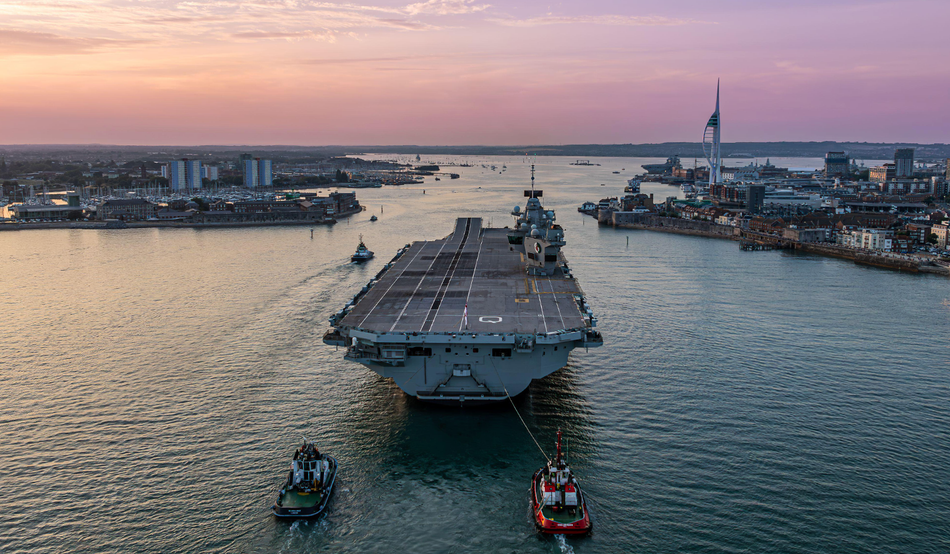
The Ministry of Defence’s notorious record of wasteful procurement redoubles the case for thoroughgoing interrogation of its demands. From the managerial failings with the Ajax Armoured Vehicle programme catalogued by the National Audit Office, to back-and-forth-and-back-again swerves over “cat and trap” planes on aircraft carriers, the military state has spent in an incontinent manner rivalled only by the managers of HS2.
Some of this may seem by the by if, as the hawks fear, we’re heading for war with Moscow by 2030. But underlying the whole discussion are—or ought to be—serious questions about whether the envisaged conflict can somehow be managed without sliding into a nuclear exchange. Through the long decades of the Cold War, all manner of regional conflagrations were carefully calibrated to avoid direct conflict with the Soviet Union because the risk of nuclear war was considered real. Today, although Putin’s Russia justifiably commands the same enmity as the Soviet one, there is nothing like the same wariness—even though he has the same apocalyptic weaponry.
A meaningful defence debate should certainly pay careful attention to the potential contribution of stronger conventional deterrence in avoiding a war that could escalate to nuclear level. But it should surely also interrogate what reason, if any, we have for treating Putin as less likely than Khruschev or Brezhnev to press the button. Because if there are serious fears that he might do so, then even extensive investment in conventional armaments could very rapidly become obsolete. Alongside an awful lot of other things, too.