In 2021, the British government promised to “explore options for a wider civilian reserve” who could be activated in a crisis. The exploration happened (I was part of it), but the reserve did not. We’re still waiting.
With climate change and geopolitics worsening, the UK will be subjected to increasing non-military incidents, such as power cuts and natural disasters. Should war break out, simply keeping the country’s essential functions going would require enormous efforts.
Now Sweden has put the UK to shame by establishing precisely such a reserve. In 2024, Sweden activated the civil duty (its name for a civilian reserve), which means that any resident aged 16 to 70 can be asked to contribute to the nation’s security in a non-military capacity. It’s an impressive undertaking involving 19 essential professions, from electricians to funeral directors.
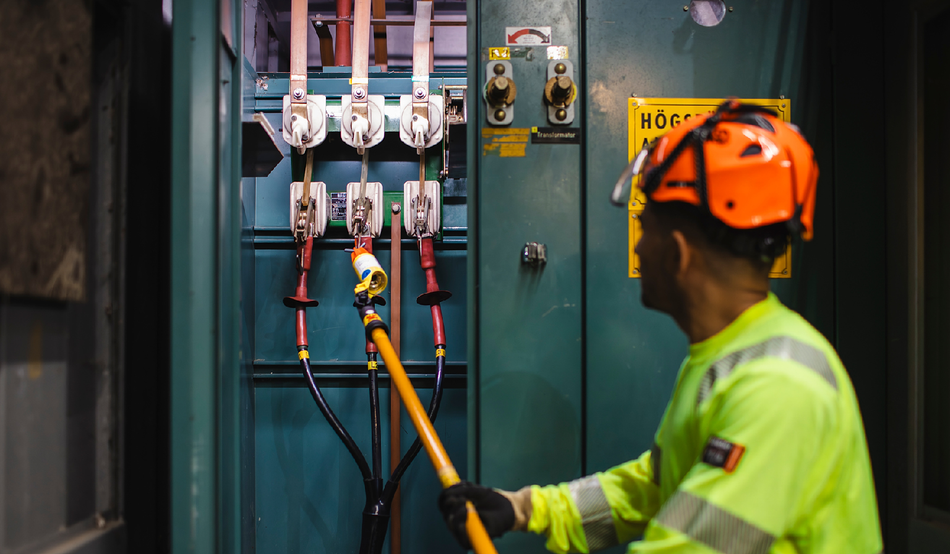
Imagine a war with a shortage of undertakers. Or a war with a shortage of electricians able to turn the lights back on when the enemy blows them out. Swedish electricians are already being trained as electrical-repair crew reserve, which will initially encompass some 1,000 members—a wise move, considering Russia’s propensity for attacks against energy infrastructure. In recent months, which have been bitterly cold in Ukraine, Russia has repeatedly attacked Ukrainian high-voltage transmission lines, power plants and substations; the UK could learn from this.
But selecting the participants isn’t as easy as it sounds. Svenska kraftnät, the state-owned enterprise in charge of the country’s electricity transmission, looked up all licensed electricians aged 18 to 60 in the country’s war placement registry. It excluded the ones that are already part of the military reserve and assessed the rest according to criteria including health and geographical location.
The vast majority of those selected voiced no objections. “Ten per cent have contested the decision,” Maria Bedford, Svenska kraftnät’s manager in charge of the reserve, told me. Perhaps even more astonishingly, more than 100 electricians not selected in the assessment process have also applied to participate.
The 20-day training of the first cohorts is now underway. “In the first group we made sure to include electricians from Gotland,” Bedford told me. “That was not a coincidence.” Located in the middle of the Baltic Sea, the island of Gotland is particularly vulnerable to attacks on energy infrastructure.
Most of the students are in their thirties and forties; some are younger, some older. During training, they’re housed in youth hostels and similar facilities close to training areas, where they can practice scaling electricity towers and reaching high-voltage lines. “For me, the fact that these electricians leave their jobs and families for 20 days to attend our training is incredibly humbling,” Bedford reflected.
Yes, it’s a legal obligation, but they could have contested their selection and most did not. “A number of the students have made observations along the lines of, ‘This is so big that I can hardly believe I’m part of it. Now, the threats in the world are getting real’,” Bedford told me. Svenska kraftnät calls the reserve “one thousand heroes for a radiant Sweden”.
The selection and training of the firefighter reserve is also underway; the rollout will then continue one profession at a time. For now, the reserves will only be called up in case of war—they’re not there to absolve businesses and local authorities of peacetime responsibility.
To many British ears, the Swedish scheme will sound otherworldly. People may wonder, how would such a thing even work in the UK? The Nordic countries are different, they’ll say. The UK is too disorganised, they’ll argue. Even if such a reserve were attempted, it would fail, they’ll predict.
Yes, the Nordic countries are different. Sweden’s civil reserve has involved enormous planning, but it was aided by the country’s war placement registry, a comprehensive database that includes every single person who has contingency duties, ranging from nursery teachers to generals. The UK has no such registry, and it has no registry of people who have skills—such as first aid—that would be crucial in a crisis. It doesn’t even have up-to-date details for its strategic reserve, the 95,000 or so former regulars who are liable for call-ups in case of war.
Databases, though, can be built. And Britons have, at times, proved willing to help one another and the community. During the Covid pandemic, more than 400,000 people signed up to join the “NHS army” in one day. Also during Covid, youngsters involved in the Duke of Edinburgh Award scheme spent a staggering 1.8m hours assisting the needy. There are 300,000 Girl Guides. More than 14m people volunteer annually.
But when a power station is attacked, people can’t just turn up to help. Only the government can create a civil reserve. Back in 2021, Britain’s attempt failed because there was no blueprint and ministers weren’t interested. Now Sweden has delivered a template. And given the situation in Europe and the world, you would expect ministers to be very interested indeed.
The Swedish civil reserve, and several other countries’ military reserves, are explored at length in a forthcoming report by Elisabeth Braw for the UK National Preparedness Commission.