At the peak of summer, as sweating Brits grumbled and moaned about the heat, a message came from on high, stirring the masses: “There is a very high risk of wildfires nationally. Residents, landowners and visitors should not undertake any activity that could start a fire, including disposable barbecues, firepits, garden incinerators or fireworks.”
If you were lucky enough to be in the country experiencing Britain’s fifth, or was it sixth, heatwave, you will have received this clarion call. Perhaps like me, you received it several minutes after everyone else in your house, thereby clarifying your relative importance in the government’s hierarchy for lifesaving. Perhaps you quietly extinguished your portable barbecue or stopped setting off roman candles.
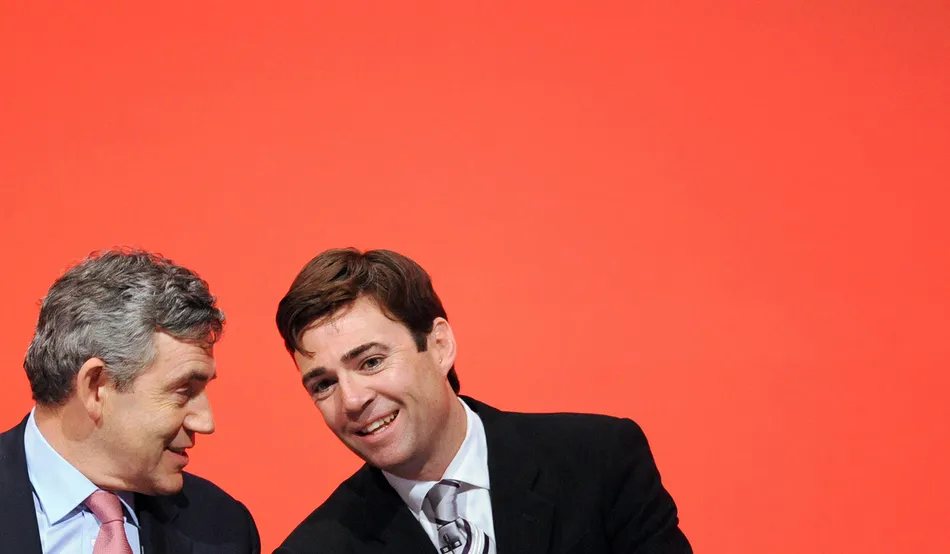
But what you almost certainly did was notice it. And you might also have taken the opportunity to stop moaning about the heatwave and instead gripe about an overactive, faintly oppressive government sending you unnecessary text messages. To which I say: get used to it. Because if there’s one thing we’ll need to get used to in the era of Prime Minister Andy Burnham, it’s nonstop, in-your-face communication. He is no shy and retiring Keir Starmer, cautiously venturing out with commentary about St George’s flags or corruption in football several days after the media have already moved on from said topic. No stumbling over speeches with words written by anti-immigration aides and then retreating. Burnham will say what he means, himself, quickly and ubiquitously. Like the phone alert, you won’t be able to turn him off.
Think about Burnham’s first few weeks in office. It might feel like he has been prime minister forever, but I promise you, it really has only been a few weeks. He even took a holiday, but you would barely have noticed. Burnham announced something on every day of his first fortnight: bus fares to be capped at £2.00; VAT to be cut from electricity bills; business rates to be cut for pubs; vape shops to be curtailed.
Back from his holiday, Burnham was visiting burned-out houses in Stourbridge, taking over West Midlands buses, promising to get every rough sleeper in accommodation by Christmas and, oh yes, issuing the emergency barbecue alert.
Burnhamism, it seems, is about urgency. Sometimes just acting for acting’s sake
The criticism of Burnham, particularly by the conservative media, was immediate—and managed to make two contradictory points. Not only was Burnham’s policy blitz going to bankrupt the country, but each new policy was also minor trimming around the edges that would never adequately address the UK’s major problems.
This is a category error. The Burnham strategy is not to produce a 100-page, five-year plan to be carefully considered by wonks and gleefully eviscerated by columnists. It is emphatically not about deliberating slowly and tacking and jibing according to the concerns of MPs, thinktanks and stakeholders. It is about doing things and making sure the public sees you doing them.
Burnhamism, it seems, is about urgency. Sometimes just acting for acting’s sake. Showing the public that you care, not simply by emoting—though that is certainly a skill of Burnham’s, on display among the ashes in Stourbridge—but through energy and activity. If populism has risen because of a lack of trust in politicians and a cynicism that government can do anything, then its antidote is to do stuff and tell people about it (ideally not always with a phone alert).
Will this work? The record of “always on” politicians is mixed. Tony Blair made it work for two terms. With Boris Johnson, the gloss wore off two years into his three-year premiership. Emmanuel Macron’s experience shows the risks and rewards. France’s president is always in the public eye, always acting, so far fending off populists, but with each day he grows slightly more desperate, more unhinged and increasingly unmoored from his initial political ideology.
But Burnham’s approach has already breathed life into the Labour party. At recent summer events along the gleaming Thames, Labour MPs have a new spark, a summer fever of sorts. They can see another term in office for Labour as the phoney war of Starmerism is forgotten and Labour principles, including that of actually making policy, are once again on the horizon.
And while parts of Fleet Street and Westminster might find Burnham’s Duracell Bunny act as irritating as an incessant phone alert, the voters, so far, don’t. YouGov recently found that Burnham’s personal favourability has risen since he entered office, up from break-even to a net score of positive 13. He is especially popular among that most beleaguered of groups: Labour voters. But he is in positive territory, too, with supporters of the Liberal Democrats and the Greens, the groups Labour either needs to win back or keep on side through tactical voting at the next election. He even fares decently with Conservative voters, improving Starmer’s favourability of -82 among Tories to a more lukewarm -19.
You know what else was surprisingly popular? The phone alert, which 78 per cent of people received, and of which 53 per cent approved. It might have been loud, in-your-face and unmissable, but it cut through—just like Burnham.