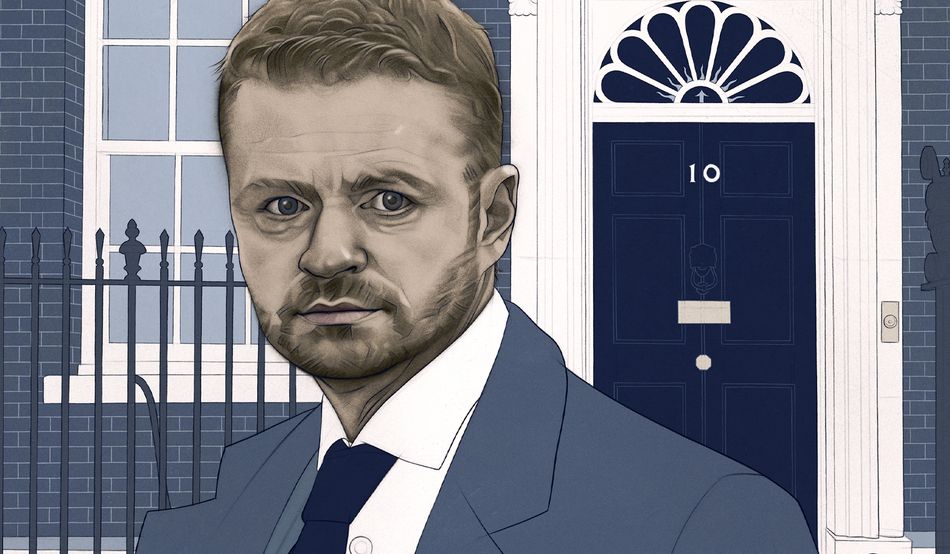
Ask any Labour MP or staffer who is their most successful cabinet minister, and even his enemies are likely to say Ed Miliband. At the same time as Rachel Reeves’s budget was running into predictable difficulties, the energy and climate secretary quietly published the latest element of his net zero implementation strategy, this time on North Sea oil and gas.
The Department for Energy Security and Net Zero (DESNZ) confirmed last month that no new oil and gas exploration licences will be issued in the North Sea, but projects linked to existing schemes will be allowed. With this deft compromise, Miliband managed simultaneously to defeat the Treasury and Department for Business and Trade (who wanted to abandon Labour’s pledge to end new licensing altogether), maintain the UK’s global climate leadership (no other country in the world has committed to ending fossil fuel production) and retain the support of the trade unions (concerned about North Sea jobs). He even got the support of some climate NGOs.
Miliband’s success on this front is not hard to understand. He has very clear objectives, which he articulates well and the public grasps. He knows how to make the Whitehall machinery work, having done it before, in the same role under Gordon Brown between 2008 and 2010. And crucially, he has the support of Keir Starmer.
The latter might come as a surprise. At least twice since the general election, it has been reported that the prime minister’s chief of staff Morgan McSweeney has wanted Miliband reshuffled to another job. On both occasions Miliband refused, and Starmer left him in place. In the Spending Review earlier this year, Starmer’s backing enabled the former Labour leader to win a significant increase in investment spending—a five year capital budget of £62bn, less than half the £28bn a year which Labour once promised and then abandoned, but proportionately larger than that of any other department. The prime minister knows that Miliband’s radicalism is one of the few reasons Labour can offer left-inclined voters why they should not defect to the newly assertive Green party.
Miliband’s climate strategy certainly has its green critics, and Labour’s broader environmental agenda, particularly in relation to planning reform, has been widely vilified. Most of that £62bn will go on subsidies for nuclear power and carbon capture, usage and storage (CCUS), technologies which some environmental NGOs oppose on grounds of both expense and risk. Miliband is convinced that both are required to achieve net zero by 2050: nuclear to provide baseload (continuous) power generation, CCUS to enable heavy industry to decarbonise. He welcomes the small modular nuclear reactors being developed by Rolls Royce as a source of new manufacturing jobs and exports.
Under the Climate Change Act, the statutory goal of achieving net zero emissions by 2050 is monitored by the independent Climate Change Committee (CCC). Having last year reported that the UK was off track to meet the goal, the CCC’s latest report welcomes “encouraging signs of progress”. But it also warns of the challenges the government still faces. Miliband’s bold manifesto promise to achieve net zero power generation by 2030 is very unlikely to be achieved. Though more people are now buying domestic heat pumps to replace gas boilers, only 1 per cent of homes yet have them, and the government has scrapped its former plan to ban new gas boilers after 2035. And as the CCC carefully notes, the government’s decision to authorise a third runway at Heathrow, along with other airport expansions, will make a reduction in aviation emissions much more difficult.
But for Miliband, net zero is not just a climate goal. He wants its achievement to exemplify a new kind of social democratic politics.
By establishing Great British Energy (GBE), Miliband has reasserted Labour’s belief in publicly owned enterprise as a means to restructure the economy. GBE has got off to a somewhat slow start, but its recently announced investments—in solar rooftops for schools and a floating offshore wind project in Scotland—demonstrate its twin goals of investing in renewable energy when the private sector won’t, and competing with the private sector in order to bring prices down.
More widely, Miliband is trying to turn DESNZ into a ministry for job creation. Its recently announced plan to support the creation of 400,000 new “clean energy jobs” by 2030 is aimed in particular at providing new opportunities for workers in declining fossil fuel industries and the businesses dependent on them. The plan will see investment in key energy and environmental sectors, an expansion of technical training focused on young people, and the upskilling of oil and gas employees. The plan is notable for its emphasis on “fair pay” and strong employment rights: Miliband worked hard to agree the terms with both business and union leaders. It is one of the very few of Labour’s much vaunted “missions” which shows genuine progress.
Crucially, Miliband wants to show that all this can directly benefit ordinary people by cutting energy bills. But it is here that he faces his greatest risk.
At £1,755, the average annual household energy bill under Ofgem’s price cap is far less than the peak of £2,380 it reached in 2022-23 after the Russian invasion of Ukraine. But it remains a key squeeze on the cost of living, and therefore on the public’s view of the government. The price cap is forecast to increase by around 3 per cent from April next year.
Miliband insists that investment in homegrown renewables will reduce consumer prices: it is the higher cost of imported gas, after all, which has caused the price hikes of recent years. He is right, but not yet by enough actually to bring prices down. Once there is enough wind and solar on the system, the price-setting role of gas will diminish. In the meantime, the huge cost of building new transmission lines to bring renewable electricity to people’s homes is largely offsetting their price advantage.
Miliband won an important victory in the budget. He persuaded the chancellor to remove from electricity bills some of the “green levies” paying for renewables and home insulation; they will now be funded from general taxation instead. This will take £154 of costs out of bills next April. Importantly, by reducing the price of electricity relative to gas, it will also incentivise the take-up of domestic heat pumps. But thanks to additional transmission charges authorised by the regulator Ofgem, consumers won’t see all of the £154 cut in the actual bills they pay.
This is where Labour’s opponents have identified the government’s—and Miliband’s—weakest link. Contrary to claims of an “anti-green backlash”, strong action on climate change is still supported by large majorities of the public, among voters of all parties except Reform UK. But both Nigel Farage and Kemi Badenoch reject net zero and promise to repeal the Climate Change Act because they know they can get purchase with the public by claiming that climate policy is the cause of high energy prices. And they are gunning for Miliband—“Britain’s most dangerous man”, as the Daily Express has it—in the process.
A year ago, McSweeney was said to want Miliband to fail: the success of his avowedly left-wing approach would set the wrong example. Today, too much of Starmer’s own standing rests on Miliband’s shoulders for him to take the same view.