I arrived from New Zealand at 17, after a not especially distinguished secondary school career, and met my father, David Benedictus, for the first time (I had learned of his existence only a few weeks earlier). After several months working as a shop assistant in Fenwick’s, Newcastle, I learned from him that there was a clerical job going at BBC Radio, where he then worked. I was interviewed, stumbled through a typing test, and was offered a job paying £8,000. Six months later I had secured £300 of "seed" money from Radio 3 to return to New Zealand and record some interviews for a feature on New Zealand’s national poet.
I mention that story only because I would not, now, have the courage to offer Radio 3 a feature on anything. This despite the fact that I am much better qualified: my poor B in "University Bursary" English replaced with an MA with distinction in Modern Literature. So what has changed?
I reflect on that question a lot. And I think the answer is this: there is something intellectually debilitating in the intellectual life of our nation. A fearfulness that causes us to believe that things cannot be done. And sometimes they cannot. But sometimes they can, and we must not stop trying. And the programme I would not now have the courage to offer—"Images of James K Baxter"—was a considerable critical success.
Yesterday I published a short position paper for a project I have been working on called Spring The Party. Sometimes those projects work. An earlier one, the Good Law Project, already has two important cases (litigation on Brexit and to prove the extent of Uber’s tax avoidance) underway with a third pending. And sometimes they don’t. And this one didn’t. Each of three legs—a festival, a new political party, and standing against Theresa May—had to stand up and time was too short to deliver the first.
Spring the Party was derided, predictably. Both by those over-invested in Jeremy Corbyn’s failed project and also by those on the far right who make a living shaking down the delicate cultural ecosystem that protects them. But as a great philosopher once said, I think it was Jurgen Habermas but I can’t be sure: “Haters gonna hate."
The derision was predictable but I published the position paper because the case for a new political party is overwhelming. Embedded in it are some ideas about what that party might look like. They are sketched for its particular audience but they are there. And there is policy to support them.
And when Labour collapses—a question of when and not if—we will need to talk about what comes next.
And that discussion will be easier if we have moved beyond the timidity of organisations like More United that recognise the lacuna but lack the courage to fill it. And it will be easier if we have learned the important lesson from Ukip, that even with a first-past-the-post system there are different ways to win and to exercise political power.
And it will also be easier if we remember Dominic Cummings’ important homily that success comes to those who are “happy to risk looking stupid to win.”
I didn’t know, at 18, that I was risking looking stupid. Of course, I know it now—as will all those other readers of Prospect who recognise that our present party politics is broken—but success can only come to us if we choose not to care.
Planning for a post-Labour world
The case for a new political party is overwhelming
April 27, 2017
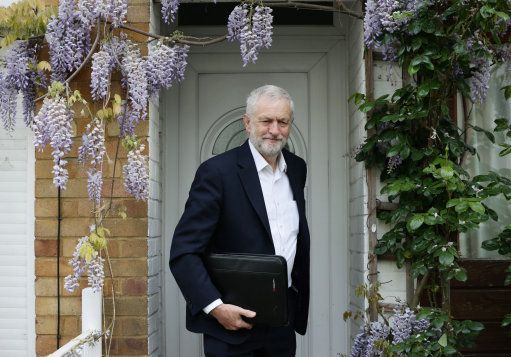
Labour leader Jeremy Corbyn leaves his home in north London. © Yui Mok/PA Wire/PA Images