Sometimes MI5 does not tell the courts the truth. That is not some wild lefty view, but the considered view of the prime minister himself, as expressed to the House of Commons. Only a few months ago Keir Starmer said in a parliamentary statement that:
“On 2 July the High Court concluded that the High Court, the Investigatory Powers Tribunal, the Investigatory Powers Commissioner and the associated Special Advocates were misled by MI5.”
It is also the view of the High Court, in a judgment where the bench included no less than the Lady Chief Justice and the President of the King’s Bench Division:
“It is apparent from the material that we have seen that the High Court, the special advocates, the [Investigatory Powers Tribunal] and the Investigatory Powers Commissioner were all misled on [a] key question […]”
The High Court then “direct[ed] that a copy of this judgment be sent to the Secretary of State for the Home Department, who has Ministerial responsibility for MI5”.
And it was the prime minister and not the home secretary who responded.
The prime minister, the Lady Chief Justice and the president of the King’s Bench Division are not woke agitators making baseless smears. This was instead a serious, publicly expressed concern made by the very highest levels of the British establishment.
In that case, the misleading conduct of MI5 was immediately referred by the prime minister to the Investigatory Powers Commissioner’s Office (IPCO). The investigation by a senior high court judge is ongoing—the latest update is here. The commissioner, in restrained and careful language, says it is “surprising” that relevant material is still being identified, four years after the incident in question:
“However, relevant material continues to be identified, both at IPCO’s request and through the efforts of those responsible for engaging with the investigation. That the latter remains the case, some four years after injunction proceedings were commenced and over three years after my inspectors first considered the Agent X case, is surprising.”
In essence: MI5 misled a court and years later the correct position is still not clear. This is an unsatisfactory position and it does nothing for the confidence one can have in our security services to be straight with our judicial—and political—processes.
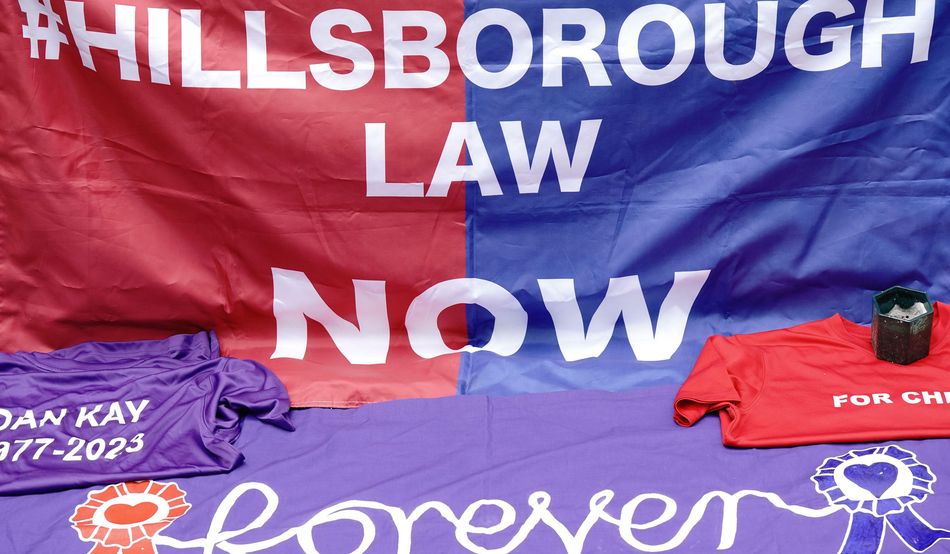
It is against this background that one can see why the tenacious and admirable campaigners for the Hillsborough law—which would impose a duty of candour on all public officials—are right absolutely to reject the blanket exclusion of the duty on the security forces.
Earlier this week the government pulled the Hillsborough law bill—officially titled the Public Office (Accountability) Bill—from its important third reading. The Hillsborough Law Now campaign group commented:
“This pause, whilst frustrating, gives the chance for government to listen further [and] agree an amendment to prevent cover-ups by the intelligence services without changing existing national security safeguards.”
What had happened is that the government, at this late stage, proposed an amendment that would make any duty of candour by an intelligence agent subject to approval by the head of the relevant intelligence service. But as the Hillsborough Law Now group says, the late amendment would "hide serious failures behind a vague claim of national security".
The government withdrew the amendment, but at the cost of delaying the progress of the bill towards enactment. The prime minister says he wants to “get the balance right”.
The security services were not directly involved with the Hillsborough tragedy, but were involved in the Manchester Arena attack. Pete Weatherby KC, who acted for some of the bereaved at the public inquiry into the attack, has explained why it is important that the bill is not watered down:
“The problem was that MI5 decided to protect themselves after the fact, and advance the false narrative. And that just means that those failures will repeat in the future, and nobody will have confidence in MI5.
“If this law is passed and they’re required to tell the truth even when things go wrong, then failures can be rectified and people can be safer in the future.”
He added that: “MI5 shouldn’t be given a free hand to run a false narrative to protect themselves, rather than to advance truth and justice.”
In the official report of the Manchester arena inquiry there is reference to the distinction between what the security services said and what they did in respect of the Manchester Arena attack. The inquiring judge said:
“The witnesses who gave direct factual evidence to me during the closed hearing were able to offer real insight into their thought processes at the time. On occasion, it became apparent that the Security Service’s corporate position did not reflect what those officers did, thought or would have done at the material time. Rather, the corporate position was more by way of a retrospective justification for the actions taken or not taken.”
The judge added “I do not consider that [two security service] statements present an accurate picture”.
The Pavlovian, knee-jerk reaction of many to this would be to say that the security services sometimes need not to reveal the full position. Sometimes national security can take priority. But the Hillsborough law campaigners fully accept this. The question is who decides.
As the Guardian reports: “The families say individual officers should provide their evidence to any inquiry with a duty of candour, and if the intelligence service heads argue it should be excluded on national security grounds they should make an application for that to be determined by the inquiry chair.
In other words: the heads of the security services should not mark their own homework. If something needs to be excluded on national security grounds then it should be for an independent (and security-cleared) court to decide. And this is not unusual: it is similar to the public interest immunity regime for excluding sensitive evidence from open court proceedings. That regime has been in place for a long time, and the sky has not fallen in.
We have security services which the prime minister and the highest judges say have misled the court and which another senior judge said in an inquiry report do not present accurate pictures and instead give retrospective justifications for their actions. And these are the instances we know about.
The Hillsborough law campaigners are right to resist this late amendment, and the government should provide that any exemption of the duty of candour on national security grounds should be independently assessed from those who assert it. And that is how the national interest would be best served.