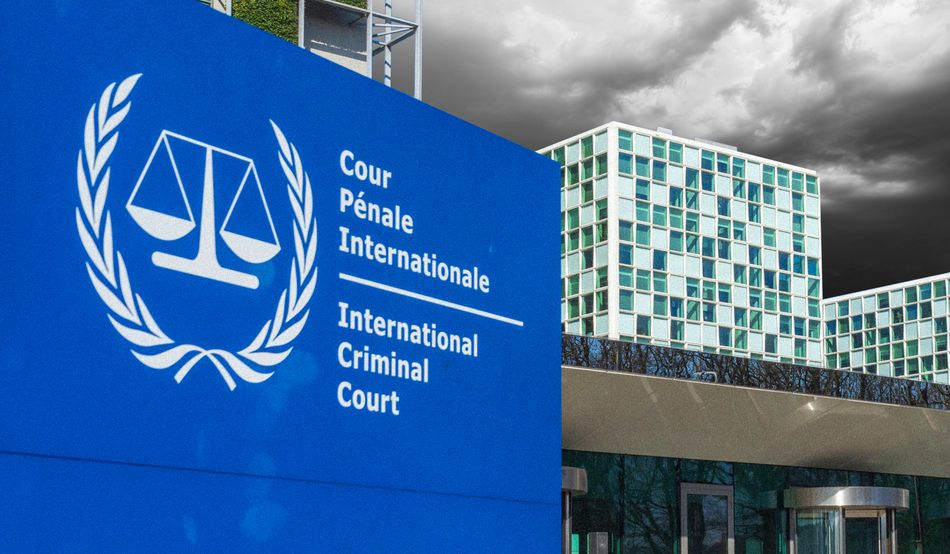
On 24th July 2026, member states of the International Criminal Court (ICC) voted by an overwhelming 82 to 13 to remove Karim Khan, the court’s chief prosecutor for the past five years, from his post.
The decision by the Assembly of States Parties, the ICC’s governing body, came after a series of inquiries into the prosecutor’s alleged misconduct, which included coercive sexual behaviour against a junior female colleague and pressuring her not to pursue a complaint. Khan denied everything; his lawyers talked of an “orchestrated campaign”.
The court, which turns 25 next year, has faced its fair share of controversies—but this is an unparalleled moment of peril. Khan’s departure could, however, also be the occasion for ensuring that the ICC gains new energy if member states find the courage to stand up for justice. For now that remains a big if. Everything depends on what happens next.
The Khan saga ran for two years and featured two opposed and misleading narratives. These can be loosely summarised as “human rights hero faces unjustified smears” on the one hand, and “sleazebag requests arrest warrants to deflect from his own behaviour” on the other.
In interviews, as the date for a decision on his future came closer, Khan proclaimed his innocence and complained of an “astonishing, unjustified and unlawful” process. Finally, however, a few days before the July vote, his accuser, Sarah, broke her silence in a CNN interview with Christiane Amanpour. The Malaysian Muslim lawyer was identified by first name only; a former ICC intern spoke to Amanpour of her own earlier experiences, too.
For the “unjustified smears” narrative, Khan’s supporters had released a steady drip-drip of insinuations against his then unnamed main accuser, including suggestions that she was a tool of the Israeli government. But Sarah was no such thing. She had initially been hesitant to make a complaint precisely because of how it might be misused by those— such as the government of Benjamin Netanyahu—who have tried to undermine the court. She told Amanpour: “I believe in what the court does… I was so scared and so worried that [coming forward] would affect the court’s work.”
Karim Khan’s alleged behaviour, while damaging to the court’s reputation, has no real bearing on its wider importance
Despite the clear majority in favour of his removal, Khan and his team still talk of mounting a legal challenge. But that seems unlikely to succeed. Meanwhile, the ICC will choose a fourth prosecutor, following Luis Moreno Ocampo from Argentina (2003 to 2012), Fatou Bensouda from the Gambia (2012 to 2021) and Khan himself, from the UK (2021 to 2026). Given the court’s vulnerability, now is not the time for the ICC and its supporters to be divided among themselves. Nor should member states draw the wrong conclusion by choosing a more politically timid prosecutor in future. Khan’s alleged behaviour, while damaging to the court’s reputation, has no real bearing on its wider importance.
To put my own cards on the table, I had been an admirer of Khan and the unusual ambition of what he was trying to do. During a visit to Israel and the West Bank in March 2024, Palestinians and Israeli liberals told me of their fear that—despite all the crimes by the Israeli military which had been documented in Gaza since the Hamas atrocities of 7th October 2023—no ICC prosecutor would be so bold as to
request arrest warrants for an Israeli leader. The geopolitical forces lined up against such a move seemed too overwhelming. Just two months later, Khan requested warrants for Netanyahu and his then defence minister Yoav Gallant, along with warrants for Hamas’ three most senior leaders (all of whom have since been killed) for “unconscionable” crimes.
When I met Khan in his offices in The Hague a few days after he requested those warrants, the prosecutor was clear: “If we apply the law vigorously in some cases and close our eyes in others, that brings the law into disrepute.” Khan then quoted King Lear: “Robes and furr’d gowns hide all. Plate sin with gold / And the strong lance of justice hurtless breaks.”
Or, in the prosecutor’s paraphrase: “If you’re poor, you’re weak, the law will come down on you. But plate that with gold, somehow you get a free pass.” Khan was determined that this imbalance should be confronted.
He was partly echoing what the Israeli human rights lawyer Michael Sfard had told me in Tel Aviv: that the prosecutor must remain true to the court’s moral and legal values and ignore all external pressures, “or it will colour the institution that he serves”. Khan, it seemed to me then—and still seems to me today—wanted to ensure the court’s own consistency, by showing it cannot be beholden to powerful leaders accused of the worst crimes.
Indeed, as chief prosecutor, Khan stood up to politicians in Washington, Jerusalem and Moscow. In the workplace, by contrast, he represented the ultimate figure of power—“everyone’s boss, the boss of all bosses”, as Sarah put it. Those two identities—courageous prosecutor and alleged abuser-boss—can co-exist, even if some pro-Netanyahu and some pro-Palestinian commentators seek to entangle the two issues and draw their own (opposed) conclusions.
Netanyahu’s belligerence towards the court long pre-dates Khan’s tenure as prosecutor and indeed the 7th October attacks. Fearing, perhaps, that he might one day be held accountable—for example for the large number of civilian deaths in successive assaults on Gaza—the Israeli prime minister had been “obsessed, obsessed, obsessed” (to quote an anonymous Israeli source, speaking to the Israeli-Palestinian +972 Magazine) with finding out what the ICC knew about alleged Israeli crimes, and how.
The core principle of “complementarity” means the ICC will open an investigation only if the country concerned is “unwilling or unable” to carry out credible prosecutions of its own. If war crimes suspects are likely to be charged in domestic courts, the ICC does not get involved. But that seems improbable in Israel’s case, especially while Netanyahu is in power.
In 2019, the then chief prosecutor, Bensouda, found a “reasonable basis” to believe Israeli forces had committed war crimes in the Palestinian occupied territories. Fifteen months later she confirmed that the ICC had established jurisdiction for those alleged crimes, meaning that the court has the legal right to investigate and prosecute those crimes. Netanyahu proceeded to launch a series of extraordinary measures against her. This included the director of Mossad barging into a one-on-one meeting between the prosecutor and the then Congolese president, Joseph Kabila, in his Manhattan hotel suite, and an envelope stuffed with dollars and with an Israeli phone number inside being delivered to Bensouda’s home in The Hague, as revealed by the Guardian in 2024.
Threats came from across the Atlantic, too—even before Donald Trump’s return to the White House in 2025. In May 2024, US senators (including Trump’s now secretary of state, Marco Rubio) issued mafioso-style warnings to Khan, Bensouda’s successor, telling him: “Target Israel, and we will target you… You have been warned.” The senators’ letter even complained of “double standards”. Brenda Hollis, former US Air Force colonel and experienced war crimes prosecutor, who worked with Khan on the requests for Netanyahu and Gallant’s arrest warrants, is scathing of complaints that the warrants were hasty or lacked balance. In a LinkedIn post in July 2026, she wrote: “[The requests] were based on law and sufficient credible evidence and finalised after thorough internal and external review.” Hollis expressed pride in the “outstanding” team who “impartially gathered and analyzed the evidence within the ICC legal framework”.
The scale of the ICC’s ambition—to prosecute powerful politicians without fear or favour—has grown, not diminished, over the years
For some, however, that care and impartiality are part of the problem. When judges in pre-trial chamber I of the ICC unanimously approved the warrants after six months’ consideration, the threats multiplied. Andrew Cayley, a former chief British military prosecutor who is no stranger to professional challenges, resigned as principal trial lawyer after what he called “the worst few months of my life”. Dutch police warned that the threats against him were so serious that he should put bars on the skylights of his apartment and install a reinforced front door.
Trump, meanwhile, continues to ramp up sanctions against prosecutors, judges and other officials, for what he sees as a conspiracy against the United States and its ally Israel. Bank accounts and credit cards have been blocked. Trump and his secretary of state are determined to “dismantle” the court itself—“brick by brick”, in Rubio’s words. The US has threatened unprecedented new sanctions against the court, potentially cutting it off from the provision of financial, and other, services and goods.
Many of the same governments that boasted of their contribution to the court’s founding statute in Rome in 1998 now cower from defending the institution. The ICC’s co-founders refuse to stand up against Trump’s apparent determination to tear up the global rule of law.
At the Rome Conference nearly 30 years ago, Germany called the ICC “an idea whose time has come”. Robin Cook, Tony Blair’s foreign secretary who wanted a foreign policy “with an ethical dimension”, was another key advocate. That earlier clear commitment is now selective. German chancellor Friedrich Merz said it would be “completely absurd” if Netanyahu couldn’t visit Berlin. Others have sounded equally reluctant to execute a legally binding international warrant.
The UK and other governments supported arrest warrants for Vladimir Putin and his generals in 2023 and 2024 for crimes which included the targeting of infrastructure and hospitals, and the starvation of civilians. But they opposed warrants issued for similar crimes against Netanyahu and Gallant. That disconnect between “warrants for our enemies” (good) and “warrants for our friends” (bad) has, in turn, weakened global support for the court.
In recent months, five countries have announced their intention to leave the ICC. In conjunction with the sacking of Khan, it may seem as if the court itself is crumbling or becoming an irrelevance. But the flurry of proclaimed departures, which come into effect next year, is perhaps an acknowledgement of the power that the court may yet wield.
The military regimes of Mali, Burkina Faso and Niger—each with close connections to Putin’s Moscow—want impunity for their own leaders; they had already dropped out of the regional economic bloc of West African states, Ecowas, in January last year. Venezuela and Chad, meanwhile, have also said they intend to leave, with lofty words about the need for “genuinely equitable justice”.
Those announcements, too, need to be understood in context. Venezuela is under investigation by the ICC in connection with violent repression by the regime of Nicolás Maduro. It is also now under the thumb of the Trump administration, which was quick to praise Venezuela’s decision. Chad undermined its own complaints about a “limited and uneven” system and alleged anti-African bias when it revealed that its announcement followed a request (or, perhaps more likely, a demand) from the White House.
Partly unnoticed, the scale of the court’s ambition—to prosecute powerful politicians without fear or favour—has grown
The ICC was created a quarter of a century ago in what the late Conor Gearty, the legal scholar and professor of human rights law, described as “the high point of end-of-history fervour”. We are now in a different place. But, partly unnoticed, the scale of the court’s ambition—to prosecute powerful politicians without fear or favour—has grown, not diminished, over the years. That is one reason why Trump loathes the court so much (as do Putin, Netanyahu and other potential indictees).
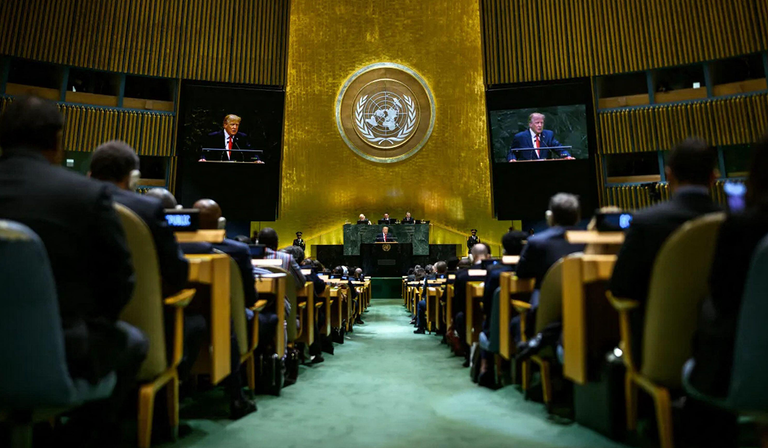
Trump’s assault on the ICC— “an evil group of people”, as he put it in his UN General Assembly address in September—and on justice more generally seeks to reverse the achievements of past decades. Eighty years ago, the Nuremberg trial laid the foundations for international justice. We now take the fact of that trial for granted. It was, however, far from obvious at the time. Joseph Stalin and Winston Churchill both initially argued it would be better simply to execute Nazi leaders and have done with it. The idea of a judicial process, filled with checks and balances, was—in the words of Robert Jackson, the visionary US chief prosecutor who helped make Nuremberg a reality—a “quixotic undertaking”.
Over the past 30 years, there have been new victories as well as new challenges. In the 1990s, US-backed international war crimes tribunals made it possible for the first time to prosecute those responsible for genocide and other grave crimes in Bosnia, Rwanda and elsewhere. The agreement to create an international criminal court seemed to mark the culmination of all the progress since 1945 (even if the US never joined). Seen in perspective, however, it is only now that the ICC is truly coming of age, with previously unthinkable arrest warrants for powerful leaders with “robes and furr’d gowns”.
Results rarely come quickly, but things do often happen when they are least expected. In 1992, I met Slobodan Milošević, then president of Serbia. He mocked the idea of a new war crimes tribunal that might one day put him on trial. Nine years later, an elected Serb government delivered Milošević to the International Criminal Tribunal for the former Yugoslavia in The Hague. He was charged with crimes against humanity and genocide and died behind bars in 2006 before the conclusion of his trial.
In Hong Kong in 2025, former president of the Philippines Rodrigo Duterte laughed at an ICC arrest warrant for crimes against humanity in connection with thousands of extrajudicial executions in his “war on drugs”. When Duterte returned home a few days later, the Philippine government put him on a plane from Manila to The Hague, to his indignation—and to the happiness of the relatives of his alleged victims. His trial for crimes against humanity begins at the ICC at the end of November.
Handcuffs are not immediately in prospect for the two most high-profile international indictees of all. Putin has, however, cancelled key foreign trips because of “certain difficulties”. In Washington, Trump likes to roll out the red carpet for Netanyahu, just as he did for Putin in Alaska in August 2025. But Netanyahu—who has sometimes been obliged to change his flight route—is also unlikely to visit Berlin, Paris or London any time soon.
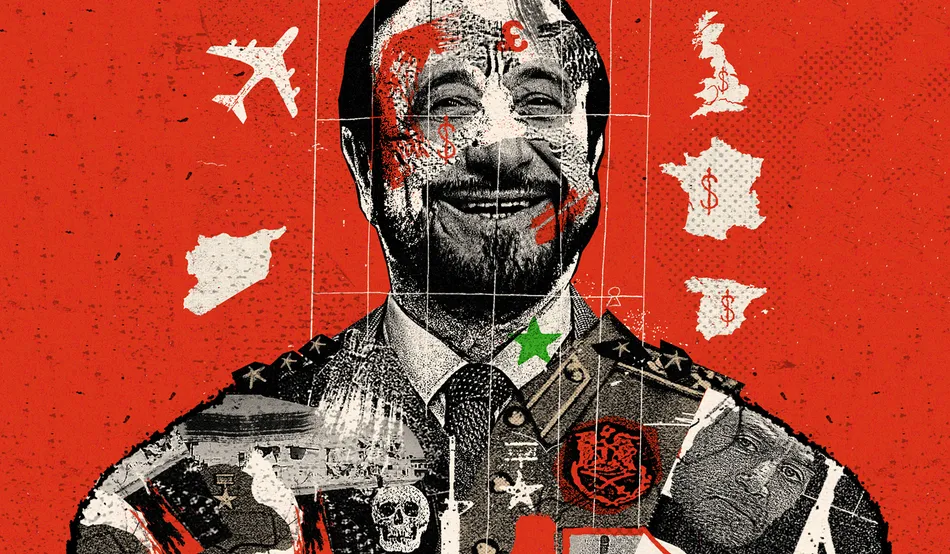
In the meantime, the mere existence of the ICC has energised pressure for justice elsewhere, including, for example, a special court in the Central African Republic for atrocities committed during its civil war. In August, Bashar al-Assad’s cousin was convicted in a Damascus court, including for the intentional killing of children and torture; the former president himself, now living in Moscow, was tried and sentenced in absentia.
During a visit to Syria last year, I was struck by how ordinary citizens were focused on the importance of truth and justice for the crimes of recent years. Ethnically and politically driven massacres since Assad fell have been linked to a lack of justice. The Syrian minister of social and labour affairs, Hind Kabawat, told me of what she called the “justice gap” if crimes remain unaddressed. That same hunger for justice can be found in other places around the world where the worst crimes have been committed.
Trump has no interest in accountability, however. For his allies and himself, he demands impunity. At Nuremberg, Robert Jackson emphasised the importance of justice to “stay the hand of vengeance”. But Trump is not alone in refusing to accept that simple and powerful message. In Israel, it’s not just Netanyahu and his allies who appear to believe that Palestinian lives don’t matter—even though, as an orphaned and brutalised generation comes of age, that approach is dangerous for all.
If Trump succeeds in destroying the International Criminal Court, it is difficult to imagine that it could easily be rebuilt. Judge Tomoko Akane, the respected Japanese president of the court who is herself now banned from entering the US, has warned of an existential moment for justice. As she told El País: “History sooner or later will call us all to account. ‘Where were you?’, we will be asked.”
Mostly, her warnings have been ignored. Andy Burnham’s acknowledgement that Labour “didn’t get it right” on Gaza and Ed Miliband’s sanctions against ethnic cleansing in the West Bank, announced in September, are welcome confirmation that lawlessness can still be confronted when politicians choose to do so. Still, it remains unclear whether Burnham and other leaders will find the confidence to push back against Trump’s apparent determination to secure impunity for leaders. Governments seem frightened to leverage their political capital against this.
The continued failure to stand up to attempts to dismantle the ICC would have catastrophic consequences not just for the people of Gaza and Ukraine, but in a range of contexts, from Sudan to Myanmar. And yet, politicians in Europe and elsewhere seem eager to ignore the songwriter’s old message: you don’t know what you’ve got till it’s gone. With illiberal populists undermining the court, the ICC’s founders must choose to protect the rule of law. If they don’t, then the prospect of justice for the worst crimes imaginable will only grow more distant.