This week, Donald Trump said he was ready to bomb Iran “back into the stone ages” and threatened that “a civilisation will die”. He boasted of destroying civilian targets and infrastructure. He has previously said he is “not worried” by accusations of war crimes, and that that he “doesn’t need” international law. To the dismay of Trump’s own generals, the “secretary of war” and former Fox News presenter Pete Hegseth mocks “stupid rules of engagement”. Those rules began with the Lieber Code—the first modern codification of the laws of war—that President Abraham Lincoln commissioned for the benefit of Americans fighting on both sides of the Civil War.
In this context, it is unsurprising that there has been an explosion of articles proclaiming the death of international law. If the US president can express such contempt for basic rules that others have long felt bound by, then other authoritarian leaders will surely seek to follow where he leads. Admittedly, Trump’s scorn does not come in a void. Even before his return to the White House, we have seen the mass killing of civilians multiply in the past few years, from Ukraine and Gaza to Sudan, and in Syria before that. Vladimir Putin and Benjamin Netanyahu both seem to revel in their belief that there will never be any consequences for the tens of thousands of civilians who have been killed in Ukraine and Gaza respectively; in Sudan, more than 100,000 have died.
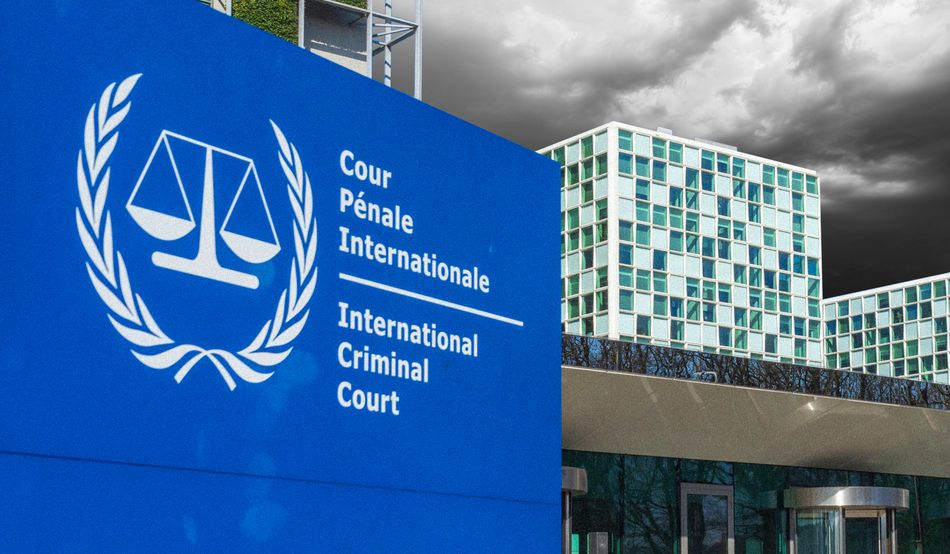
Long before the current war on Iran began, Trump was determined that he and his friends should enjoy complete impunity (including for alleged domestic crimes: he has demanded that Israeli president Isaac Herzog should end Netanyahu’s corruption trial in a Jerusalem court). Most obviously, Trump has seemed hell-bent on crushing the International Criminal Court (ICC), created at the beginning of this century to ensure accountability for the worst crimes worldwide and described by UN secretary general Kofi Annan at that time as “a gift of hope to future generations”.
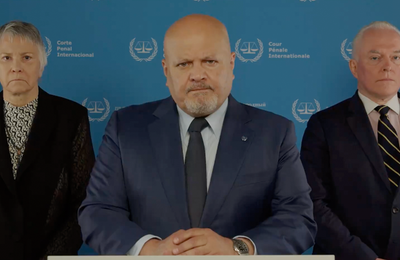
The White House has imposed sanctions on 11 ICC prosecutors and judges because of the court’s “illegitimate and baseless actions” towards the United States and Israel—in other words, the readiness to investigate or prosecute crimes without fear or favour. Those US actions already hamper the court’s work, and it may get worse. Email accounts belonging to the chief prosecutor and his staff have been blocked; ICC officials’ credit cards have been cancelled; Trump has also threatened wider sanctions against the institution itself. The Japanese president of the ICC, Judge Tomoko Akane, has talked of an “existential threat”.
All of which suggests that international law is now an empty vessel, drained of all meaning. Partly unnoticed, however, the possibilities of punishing war crimes and enforcing international law are in many ways now greater than at any time in history. The real question is: what, if anything, are governments ready to do to protect that progress and prevent the enraged hooligan in the White House from tearing the structures down?
Comparisons with the past make clear how far we have travelled. When the Polish-Jewish lawyer Raphael Lemkin, inventor of the word “genocide”, died in 1959, he was in despair, believing that his efforts to confront genocide had fallen “on a fallow plain”. Despite the UN genocide convention that he had fought so hard for, and which calls for governments to “prevent and punish” genocide, there was still no venue in which such punishment could take place. In the 1970s, around two million people died under the Khmer Rouge in Cambodia. In 1988, Saddam Hussein killed tens of thousands of Kurds with chemical attacks at Halabja and elsewhere. There were no consequences. As Saddam’s cousin declared at that time, with Trump-like bluntness: “Who is going to say anything? The international community? Fuck them!” (“Chemical Ali”, as he came to be known, was later hanged for his crimes.)
The impunity seemed set to continue. In 1992, I met the then Serb president, Slobodan Milošević, and asked him about accountability for the widespread killing of civilians and other crimes committed in the war in Bosnia which had begun a few months earlier. Milošević was confident that he would never land up in the dock for war crimes. It seemed he was right to be sceptical. Nothing like that, after all, had happened in 50 years. And yet, eight years after our conversation, I stood among the crowds in Belgrade and witnessed the huge protests that led to his downfall. A few months after that, a Serb government delivered the country’s former leader to a special war crimes tribunal in the Hague. He died behind bars, charged with crimes against humanity and genocide.
There were convictions in an international tribunal for the key leaders of the 1994 Rwandan genocide, too. One of Lemkin’s students had told a disheartened Lemkin that his work was “far greater than this generation”. She was right. There were seven mourners at Lemkin’s funeral. Today, the impact of his legacy is everywhere.
The creation in 2002 of the International Criminal Court, which now has 125 members, gave a new impetus to the pressures for justice. Many of the convictions in past years have been of militia leaders, not prime ministers or presidents. But, as we saw with Milošević—and as we may yet see with other leaders in the years to come—confidence can come before a fall.
Last year, after seven years of investigations, the ICC announced an arrest warrant for former Philippines president Rodrigo Duterte in connection with the extrajudicial executions of thousands of alleged drug dealers a few years earlier. (Duterte declared, when he became president: “I don’t care about human rights, believe me.” He boasted that the fish “will grow fat” on all the bodies dumped in Manila Bay. Perhaps unsurprisingly, Trump is a fan.) Duterte mocked the arrest warrant during a visit to Hong Kong. And then: on his return home, Philippines police handcuffed the former leader at Manila airport and put him on a plane to the Hague. He is likely to face trial for crimes against humanity.
Until recently, it still seemed that the most powerful politicians would always enjoy protection. When I started writing a book on war crimes and justice at the beginning of 2023, many still saw an arrest warrant for Vladimir Putin as an impossibility, despite the torture and massacres in Bucha, the destruction of Mariupol and other crimes in Ukraine that had already taken place. Russia is, after all, a permanent member of the UN Security Council—one of the five most powerful countries in the world. Its most senior leaders seemed untouchable. And yet, arrest warrants for the Russian president and his children’s commissioner were issued in March 2023, followed a year later by arrest warrants for the former defence minister and others.
Even more dramatic and seemingly unthinkable was another round of arrest warrants a year later. When I talked to lawyers and other observers in Tel Aviv, Jerusalem and Ramallah in March 2024, Israelis and Palestinians agreed on one point—that an arrest warrant for Netanyahu seemed inconceivable, despite the civilian death toll, the targeting of infrastructure and the starvation tactics that we had already seen. Geopolitics, it seemed, meant that an arrest warrant for the prime minister of America’s closest ally remained beyond the pale. And yet, a panel of advisers (including a former senior Israeli ambassador) recommended arrest warrants; the prosecutor requested them; after six months’ scrutiny, judges unanimously approved the warrants (together with warrants for Hamas leaders for the atrocities of 7th October).
All of those extraordinary changes are the context in which we must see Donald Trump’s determination to kill the ICC and to destroy international law more broadly. He, like Putin and Netanyahu, is frightened that international justice might—perhaps—have a chance of working, as pressures for regional and domestic trials have gained momentum, too.
Those who have suffered most from crimes in the past care most about ensuring greater stability in the future. In Syria, I saw how those who have suffered most from the crimes of an unhinged ruler are also determined to build the possibilities of accountability for those crimes. In a mostly destroyed suburb in the south of Damascus, I joined a packed meeting which focused on how to make justice real—and thus how to avoid dangerous new cycles of revenge. A Syrian government minister told me of the need to close what she called the “justice gap”, in order to have a chance of reducing violent patterns of revenge across the country.
European and other governments should understand the connections between justice and stability. The United Kingdom and other European states were proud co-founders of the ICC in a conference in Rome in 1998—an idea “whose time has come”, in the words of the German delegation. Now, though, when that court is under threat, those same governments remain silent—or even suggest that they would ignore their own obligations and refuse to execute the international arrest warrant if Netanyahu were to turn up in their country.
The ICC has been described as “a dead man walking”. The pressures it faces are real. But the court is only dead if we allow it to be killed off, through complicity and failure to defend it. That is not yet a given. If, however, Trump succeeds in his aim of destroying the court, it is hard to imagine circumstances in which it could be rebuilt. The spirit of global cooperation that prevailed in 1998 is long gone. All would then be the losers, for many years to come.