What constitutes an act of war? If, say, Russia started bombing London, it would be, indisputably. But what if someone sabotaged crucial infrastructure, and that someone appeared to be acting in the interest of a foreign state? For insurers and the companies they insure, these decisions involve massive sums. Now Nord Stream—the owner of the eponymous pipelines—and its insurers are squaring off in a London court over the explosions that closed the pipelines nearly four years ago. Half a billion pounds is at stake.
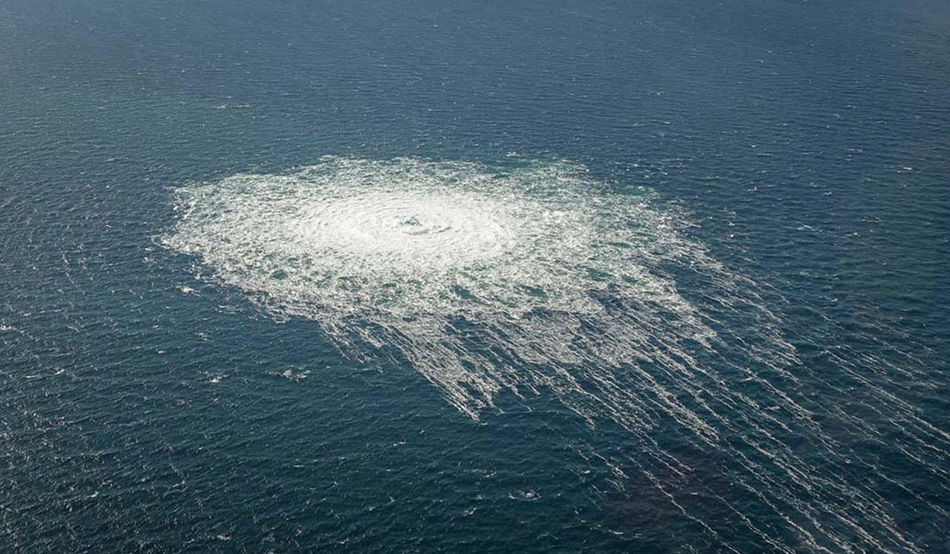
You will recall the Nord Stream blasts on 26th September 2022. One mighty explosion shook the pipelines, then a second. Masses of gas emerged from the two pipelines, forming islands of bubbles in the waters above the Baltic Sea. The pipelines had unmistakably been sabotaged, and a whodunnit commenced. Most people (including me) suspected Russia, reasoning that the Kremlin could have decided to cripple the pipelines to spite Germany—the main recipient of the gas—and the rest of Europe. Now the consensus is very different: German prosecutors say that the blasts were instead caused by a group of Ukrainians .
Two of the Ukrainians have been charged by German prosecutors. One is in German custody and at some point he and perhaps others will go on trial. But in Britain, Nord Stream court proceedings are already taking place. They began on 16th April and involve Nord Stream’s owner on one hand and the pipelines’ insurers—Lloyd’s Insurance Company and Arch Insurance—on the other. In London’s High Court, a judge must now settle what constitutes a war-like act. For insurers and the companies that they insure, the definition of “war-like act” matters even more than it does for governments and the rest of us, because of the enormous sums in question. Nord Stream has sued its insurers for €580m, slightly less than half of the €1.2bn to €1.35bn euros it estimates that it has lost as a result of the blasts.
That’s because regular insurers (known as all-perils insurers in the industry) provide insurance cover for all regular perils, precisely as it says on the tin. That does not include war, however, because war causes destruction on an enormous scale. These days, all-perils insurance also excludes coups, insurrection, civil wars and such like. For these types of risks, there are specialised war insurers; they even provide cover for ships wishing to pass through the Strait of Hormuz. (The reporting from early in the US-Israeli war against Iran which stated that insurance was no longer available for shipping in the Strait was inaccurate.)
But what constitutes a war-like act? Acts of aggression by soldiers, for sure. But can destructive activities against one country’s interests by foreign freelance groups not wearing uniform be considered as such?
No one knows, perhaps because until recently people assumed they’d know a war when they saw it. It’s not known whether Nord Stream has war insurance, but what is known is that the company considers the sabotage an act of harm committed by a group of ordinary citizens acting on their own, and that its all-perils insurance should therefore cover the losses. Nord Stream’s all-perils insurers view the matter very differently. They have told the High Court that the “complexity, sophistication and geopolitical implications” of the attack point to state involvement, the Financial Times reports. During the court proceedings, the insurers have even suggested that the United States could have been involved in the sabotage because this “provided geopolitical leverage to Russia”. It’s unfortunate that this civil case is taking place ahead of the trial of the Ukrainian suspect in Germany, because he may reveal details about the sabotage and what motivated it.
But with Nord Stream having sued its insurers, the judge, Clare Moulder, doesn’t have to establish who committed the sabotage: she simply has to decide whether the sabotage constituted a war-like act. That in itself is a momentous task. Arguments in the case will conclude later this month; Moulder’s ruling is expected a few weeks later. The sums involved are hefty; that’s the nature of destruction of large pieces of infrastructure.
That’s why the judge’s decision will have enormous significance not just for Nord Stream and its insurers. As the world’s nations have not decided what constitutes a war-like act, the judge’s ruling will be as close as we get to a definition of an act of war, at least for the time being. If she rules that the blasts were a war-like act, does it mean Germany (and Sweden and Denmark, in whose exclusive economic zones the explosions occurred) have to retaliate? Do they have cause to retaliate? And if the blasts were not a war-like act, does it mean saboteurs can continue to wreak havoc on infrastructure, causing companies massive losses?
A civil court judge—one specialising in commercial disputes—is being asked to define war because war has crept into the world of commerce. The High Court proceedings are today’s world captured in one legal case.