Imagine you had half a billion quid to recognise an individual’s extraordinary achievement—that’s 500 times more than the Nobel Prize. What sort of miracle breakthrough would be worth it? Bringing about peace in Ukraine? Developing a miracle cure for malaria? Cracking the problem of practical nuclear fusion energy?
The question occurred to me this week when I read about a man called Chris Rokos who has just paid himself £477m for one year’s work. Mr Rokos has not solved any of the world’s great problems. Indeed, it’s not entirely clear what he does do, though he is evidently very good at it. Let’s call it a form of betting.
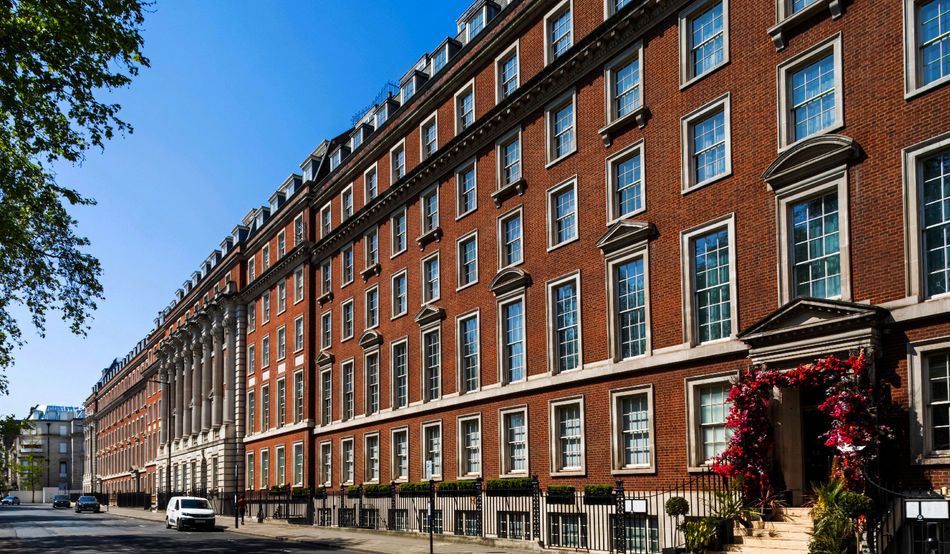
Mr Rokos is a 55-year-old macro hedge fund manager based in Mayfair, London. He manages more than $22bn and delivered a return of around 21 per cent in 2025. But do not rush to cash in your ISAs in order to bung them Mr Rokos’s way. His fund is not for you. He is there for extremely wealthy people with a high appetite for risk.
“The likes of you or me wouldn't be allowed to invest with him,” says my mole in the world of finance. “The chances are our pension fund wouldn’t be allowed to invest it in either, because they are taking more risk.”
What kind of risk? My mole burrows away for a few minutes to try to work out the secret of Mr Rokos’s extraordinary success. “Some hedge funds are betting on tiny intraday movements in credit markets or interest rate markets or derivatives markets,” he muses as he searches. “I’m guessing he’s making money on small moves rather than taking big long-term bets.”
He probes a little more. “Maybe a bet on US interest rates,” he wonders. “The point about these people is that they are very, very hard to talk to. They are quite secret and don’t like journalists nosing around their business.”
What do we know about the fabulously wealthy Mr Rokos? He won a scholarship to Eton, from which he progressed to a first-class degree in maths from Pembroke College, Oxford. He had stints at Goldman Sachs and Credit Suisse First Boston before co-founding a hedge fund called Brevan Howard (a 13-year period during which he personally earned around $900m) and then, in 2015, launching Rokos Capital Management.
2020 was a very good year for his new company, with 44 per cent returns and a £509m payday for Mr Rokos himself. The bets apparently didn’t work out in 2022, when the firm made a loss, but he bounced back in 2023 with a modest £27m pay cheque. The latest bumper payout means he may be worth nearly £3bn.
Meanwhile, he has in the past been a generous donor to the Conservative Party and is the owner of the historic 100-bedroom Tottenham House in Wiltshire. The local paper has taken a keen interest in his plans to renovate the property, calculating that it would eventually need a staff of 69 to run it.
He was reportedly a Remainer and invested in a brief-lived neoliberal political magazine called Standpoint. The FT reported him as cooling on the publication as he had “more centrist views”, and that, like his fellow hedge fund manager Paul Marshall [GB News, the Spectator, UnHerd], he nursed an ambition to own a publication one day.
The reaction of FT readers to Mr Rokos’s bumper pay package was mixed. Some applauded his ingenuity, thought he probably paid a decent amount in tax and considered his staggering wealth a private matter.
Others were not so generous. One considered the latest payout “grotesque” and compared it with the £33k earned by a friend in a postdoc research role in Oxford doing cancer research. “Think of all the innovation and research that isn’t happening because so many of our best minds are stuck doing financial engineering.” Another agreed: “I just wish he actually did something useful, made something, rather than shuffle money around for other ultra-high net worth individuals.”
This was similar to the rallying cry from this year’s Reith Lecturer, the Dutch historian Rutger Bregman, who lamented that so many of today’s brightest minds were drawn into the “Bermuda Triangle of Talent” (consultancy, finance and corporate law) rather than meaningful, socially productive work.
He calls what Mr Rokos and his peers do “BS jobs” and invites us to think about what such clever people could have achieved had they decided to try to solve climate change, cure disease or end poverty.
This is itself an echo of what Adair Turner, former chair of the Financial Services Authority, said in 2009, when he described much financial activity as “completely socially useless”. Not that anyone paid much attention: the hedge fund industry is now worth $4.7 trillion.
In an interview two years later, Turner repeated his call for a debate on some form of transaction tax. He also pointed out that many of the people in BS jobs were engaged in a zero-sum game between participants. Mr Rokos’s trading gains are, in other words, offset by someone else’s trading losses. Welcome to the wealth-shuffling classes.
What’s the morality of it all, I ask my financial mole. He sighs. “Rokos is just symptomatic of what’s happening in finance generally, which is that it’s all becoming privatised and beyond the reach of ordinary people. Private pools of money are now increasingly dominating the financial system, whether that’s private equity, hedge funds or these private credit funds. The gains of capitalism are being concentrated in an ever-smaller number of insiders.”
“The amount of private money now flowing into these private credit funds is vast. It’s the same old story of the privatisation of profits and the socialisation of risks.”
Meanwhile, Mr Rokos has ambitious plans to expand into Abu Dhabi this year. And he is revising his fee structure, according to that excellent publication Hedgeweek. Until now, he has taken a very modest 2 per cent fee on all assets and 20 per cent of any upside. In future, says Hedgeweek, that will be 2.75 per cent of assets and 25 per cent of the upside. No more Mr Nice Guy.
“They’re monstering public capitalism,” groans my financial mole about the industry in general. “As a society, it’s a bit degenerate.”
Mr Rokos’s representatives have been in touch to say Mr Rokos is fully domiciled within the United Kingdom, and that he pays a great deal of tax. In 2022, he was the second largest individual taxpayer in Britain. His charitable donations are also substantial.
This article was updated on 18th January to include the comment from representatives of Mr Rokos.