The Shortest History of Antarctica
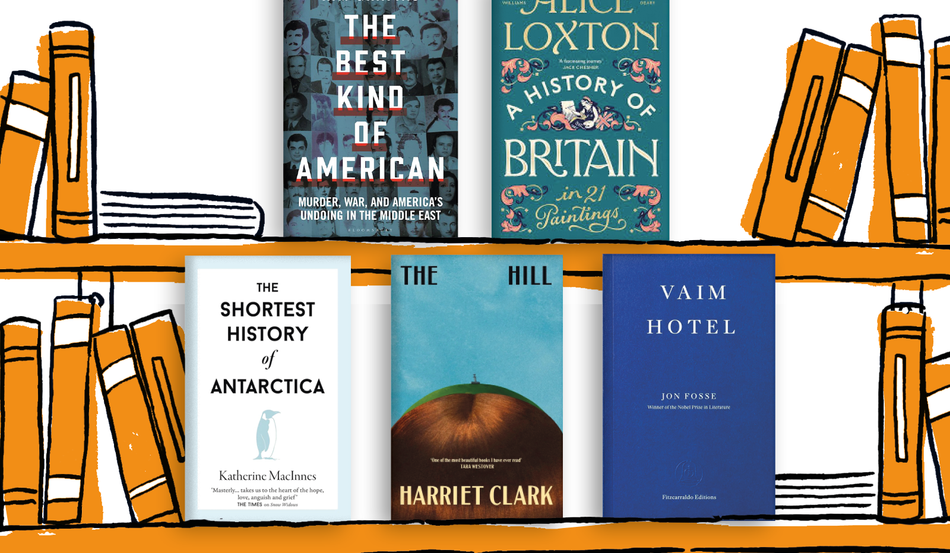
by Katherine MacInnes (Old Street Publishing, £14.99)
Pity poor Antarctica. As Katherine MacInnes observes at the start of her new book, the continent “doesn’t even have its own name”. The “Arctic” part comes from the Greek for bear, after the constellation above the North Pole, while the “Anti” prefix makes the whole thing mean “opposite the bear”. In other words—again MacInnes’s own—the “Not Arctic” or “the other one”.
For most of history, this other one existed only in theory: a counterweight that Aristotle reasoned must be down south, a Terra Australis that mapmakers drew in confidently and then, century by century, rubbed out. Nobody indisputably set foot there until 1895. Here, surely, is a subject suited to the brevity of the Shortest History series.
Or rather, it would be if MacInnes, a polar historian, didn’t cram so much in. There are the familiar figures—Scott, Amundsen and Shackleton, who fill the longest chapter—but also the overlooked: the two Sámi teenagers who became the first people to sleep on the Antarctic mainland; the entrepreneur who boiled down perhaps three million penguins for oil; the Nazi expedition that, while scouting for whale oil to make margarine, dropped swastika-stamped markers all over Queen Maud Land. Did you know that Britain shored up its wartime claims by opening post offices? Or that, when the South Pole station’s radio failed in 1957, its lifeline was a pair of brothers, aged 16 and 13, with a ham radio in New Jersey?
The result is less a narrative than a cabinet of curiosities, stuffed with everything from katabatic winds to John Carpenter’s The Thing. It can feel bitty. But it is never dull, and MacInnes’s argument—that this is the one place where humanity’s worst instincts were, by treaty, set aside—gives the bits some shape.
Her closing speculation, that Antarctica might one day be granted legal personhood, seems unlikely. Still, after so long just being the other one, it would be nice for the continent to have a sense of self.
Peter Hoskin
The Best Kind of American: Murder, War and America’s Undoing in the Middle East
by Kim Ghattas (Bloomsbury Continuum, £25)
“The violence done to Lebanon will overwhelm you.” Kim Ghattas opens the first section of The Best Kind of American with this biblical warning. And overwhelm it does. Her account of Lebanon’s wars is disturbing not just for the violence it records, but for the culture of impunity that allowed so many of those responsible to escape justice.
The book begins with the murder of Malcolm Kerr, president of the American University of Beirut, in 1984. His death leads Ghattas into a much wider history, but she never loses sight of the families caught up in it. Shortly before his assassination, Kerr promises a colleague that he’ll tell her a joke over lunch the next day. He never gets the chance. It’s the sort of small detail that makes this history hurt.
Having grown up in Beirut, Ghattas knows the city intimately. She is particularly good at showing how Lebanon became a battleground for the ambitions of the US, Israel, Iran and Syria, while making clear that Lebanese factions also played their part. She exposes the hypocrisy of US foreign policy, too. While Reagan publicly insisted he would not make deals with hostage-takers, his administration was secretly selling weapons to Iran in the hope of securing the release of American hostages.
The secrecy affects the Kerr family. A decade after the murder, Malcolm’s son Andrew, then working at the National Security Council, discovers classified US intelligence about his father’s assassination that his family had never seen. Unable legally to share it, he carries the knowledge alone for months. It’s an upsetting example of the distance between what governments know and what families are told.
The book isn’t always easy to follow. I sometimes struggled to see why certain conflicts mattered and wanted more time with the families. Yet, as the connections become clear, Kerr’s story remains at its centre: that of a man remembered for understanding a region his government so often misunderstood.
Kira Sutton
A History of Britain in 21 Paintings
by Alice Loxton (Viking, £25)
A portrait of Wellington, an audacious heist and a series of ransom notes: it’s an opening gambit that captures the historian and broadcaster Alice Loxton’s gift for conjuring spirited adventures from the past.
Loxton, who rose to prominence for her lively historical storytelling on social media, guides readers through some 1,400 years of British history with the encouraging cheerfulness of a Blue Peter presenter, stopping at the slate mine in Wales that sheltered priceless paintings during the Second World War, Shakespeare’s birthplace and even the Valley of the Kings at Luxor.
This isn’t a comprehensive art history, Loxton cautions, but rather an offer of “illuminations into the hedgerows of British history” through 21 paintings. The book’s eclecticism is both its strength and its weakness. Imagined conversations and personal anecdotes make for an engaging journey, but the book sometimes loses sight of the paintings themselves in its rush to tell the tales around them.
The chapter on the portrait of St Luke in the St Augustine Gospels, for example, relies on the ancient book as a whole, and on a biography of St Augustine, to tell the story of the Christianisation of Britain, rather than deeper exploration ofthat specific artwork. A look at a medieval wall painting of St George and the Dragon concludes with a good-natured but treacly exhortation to remember “small acts of kindness that make a miracle of our everyday”.
The book shines when it treats paintings as sources that might complicate or change our understanding of history, rather than as mere illustrations of historical events. JMW Turner’s Rain, Steam and Speed is, happily, treated as more than a quick jumping-off point for a discussion of the Industrial Revolution: the contrast between the horse-drawn plough and the train hurtling through the landscape in a startling blur captures the period’s anxieties about technological change, nature and beauty. Here the historical argument emerges from the artwork itself—and more of this approach might have uncovered richer material.
Ada Amoako
The Hill
by Harriet Clark (Sceptre, £16.99)
“Need can blossom into all the compensation it requires” goes a famous line in Marilynne Robinson’s Housekeeping. It could serve as a motto for Harriet Clark’s astonishing debut novel, The Hill, which has much in common with Robinson’s elegiac novel—above all, a narrator on whom nothing is lost and yet for whom loss is nearly everything.
The novel draws on Clark’s own life. Like Suzanna, her narrator, Clark was raised by her grandparents after her mother was imprisoned for her part in a botched robbery by a radical leftist organisation. The precociously perspicacious Suzanna—a pint-sized version of Emerson’s all-seeing transparent eyeball—structures her childhood around weekly pilgrimages to the prison just outside New York City where her mother, Helen, is serving three consecutive sentences of 25 years. Like Camus’s Sisyphus, condemned to repeat the same uphill journey, Suzanna finds purpose in this ritual. “For me being young was like being religious,” she reflects. “I believed the life I had was the life I was meant to have, that everyone was playing a role long established for them.” In another era, she might have been a mystic.
Clark is too subtle to turn her novel into a work of strident abolitionism, though she makes clear the emotional toll on those left outside the prison walls. Above all, she is concerned with evoking, through pellucid, Robinsonian prose, how physical absence calls forth imaginative presence.
For all its biographical borrowings, The Hill never reads as a dressed-up memoir—nor as a conventional coming-of-age tale, with its predictable scènes à faire. Crushes, first dates, graduation, exam jitters: all this is peripheral to Clark’s book. She has transformed family history into something transcendent: a portrait of a childhood shaped by absence, repetition, rendered with the lucidity of a miraculously preserved dream.
Rhoda Feng
Vaim Hotel
by Jon Fosse, tr Amion Searls (Fitzcarraldo Editions, £12.99)
The unnamed narrator of Jon Fosse’s Vaim Hotel checks in to a small hotel in Vaim, a tiny coastal outpost in Norway, where everybody he encounters thinks they recognise him, yet nobody can explain why. Brita, the owner of the hotel and its restaurant, turns out to be the most grotesque and howlingly funny hotelier since Basil Fawlty, as the tragedy that ended Vaim, the first book in Fosse’s series, slips seamlessly into farce.
Fosse always did have comedy in him. The meticulousness with which characters in his novels fret over minor possessions—keys, hats, bags of food—suggests that they only ever needed someone to mess with their minds, and Brita is very happy to oblige. We’re never sure why the narrator has come to Vaim—we’re told he isn’t sure either—but Brita is determined to take advantage of this wandering soul. You don’t need to be Sherlock Holmes to deduce who is rifling through his suitcases while he’s out, and you can only admire Brita’s chutzpah in asking him to change one lightbulb she can’t reach—before telling him to do same for rest of the hotel.
The self-contained universe that Fosse has created in his fiction is robust enough that comedy can’t disrupt its essentials. Drifting, rootless, looking for something: this has been a constant of Scandinavian literature (you can imagine Tara Selter, from Solvej Balle’s On the Calculation of Volume, in an adjacent room of the Vaim Hotel), and Fosse’s signature reweaving of time gamely teases logic.
This book, too, ends with a death, and there are the ghostly apparitions you’d expect from Fosse, before an ingenious folding of his digressive structure back into itself reboots the form. Perhaps it’ll all make sense when the third part of the trilogy, Vaim Weekly, appears—though it would be better if it didn’t.
Philip Clark