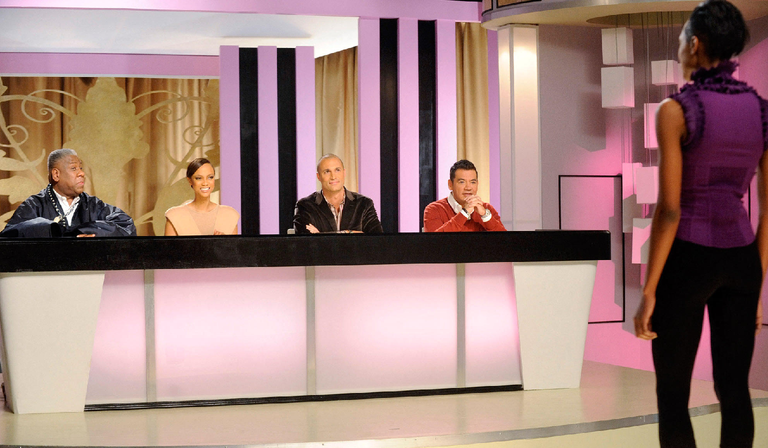
America’s Next Top Model, the reality series hosted by Tyra Banks that pitted aspiring models against each other and which ran for 24 seasons between 2003 and 2016, was an absolutely bonkers show. It’s one of those noughties programmes that the world sometimes gets reminded of by, say, memes of Banks yelling at contestants, but which quickly gets shoved back into the memory hole. So it bears repeating: it was insane. The things they did on that programme beggar belief. There was the “model stereotypes” photoshoot in which they had one contestant posing, covered in vomit, with her fingers down her throat to represent bulimia. There was the infamous race-switching challenge, which they actually did twice, in which they had models in blackface. Or the one where they had the models dress up as homeless people and pose alongside real homeless people. They filmed and aired one of the contestants black-out drunk on two bottles of wine “cheating” on her boyfriend, made contestants get permanent dentistry they didn’t want in order to compete, and drove several of them into hospital after gruelling shoots.
Other than in niche corners of the internet where people litigate such matters, the team behind ANTM haven’t really been held to account for the many, many missteps made by the programme. There has been no major reckoning with this deranged moment in reality television culture. But now, newly released on Netflix, there is a three-part documentary series called Reality Check: Inside America’s Next Top Model, featuring Banks herself, as well as the show’s longtime judges Jay Manuel, Miss J and Nigel Barker, the executive producer Ken Mok and a handful of the show’s former contestants.
The reason this is happening now, Banks tells us in a talking-head interview, is because people bored at home during the pandemic turned to old seasons of ANTM and started to say: hang on, what on earth was going on? “It brought so much joy to so many people, but also so much anger,” as she puts it.
So what do they have to say about it now? The contestants talk about how much it meant to them to be on the show, many of them very young girls with no money and, as they thought, no other prospects, and the various ways they felt manipulated by the programme. The judges dance around how responsible they were or were not for the show’s more dubious creative decisions. Ken Mok takes “full responsibility” for one of the biggest errors of judgement, the crime scene-themed challenge in which a contestant whose mother had been a victim of gun violence had to pose as though she’d been shot in the head. But, in general, there is a sense that none of these people are ever going to truly stick the knife into ANTM—because they’re too deeply embedded in either the fashion industry or the world of reality TV.
What is striking and disconcerting about this documentary is that Banks, all these years later, still doesn’t seem to understand the programme she created and what all that public anger she refers to is about. She emphasises that it was a different time, that she thought she was doing something empowering, that she was disrupting the fashion industry by opening doors for would-be models who didn’t fit the fashion world’s existing moulds. It is true that there were plus-sized models on ANTM, girls under 5’7”, a trans contestant, a contestant with vitiligo (Winnie Harlow, probably the show’s most successful alumna).
Tyra Banks, all these years later, still doesn’t seem to understand what all the public anger is about
But she was still advocating for these girls to join the fashion industry, and to adhere to its standards on things like weight. “Much as I hate and preach about models not having to be stick-skinny, we have to face it that we are in the fashion industry,” she tells one group of hopefuls at a judging, “if you don’t fit the clothes, you don’t work.” Throughout ANTM’s run, models were mocked and shamed for gaining weight during the filming.
It’s not just anger about the treatment of the models that motivates people to want some kind of contrition from Banks, though. It’s the treatment of the audience. As I watched the series, I found that I vividly remembered many of the girls; still knew their names, even. I hadn’t quite realised, until watching the documentary, how much time I must have spent watching ANTM in my teens. Now, with an adult’s brain, I watch these clips and I can see that most of the contestants—even some of the “plus-sized” ones—are unusually, often unhealthily thin. At the time, though, I thought that they looked how a beautiful woman should look and found my own body severely lacking. Barring a small section in the second episode, there is not much attention given in Reality Check to the damage ANTM did to the people watching it, many of whom were young, impressionable girls. And none of what is there comes from Banks herself; it comes from the contestants and pulled commentary from social media.
In fact, Banks even attempts to blame the viewers themselves for the show’s excesses. “You guys were demanding it,” she says. “The audience wanted more and more.” It’s odd viewing because, at the same time as she dodges any real responsibility for ANTM’s toxicity, she is saying that she is glad for the opportunity to be “open” and get “called out on [her] shit” so that she can “continue to evolve”. You are left wondering: why did she agree to do this at all?
And then it clicks. “You have no idea what we have planned for cycle 25,” she says at the very end of the series, which suggests that this attempt at reputational laundering is all about the show’s future. While the documentary itself paints Banks as a villain—there is intensive attention paid to her summarily firing all three of the original judges, for instance—she herself does not seem to realise that this is how she’s coming across. The reality check has yet to come.