What is the greatest show on Earth? For the age of European empire, a case could be made for the world fairs, from London’s Great Exhibition to Chicago’s White City and Paris’s Exposition Universelle—great displays of industrial, technological and colonial might visited by tens of millions at their peak. In the television age, the fairs were eclipsed by the Olympic Games, which could reach hundreds of millions of people, and provided a global tableaux of Cold War rivalries and a decolonised world. Over the past quarter-century, the Olympics have been tarnished by the International Olympic Committee (IOC)’s record of corruption and escalating and unjustifiable costs, and no amount of skateboarding and breakdancing can persuade the “youth of the world” to engage. In the 21st century, the accolade has passed to the World Cup.
Football, always popular, is now unambiguously the most global and culturally significant sport in the world. American football, baseball and cricket are mere regional powers to the global hegemon. The men’s World Cup, the sport’s peak moment, has not only exceeded the popularity of the Olympics but it has, despite its relentless commercialisation and entwinement with the political strategies of nation states, become a popular global festival.
First, foreign fans, a rarity until the 1990s, began travelling in large numbers—there are substantially more football fans than there are “Olympic Games fans”. When they arrive, they transform the public spaces and atmosphere of the tournament’s host countries: from the nearly half a million loved-up England fans who went to Germany 2006, to the 40,000 Peruvians who brought Latino warmth to the Russian steppes in 2018. Second, in 2002 co-host South Korea debuted huge outdoor screens, and more than seven million people watched the country’s semi-final in public. Since then, the World Cup has become a vast carnival. The world assembles to collectively watch the games in innumerable ways—giant screens in public squares, repurposed football stadiums, crammed bars, overflowing family homes, gardens, parks. Everywhere, working rules and school timetables are relaxed to accommodate tournament schedules. For a month, much of the world enters a joyous football dream space.
Who knows what will emerge from such collective reveries and spectacles? At Qatar 2022, Morocco’s amazing run to the semi-finals was a source of Moroccan national, pan-Arab and pan-African pride, igniting public celebrations in every major city across the Middle East and among the Moroccan diaspora in Europe. The world was also treated to a final of truly epic dimensions—Argentina 3–3 France (4–2 on penalties)—and shared the ascent of Lionel Messi to sporting divinity. Of course, there were a whole lot of other messages and meanings going on: Qatar got the global visibility it had always wanted, and made friends in parts of the world for its stand against alcohol and LGBT+ insignia.
What meanings will the 2026 World Cup acquire? It certainly won’t be sending out the messages envisaged when the UNITED 2026 bid was first hatched in 2016. Ten years ago, the football federations of the United States, Canada and Mexico were moving in lockstep around the globe, promising to “create… a Fifa World Cup that is more inclusive, more universal than ever”, held across a uniquely integrated continent. Donald Trump has since shocked publics and politicians alike by imposing new tariffs on the United States’ neighbours, ending the trilateral Nafta trade agreement, proposing Canada as the 51st state and threatening direct military intervention against drug cartels in Mexico. What was once intended as a celebration of regional integration has mutated into something closer to three separate World Cups; though there is notionally a high-level trilateral coordinating committee, it has barely met.
The United States, like Mexico, has hosted before, but in what seems a more innocent age. The 1994 World Cup, designed to relaunch men’s football in the US, may have begun with Diana Ross somehow missing a penalty from two metres during the opening ceremony, but it was an enormous success. In the three decades since, football has grown out of all proportion: the US remains a dominant force in women’s football; Major League Soccer (MLS) has expanded, filled its new soccer-specific stadiums, developed its own idiosyncratic fan cultures and been joined by new national leagues; the country’s growing Latino population has made the game more popular than ever before; while the value of television rights for European leagues in the US market, especially for the English Premier League, has climbed and climbed.
In another world, this US might have been on display at the World Cup: urban, diverse, cosmopolitan, progressive. Quite how this US will feel about large public gatherings in an era of Immigration and Customs Enforcement (ICE) and National Guard mobilisation is hard to gauge, but those energies will be muted for sure. The US also has past form. In 1994, a spontaneous Mexican-American street party after an El Tri (as the Mexican team are known) victory was rated by the Los Angeles Police Department as a full-scale riot. In any case, the failure of Congress to agree the release of World Cup funding during this year’s federal government shutdown has sharply curtailed plans for fan parks and public viewing spaces—the most democratic element of the modern World Cup.
One place the tournament will be visible is in New York City, where recently elected mayor Zohran Mamdani—who has made much of both his long-term support for Arsenal and measures to ease the cost of living—has made fan festivals in the city free of charge, supported grassroots football parties, taken Fifa to task for its outrageous ticket prices and organised a raffle for New York residents, with 1,000 $50 tickets (transport included) for the games in New Jersey.
Trump is, above all, the former host of a game show—and the World Cup offers coverage and ratings like no other spectacle
A little further north in Canada, the World Cup arrives at a moment when football has never been more popular. The country hosted a very successful women’s World Cup in 2015 with record-breaking attendance and TV viewership, has since established men’s and women’s national professional leagues and has seen a steep rise in levels of participation. At the same time, ice -hockey’s hegemonic hold on Canadian sport, while not broken, has been tarnished by persistent and widespread scandals over sexual abuse and bullying. In this context, football has offered a different version of Canada, one in which the enormous waves of migration of the past 30 years are finally registering, not least through the many players in the Canadian squad with Afro-Caribbean roots.
How Trump will play the World Cup is less clear. He has, so far, been an unlikely enthusiast for the tournament. His preferred sport is golf. And, when not in Washington DC, he holds court at Mar-a-Lago, his gaudy golf resort in Florida. The US men’s team is unlikely to offer opportunities for the kind of nationalist grandstanding enjoyed by Benito Mussolini at the 1934 World Cup in Italy, or General Videla in Argentina in 1978, when the host nations were victorious. In any case, many voices on the right have framed football as un-American, using the World Cup to make their case. In 2014, for example, commentator Ann Coulter dismissed football as a “a sport for girls” and “Third World peasants”, linking its popularity to what she called the “the demographic switch effected by Teddy Kennedy’s 1965 immigration law”. More recently, the outspoken pro-LGBT+ stance of the US women’s national team, especially former captain Megan Rapinoe, has drawn the ire of Trump and the wider Maga movement.
However, Trump has past form with football. He played the game in high school and appeared on British television in 1991 to make the draw for the fifth round of the League Cup in a Trump Tower boardroom. He is also, above all, the former host of a game show, hyperalert to the power of television, social media and entertainment—and the World Cup offers coverage and ratings like no other spectacle.
The 2025 Fifa Club World Cup trophy ceremony demonstrated that Trump is casting himself as the “host with the most” at the biggest, greatest World Cup ever. Under normal protocol, after he presented the trophy to Chelsea’s captain, Reece James, the head of state would have left the dais, allowing the team to lift the trophy amid the usual confetti and fireworks. Trump, however, beaming widely, remained at the heart of the action as, of course, the host of any game show would. Where else are you going to be when the winners are announced and the credits begin to roll?
I would argue that the rashest and most aggressive of Trump’s threats to disrupt the tournament—to take matches away from Democratic-voting cities or to allow ICE to aggressively patrol the environs of the stadiums—are hot air. This is entertainment, where no one wants to be the villain. It would be quixotic to imagine that he will not try to make his presence felt, whether in person or on social media. But it is not clear whether he can have a take on football that can resonate with his base, or with the wider football world. Regardless, on 19th July Trump will present the World Cup to the victorious captain—though the booing he received at last September’s US Open tennis tournament might have given him pause about such outings.
Whatever Trump’s personal profile, the nation he has made will be very clearly on show; nowhere more so than in his relationship with Fifa president Gianni Infantino. Having presided over tournaments in Russia and Qatar and awarded another to Saudi Arabia, Infantino is not unfamiliar with the personal politics of authoritarian states and their leaders. In Trump’s case, he has clearly understood that a capricious, self-regarding and vengeful leader is best managed through a mixture of showbiz glad-handing and obsequious flattery.
In this respect, Infantino has played a blinder, though I increasingly think that he has crossed over from the cynical and performative into actually believing his and Trump’s propaganda. Beginning with his fawning presence at Trump’s inauguration in 2025, he has gone on to form part of the president’s retinue at Davos, spoken at the launch of his farcical Board of Peace and worn a “red cap” marked with “USA” and “45-47” —a clear reference to Trump’s non-consecutive presidencies.
His masterstroke was to loan the World Club Cup trophy to Trump. Its aesthetic was tailored to that of the president’s—an enormous, ostentatious piece of gold kitsch—and it sat on Trump’s desk for months. Fifa had only had two trophies made—one for the winners and one for itself—but had to let Trump keep the second one and order another. Since then, Infantino has joined Cristiano Ronaldo at the Oval Office—featuring in a CR7 selfie alongside Elon Musk and, among others, the US commerce secretary—and, heroically, was one of the few to attend the gala opening of Amazon’s own genuflection to the Trumps, the film Melania.
Nothing, however, has quite topped the lickspittle of the World Cup draw in December 2025, at which Fifa presented its newly created peace prize to Trump. After the president was thwarted, not unreasonably, in his desire to be awarded the Nobel Peace Prize, Fifa served up its own version instead. Like a school prizegiving ceremony, Trump received a medal, an illuminated scroll and an extraordinary sculpture in which many hands lift a globe aloft. (Or in which a small army of dismembered zombie limbs drag football down into the inferno below, depending on your point of view.)
One wonders quite how the conversation now runs at Fifa headquarters when they discuss the peace prize. Since the US and Israel began their attack on Iran, we have been in the remarkable situation of a World Cup host and one of the qualified nations being at war with each other. In one not entirely improbable scenario, the US and Iran could meet in the round of 32 in Arlington, Texas. Iran has asked Fifa to move its games to Mexico, where the team will now stay, and has threatened to “boycott” the World Cup in the US, but has given assurances it will not withdraw from the tournament.
In March, Trump posted a trademark veiled threat: “The Iran national soccer team is welcome to the World Cup, but I really don’t believe it is appropriate that they be there, for their own life and safety.” Amid a fragile ceasefire in the Middle East, US secretary of state Marco Rubio has said that while the Iranian players were welcome, anyone with links to Iran’s military would be denied entry. What will actually happen is anyone’s guess. For lovers of macabre political theatre, it preserves the prospect of a group stage clash between Egypt and Iran—two countries in which homosexuality is illegal, but a meeting that the local organising committee in Seattle has nonetheless designated as an LGBT+ pride game.
The same grating contradictions between Fifa’s milquetoast moralising and the reality of the world have been even more exposed by the Trump administration’s migration, racial justice and citizenship policies, with the governing body’s vocal if anodyne statements on anti-racism and internationalism already quieted by the White House’s aggressive assault on the language of diversity. More substantially, the administration’s hardline border and immigration policies have had serious consequences for the tournament. International human rights organisations are warning travellers to be, at the very least, careful about arranging to visit the United States. Citizens of four qualified nations—Iran, Senegal, Côte d’Ivoire and Haiti—are practically unable to get any kind of US visa at all, though there are exemptions for athletes and coaches. Citizens of a dozen or so other qualified nations are able to get travel visas, but will need to have bought tickets to escape paying a visa bond of anything between $5,000 and $15,000 before travelling.
Emissions for this newly expanded World Cup will break the tournament’s carbon footprint record again
This is a great shame, and not just because the World Cup is enriched by travelling fans both inside and outside the stadiums. A cursory examination of the teams reveals a world being made by innumerable and complex flows of temporary and permanent migration that make nativist conceptions of nations and national identity redundant. We could be celebrating this rather than deploring it. The multi-ethnic teams of France, England, Spain, Belgium and Germany are, at their best, testament to both their colonial pasts, contemporary migration and emergent, inclusive versions of their nations. At the same time, Curaçao and Cape Verde are fielding teams drawn from global diasporic networks rather than home territory, while Haiti players are refugees from an island now almost without a functioning state.
While this World Cup will display some of the cruelties and inequalities of its American host, one thing we have not heard much about is climate. In 2022, Qatar set a record carbon footprint for a World Cup and its plans for carbon offsets were closely scrutinised and challenged. Nonetheless, Fifa was enthusiastic in claiming green credentials for the event. The carbon emissions for this newly expanded World Cup—with 48 teams and 104 games in cities, often with poor public transit—will break the carbon footprint record again. But this time, Fifa is curiously silent on the matter. In part, this is a function of the arrival of Saudi Arabia’s state-owned oil giant Aramco—the world’s largest single corporate emitter—as one of Fifa’s leading sponsors. It is also testament to the Trump administration’s chilling impact on climate conversations and actions at every level.
It is possible that there might be a sting in the tail. North American summers have experienced more extreme weather over the past decade: serious and prolonged heatwaves, intense precipitation and increasingly powerful storms and hurricanes. Games at the Copa America in 2024 were played in dangerously high heat and humidity, with one player passing out from heatstroke. Matches at the 2025 Club World Cup were seriously delayed as lightning storms raged across the east coast. It may all be fine but, after the Rugby World Cup in 2019 was disrupted by typhoons, and the Tokyo Olympics was forced to reschedule many events in the searing heat of the 2020 summer, the World Cup’s climate reckoning is coming.
Mexico has also been here before, hosting in 1970 and 1986, during the era of the PRI (Partido Revolucionario Institucional), whose long and often authoritarian rule lasted from 1929 until the 21st century. Third time around, Mexico has democratised and is now governed by the left-leaning administration of Claudia Sheinbaum. Promising a social and accessible World Cup, the Mexican government has funded a nationwide festival of grassroots football, music and culture, and organised huge community arts projects, including the biggest ever communal football practice.
Yet security is a concern. The killing of drug lord El Mencho by the Mexican military in February has unleashed revenge killings and turf wars among the splintered cartels in the north of the country. In a show of strength aimed as much at Washington as the cartels, the Mexican government is mobilising a security force of 100,000 for the tournament.
Mexico’s drug wars have leaked into the nation’s football before, with inter-cartel gun battles at football games, narco money laundering through clubs, and prominent players, like Rafael Márquez (now the national team’s assistant coach), having to deny accusations of links to the cartels. The proximity of violence to the game was reinforced in early 2025 when 400 hitherto “forgotten” body bags were unearthed near Akron stadium in Guadalajara, a World Cup venue, and again in January when gunmen opened fire after a game at a football field in Salamanca, central Mexico, killing 11 people.
The renovation of the Azteca Stadium in Mexico City has also caused controversy. The owner, the media conglomerate Televisa, has been accused by the longstanding local working-class community of refusing to share the neighbourhood’s only well and water supply. Residents have regularly protested against being edged out by the gentrification triggered by the development.
These issues—inequality, gentrification, corruption and the drug wars—have haunted Mexico at every World Cup for the past 30 years. Mexico made the quarter finals in 1986, but the senior team was banned from the 1990 tournament after the under-20s side fielded ineligible players. From 1994 to 2018, Mexico were eliminated in the round of 16 or “fourth game”, always falling short of their promise and where Mexico thinks it should be. (In 2022, they went out at the group stage.) The country longs for El Tri to make it to the El Quinto Partido and assume its rightful place in the football universe. The World Cup has become one of the ways in which Mexico explores and laments the pathologies of its national development, and 2026 is unlikely to be any different.
Perhaps the most telling feature of this World Cup has been the ticketing arrangements. When Fifa first announced the price of tickets in 2024, it was clear that there would be a very substantial increase from Qatar 2022—in some categories, fourfold. But this was just the beginning as it emerged that, in line with much of the rapacious US entertainment industry, dynamic pricing would be applied, with popular tickets rising sharply in cost. Fifa has established a ticket resale site and will take a 15 per cent cut from both buyer and seller. Most recently, seating maps for the stadiums have been released; hitherto, fans were buying a category of ticket rather than a numbered seat.
Category 4 tickets—the only reasonably priced seats—make up less than 5 per cent of the stands, perhaps even less, and are banished to the stadiums’ far upper corners. A Category 3 ticket, located behind the goals where the cheap seats used to be, will cost around $500 for games in the group stage. Category 1 and 2 tickets occupy more than 70 per cent of the stadiums and will cost thousands of dollars. In a final touch of class, Fifa has introduced a new, even more expensive category for the front rows of the stands. At the time of writing, tickets for the final were trading at over $25,000. If ticket prices were not enough, Fifa and some US transit authorities have been pushing the limits elsewhere. Parking at SoFi stadium in Los Angeles, for example, will cost $300. The train from New York to the Met Life stadium in New Jersey, normally $12.90 for a return, will set you back $98.
Of course, some people will stretch their budgets or go into debt to buy a ticket. Foreign football associations have been given a small number of cheaper tickets for their most regular travelling fans. But for everyone else, it is hard to see how this is not a World Cup of, if not the 1 per cent, then certainly the 10 per cent: the kind of rich Americans—and there are plenty of them—who can drop $10,000 on a family day out. One wonders: what kind of atmosphere will they generate?
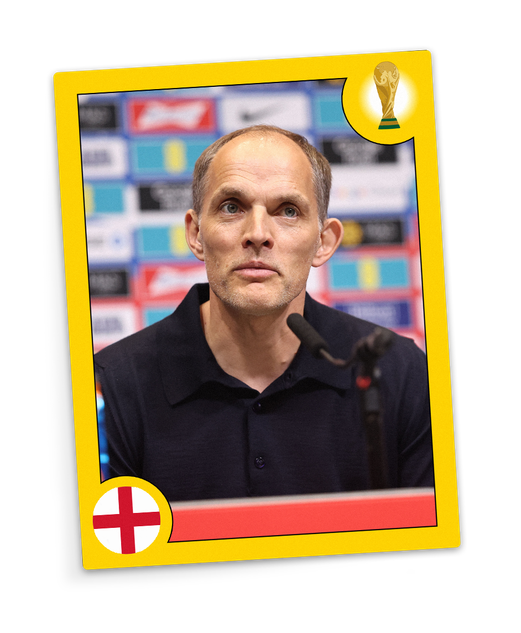
I hope, as ever, that despite everything, some moments of beauty and resistance, some slivers of a cosmopolitan utopia, will emerge from the World Cup: counterpoints to the forces of economic and political power that have so systematically colonised the game. Personally, I am looking forward to the delicious pleasure of watching the far right’s discomfort with the victory of an England team more multi-ethnic than ever, and led by a German. The World Cup is a dream space, and we are allowed to dream.
This essay is based on an article that first appeared on www.playthegame.org