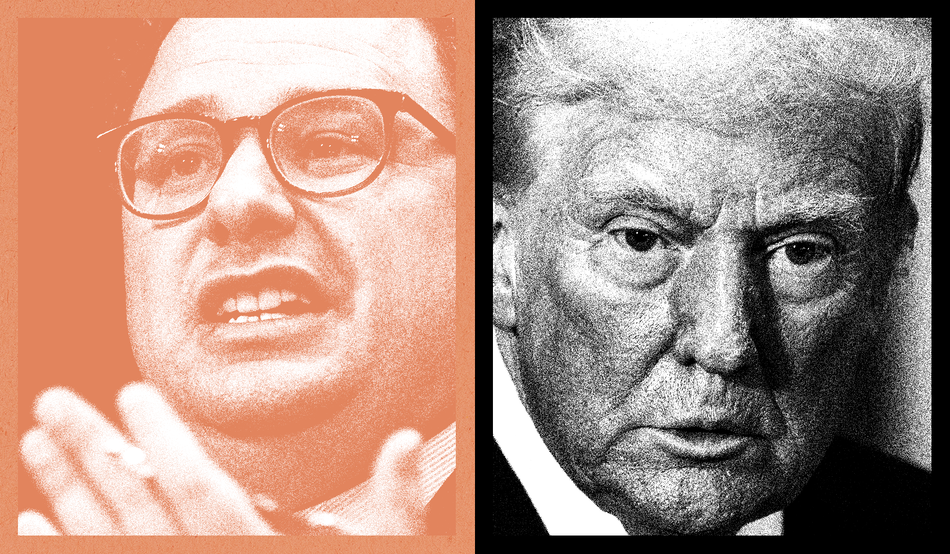
For the major US AI companies today, there are two big risks. The first is getting on Donald Trump’s bad side. The second, strangely, is having people believe your own hype.
Take Anthropic, creator of the popular AI chatbot and coding tool Claude. The company was launched in 2021 by dissidents from OpenAI as a more safety-focused and socially responsible alternative to the chatbot pioneer.
OpenAI, of course, had its own socially responsible mission when it was founded in 2015—to “benefit humanity as a whole, unconstrained by a need to generate financial return”. But it has moved away from many of its principles, creating a for-profit structure to enable a stock offering that might value the company at a trillion dollars.
Like OpenAI, Anthropic is a commercial juggernaut. It focuses on tools for software developers, led by its popular Claude Code product. But while OpenAI has been willing to try anything to make a buck—from inviting users to create AI-enabled viral videos with its short-lived Sora app to introducing ads within its free tools—Anthropic has been more discerning and willing to say no to usages of its technology. Specifically, Anthropic said no to Pete Hegseth’s “Department of War”, a decision that has had far-reaching consequences for the company and the world.
In late February Hegseth, the US defence secretary, demanded that Anthropic agree to “any lawful use” of its tools by the Department of Defense. But its CEO Dario Amodei objected to Anthropic’s tech being used for “mass domestic surveillance” or “fully autonomous weapons”, later commenting that he would prefer Anthropic not to work with the department if such work would “undermine, rather than defend, democratic values”.
That stance didn’t go down well with Hegseth or his boss, Donald Trump. Hegseth declared Anthropic a “supply chain risk—the first US company to receive this designation. It is usually reserved for Chinese telecoms companies like Huawei and ZTE, reflecting concerns that espionage capabilities may have been placed in their hardware by the Chinese government.
Trump took to social media to instruct the rest of the US government to stop using Anthropic’s tools as well. Anthropic has appealed the decision in US courts with mixed results—one federal appeals court has ruled for the company, and another against.
But standing up to the US government likely earned Anthropic some new customers. In 2026, Anthropic has taken market share from OpenAI, and some have speculated that its stance is helping it recruit and retain top AI talent. But the Trump administration continues to hold a grudge, as Anthropic learned with the release of its new product, Mythos 5.
When AI companies release new “foundation models”—the core large language models that power task-specific tools such as Claude Code or a web chatbot—they often warn about the world-disrupting potential implications of their new tools. OpenAI CEO Sam Altman routinely makes headlines declaring that OpenAI’s new models might threaten democracy by creating persuasive misinformation, or threaten global security with powerful cyberattacks.
These warnings should be understood as both sincere concerns about how models could be abused and a form of PR: “our tools are so powerful, they have to come with warning labels”. Virginia Tech scholar Lee Vinsel has called this phenomenon “criti-hype”. The term describes how we accept AI company claims about their products at face value and then critique them—demanding regulation or safeguards against their awesome power—thereby legitimating those same outsized claims.
With Mythos 5, Anthropic declared it so effective at finding exploitable bugs in existing software that it would only release the most powerful version to members of Project Glasswing—a select group of critical infrastructure providers and defenders including Google, Microsoft, Amazon Web Services and the Linux Foundation, so they could use the tool to identify and patch holes in their software. The rest of us have been made to settle for Fable 5, a version of Mythos made safe for general release.
And so the stage was set for Donald Trump to insert himself into the conversation about the future of AI. After insisting late last year that US AI companies “must be free to innovate without cumbersome regulation”, the president teased, then scrapped, an executive order that would have required AI companies to give the US government 90 days to review new models before public release.
Instead, tech companies are now asked to voluntarily give it 30 days for a new “cybersecurity clearinghouse” to review these models. If companies don’t “voluntarily” comply, they might face the nightmare Anthropic experienced on 12th June, when the US Commerce Department ordered it to suspend Mythos and Fable access to all foreign nationals, including those who work for the company.
Nominally, the ban was installed because the government was informed that Fable’s safeguards could be bypassed, giving adversaries access to the more powerful Mythos tools. The US government dropped these restrictions less than three weeks later, but it is clear to AI industry followers that the US government is willing to use trade restrictions to control who can access the most powerful AI systems.
The Anthropic ban also came at an opportune time for the emerging movement for “AI sovereignty”: the idea that AI systems are so important to a government or a company’s future that it is unwise to be dependent on another entity for those tools. The Trump administration effectively just made the case for every technology adviser urging governments from the Republic of Ireland to Israel to develop their own AI tools lest the US government cut off access.
Some are also thinking beyond AI. US-based companies control the great majority of cloud computing resources—the giant servers many companies rent to run their websites, inventory systems and databases.
A report by the Canadian Anti-Monopoly Project found that 85 per cent of that country’s cloud resources are controlled by three US-based companies: Amazon, Microsoft and Alphabet, Google’s parent company, and that the number is close to 70 per cent in most nations. The Trump administration’s feud with Anthropic may lead not just to a wave of national AI projects, but also of broader national information technology products.
If companies and countries no longer want to rely on the US, they will find ready suppliers in China. The 2026 AI Index report from Stanford University’s Institute for Human Centered AI bluntly states, “The US-China AI model performance gap has effectively closed”, noting that China’s DeepSeek briefly matched the top US models on a key index in 2025, and that the best model from Anthropic is now only a few percentage points ahead of the strong Chinese models.
Many of these Chinese AI models are “open”, which means that companies, universities and governments can download and run them on their own hardware, rather than relying on servers hosted in another country. If the future is AI sovereignty, at present it is likely to be built on Chinese code, not US systems.
Beyond the Great Power dynamic of the US vs China, there’s another, more intriguing possibility: that the Trump administration’s ham-fisted approach to AI regulation and China’s success in building homegrown models will rewrite the rules of AI development. As countries like Canada and France build sovereign AIs, perhaps we will see the rise of systems built around carefully chosen national texts and archives, embodying national values and priorities.
The current AI future is built on a pile of words scraped haphazardly from the internet by billionaires promising safe and careful futures while barrelling full speed towards both infinite profits and social calamities. By tripping up the American leaders of the AI race, the Trump administration could be creating room for alternative AI futures.