As I was about to go to sleep the night before Eid, I heard about an airstrike on a building in Gaza, not far from where my family is displaced. They are alright, but every morning and every night here in Dublin, I begin and end my day with the news from home while trying to make my future in Ireland.
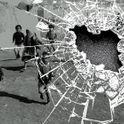
In the last year, around 80 Palestinians like myself have arrived in Ireland to pursue master’s degrees. Meanwhile, our families remain trapped in an ongoing genocide, despite the so-called ceasefire. In the past few days, Israel has increased its airstrikes on Gaza, including in my neighbourhood of Rimal, where a strike on a block of flats—in a street packed with shoppers looking for Eid clothes and sweets—killed at least seven people. It is hard to feel like celebrating anything with news like this.
On Wednesday, Muslims around the world marked the start of Eid al-Adha, the festival of sacrifice. For me and my Palestinian friends in Ireland the holiday came not as a celebration, but as a painful reminder of everything we have lost, despite our new opportunities.
I still remember Eid in Gaza before 2023. I used to spend long hours helping my mother and my aunt prepare ka’ak (date-filled biscuits). We’d shop for chocolates and coffee and carefully choose new clothes. These were rituals that made joy feel possible, however fragile.
During the war, I spent two Eids displaced with my family, in a small room in the Deir al-Balah area. My relatives, whom I normally visited each holiday, were refugees in different areas, and transportation to see them was expensive and dangerous. Food was scarce, the sound of explosions constant.
Whether in Gaza or Dublin, for the past three years Eid has become less a celebration than a reflection of collective grief. In Gaza, mothers mourn sons they have lost. Families sit atop the ruins of their homes. Others visit the graves of loved ones instead of exchanging holiday greetings.
In student accommodation my friend Ramez, who had often cooked for us during Ramadan in Dublin, sat at his desk on the day before Eid, preparing for his thesis. Like all of us, he had no plans to celebrate. We talked about our memories from Gaza: he remembered staying out late with friends and, after barely sleeping, being woken up early by his mother for Eid prayer.
There would be breakfast and coffee, then journeys from and to relations’ homes. Their father was paralysed and could no longer leave the house, so Ramez’s older brother would go in his place, visiting relatives across Gaza City, while Ramez stayed at home to receive guests. Of those visits, he told me, “You only know their value when they disappear.”
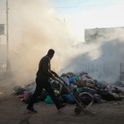
On the third day of the war, Ramez lost his family's home in al-Karama. Three months later, after some time without dialysis, his father died. After repeated displacement, Eid under bombardment was spent fetching water, searching for food, lighting fires so his mother could cook, and trying to keep life going.
“I still don't feel like I'm in a safe place,” he confessed to me. “I've been out of Gaza for almost a year, but I still feel like I haven't left it. My family is still there. Anything can happen to them at any moment.”
Like all of us, he feels guilty that his family did not leave with him. Guilty that all their struggles continue without us.
The night before Eid, some of us gathered for dinner after a day of fasting. We cooked lamb and rice together. My friend Ahmed reflected on his own memories. “Honestly, in Gaza, despite everything, there was a real feeling of life,” he said. “Back home, I would see children happy, go out with my brothers, visit my aunts and uncles, and gather with family.”
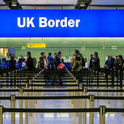
In Dublin, there are a small number of mosques we can go to for Eid prayers, but there is no public acknowledgement of this day. No family gatherings. No familiar faces. In Ireland the traditional three days of celebration passed like any other days. I joined a university meeting from a busy train; most of my friends worked on their school assignments or looked for jobs.
There is another burden for us that is harder to explain: trying to rebuild a life after surviving war. “You leave a genocide behind, and suddenly you’re expected to continue studying and deal with everything life throws at you,” Ahmed told me. “Mostly, I feel heartbreak… I can't celebrate with my family. I can’t sit with them. I can’t feel what family feels like anymore.”
Being far from Gaza means safety, but it also means the painful acknowledgement of the gap growing between ourselves and our loved ones. We try to remain Palestinians and Muslims, even as we try to be Irish.
This Eid, with loneliness, love and guilt, the first thing I did was call my family, first to see if they survived another night and then to wish them an Eid Mubarak. Then, I went about my ordinary day.