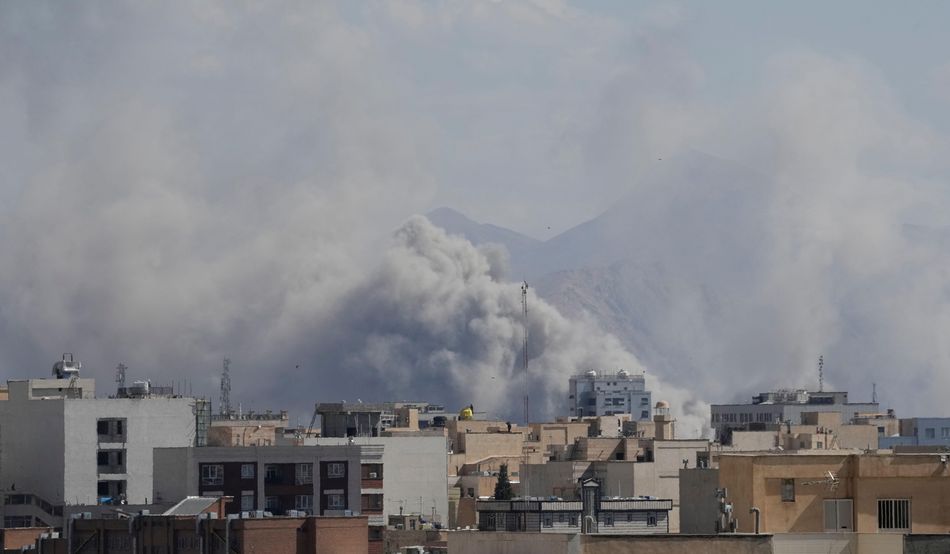
Late last Wednesday, Israeli TV channel i24 News ran a story claiming thousands of Kurdish troops in Iraq had launched a ground invasion of western Iran. The US and Israeli airstrikes that have been targeting Iran since 28th February are unlikely to topple the Iranian regime alone, but Washington and Jerusalem are keen to avoid sending in their own soldiers. One solution could be to mobilise Iranian ethnic minorities to fight instead.
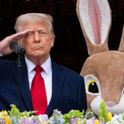
The story about a Kurdish invasion spread fast, repeated by outlets like Fox News and the Jerusalem Post, appearing to confirm the narrative that spread across western media last week: that Kurds have been armed by the CIA and are poised to spearhead the invasion. Donald Trump even offered “extensive US air cover” to any Kurdish ground operation. But as representatives from the major Iranian Kurdish parties quickly denied any such operation, it became clear that the news was false, and may have been part of a tactic to thrust Kurds into the spotlight and manufacture public pressure to force military action.
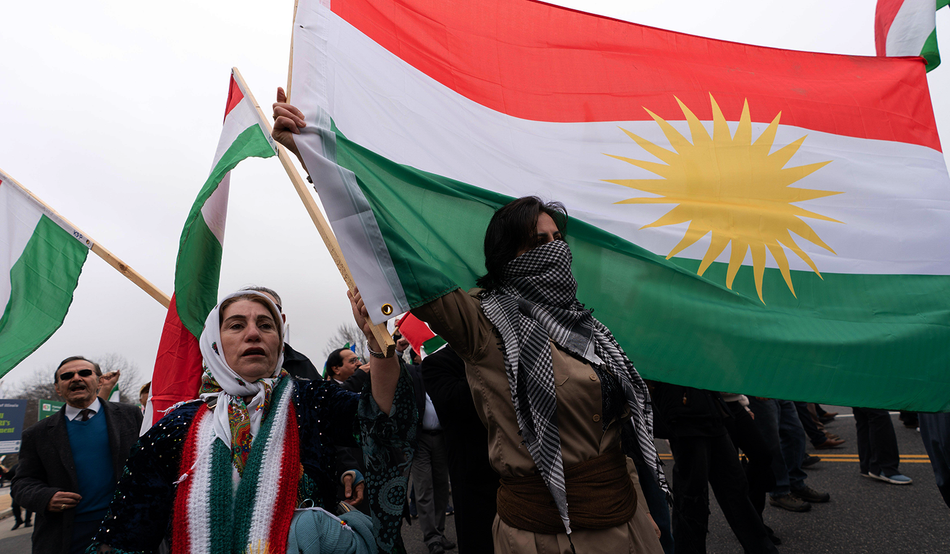
Kurds represent some of the most organised political opposition in Iran, with proven combat experience after fighting Isis and leading decades of guerrilla warfare against Iran in the Zagros mountains. Kurds participated in uprisings against the Iranian regime in January and it was in Iranian Kurdistan where nationwide protests began in 2022, in response to Jina Amini’s death in Tehran after refusing to wear the hijab. The slogan “Jin, Jiyan, Azadi” (“Woman, Life, Freedom”) spread from there around the world.
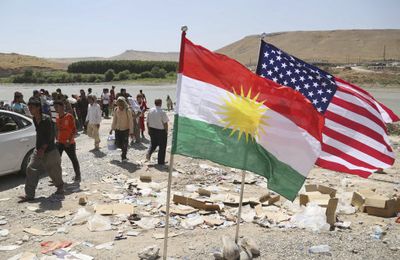
Kurdish groups and Americans have worked together in Iraq for more than 30 years, and fought Isis side by side for more than a decade in Syria. The concentration of airstrikes on police, intelligence and military buildings in Iranian Kurdistan hints at a strategy built around Kurdish cooperation. But so far, Iranian Kurdish parties have exercised caution.
The west has often treated Kurds as pawns for its own imperialist interests in the Middle East. Recent Kurdish history is littered with examples of betrayal. They were promised a homeland by western powers at the 1920 Treaty of Sèvres only to have it cruelly taken away three years later at the Treaty of Lausanne. Kurds were left the largest stateless ethnic group in the world, divided by the borders of Turkey, Iran, Iraq and Syria, where their culture, language and existence has been denied and persecuted. Kurds also talk about similar betrayals in 1946, 1975, 2003, 2017 and 2019. In a recent letter, Iraq’s Kurdish First Lady Shanaz Ibrahim Ahmed demanded Trump “leave the Kurds alone”, reminding people of 1991, when America urged Kurds to revolt in Iraq but then “abandoned” their allies when “priorities changed” and Saddam crushed the uprising. This January, the US again turned its back on an alliance with Kurds in Syria and allowed President Ahmed al-Sharaa to invade Syria's formerly autonomous northeast region, reportedly executing and kidnapping Kurdish civilians along the way.
Moreover, it’s unclear whether Turkey will tolerate an increase in Kurdish nationalist activity on its border; an end to a bitter 40-year war with the Kurdistan Workers’ Party is currently being negotiated and the Rojava revolution is being integrated into the Syrian state. Others are wary of the backlash from Iran if any attack fails. Kurds alone could not take down the Iranian state. To achieve this end, uprisings by the Baloch people in the south, Azeris in the north and Iran’s Persian majority would likely be needed too.
Kurds are biding their time. For months, the main Iranian Kurdish parties have been strengthening their cooperation. In January, in response to the protests, they called for a general strike which 39 Kurdish cities and towns joined. On 22nd February, five of the seven main Kurdish parties in Iran came together to form the Coalition of Political Forces of Iranian Kurdistan. The coalition agreed to work towards overthrowing the Islamic Republic of Iran, realising “the right of the Kurdish people to self-determination” and laid the groundwork for further political and military cooperation and a constitutional framework for a post-revolution Kurdish region in Iran.
The parties appear to think this is a historic opportunity they do not want to miss. Their caution should not be mistaken for timidity. Two of the largest parties—the Kurdistan Free Life Party (PJAK) and the Democratic Party of Iranian Kurdistan (KDP-I)—have affirmed their forces’ readiness and refuse to rule out future intervention. In one sense Kurds are already involved, caught in the crossfire: the headquarters and military bases of the Komala party, the Kurdistan Freedom Party and the KDP-I in Iraq were all hit by Iranian airstrikes last week.
A glimpse of future action in Iran by Kurds may be revealed by looking at PJAK. It follows the ideology of the Kurdistan Workers’ Party, which provided the foundation for the women's revolution in Rojava, northeast Syria. With a network of tunnels along the Iran-Iraq mountain border and political influence that has grown since its establishment in 2004, PJAK is the most combat-ready Kurdish armed group in Iran.
In a statement last Wednesday however, PJAK called on Kurds in western Iran to form local committees to fill gaps where the Iranian state is withdrawing, and organise self-defence. This call echoes the early years of the Arab spring when Kurds achieved autonomy in Syria in a similar fashion, with little military intervention as the Ba’athist state collapsed.
PJAK say it is seeking a “third path”, rejecting the false dichotomy Trump presented to Iraqi Kurdish leaders when he reportedly told them they must pick Iran or America, and instead focusing on regional autonomy for the 10m Kurds in Iran.
“We cannot take the side of either the Americans or the Iranians. Our goals are different... a democratic and decentralised Iran that guarantees the Kurds and other people's right to self-determination,” Mazloum Haftan, a senior PJAK commander, told The New Region.
Over the weekend Trump appeared to roll back on his earlier position, telling reporters, “The war is complicated enough without having... the Kurds involved.” This doesn’t mean Kurdish parties will do nothing. It is more likely that they hold back, waiting for popular uprisings to destabilise the regime in western Iran, and for the inevitable Iranian crackdown that would follow, before armed Kurdish groups intervene on their terms in the name of self-defence. But for now they sit tight, trying not to get dragged into a confrontation that serves the United States’ and Israel’s interests.