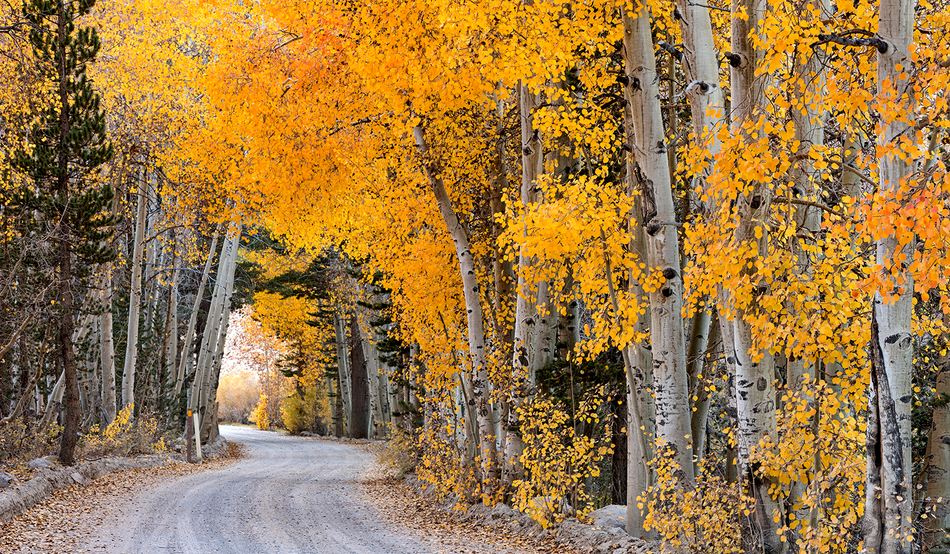
And then, just like that—the slanted light, the longer shadows, the leaves all aflame—autumn catches us by surprise us once again. Odd, really, given its impressive record of arriving every year. But after the nightmarish heatwaves of summer, there is relief in finding that nature retains the power to delight as well as terrorise us.
This autumn, for the first time in nearly a quarter-century, I am living where I grew up: northern California. I had expected this homecoming to be complicated—I’d tried fruitlessly, over the years, to outrun the painful memories bound up with this place and cure myself of longing for it.
“It is possible,” the literary critic James Wood writes, “to miss home terribly, not know what home really is anymore, and refuse to go home, all at once.” That was my predicament—and the knot I had come back hoping to untangle. What I hadn’t counted on was just how readily California autumn would begin to help.
The first unexpected gift came before I’d even left the jet bridge. Amid the acrid rush of exhaust and Citibank posters selling far-flung adventure, I caught my first whiff of San Francisco Bay. Salt-water docks, wetland marshes, distant redwoods—all those littlest of molecules mingling into a bouquet I would know anywhere. My cells danced for joy: home.
In this, I have learned, I am not so different from the Pacific salmon that begin their lives in the freshwater rivers and streams near here. For they, too, recognise the distinctive chemical signature of the waters where they are born, only to use that scent to navigate back from the open ocean years later. Attachment to the places of childhood is like that: visceral, pre-rational.
And then there is the sheer pleasure of the seasons being back in their rightful place. After years of Christmases in flip-flops, Easters in autumn and Halloweens amid daffodils and bright green shoots, it’s absurdly satisfying that time itself has started making sense again.
For that is one of the curious things about living in a hemisphere different to the one in which you were raised: you discover just how deeply the meaning of things is coloured by season and place. The calendar says one thing, while your body is always saying something else.
This year, the cosmic dissonance ends: my kids will have paraded their Halloween best against a carpet of fallen leaves.
And so I have been relishing all the many things that simply feel right: the plants, the play of the light, the feeling of the distances—across the bridge to the city, the rolling hills to the north where I grew up, and Mount Tamalpais, which held my childhood in its shadow.
At the summit, it still wears that tiny little top hat I remember so clearly—a ranger’s station whose square geometry interrupts the mountain’s perfectly soft and sloping silhouette. There it is, looking exactly the same, as though I’d never missed it. And yet I have missed it. While the mountain and its hat appear unchanged, a chasm separates me from the young adult I was when I left here.
I became a mother, a professor, a writer, a person whose relation to the past has only grown more complicated over time. It is one thing to feel yourself at home in a place and another to know how to be there. Rootedness, after all, is more than a private feeling.
As Simone Weil taught, it involves taking part in a community that acts together to keep its past alive by reaching toward a specific future. This is precisely the complex work I am busying myself with now. And I have the distinct feeling that there’s a lot of catching up to do.
Thankfully, though, that’s only my problem. My children, raised in Santiago, are discovering a California unencumbered by memory and nostalgia.
Their first shock was that the houses here have no gates: the neighbours could walk straight up to our front door! They felt exposed but have since adjusted, and are now throwing themselves enthusiastically into acquiring the local use of “bro” and “dude”.
I, meanwhile, relish the sound of so much spoken English—just the sheer, glorious quantity of it. For them, California is happening entirely in the present, while I toggle between tenses, trying to figure out who I might be here now.
Again, autumn helps. Its return, year after year, makes time’s implacable forward march seem almost friendly, even gentle. The same light, the same scents, the same shortening days—all living things adjusting together as our tilted Earth laps the sun.
For an instant, time itself seems to stand still. But it hasn’t. The season returns; we are changed. And while there is cruelty and heartbreak in time’s passing—it leads only one way for us all in the end—there is something lovely in it, too. That’s what fall invites us to see.
And so I do my best to take up the invitation. I linger a little too long in the last of the afternoon sun, watching the monarch butterflies flit among the Mexican sage blooming purple in our front yard. For the moment, I don’t much feel like going inside. I find, to my surprise, that I am content to be just where I am.