Two frogs in a saucepan. “Nice warm water we’re getting, isn’t it?”, says one. “Yeah, can’t get hot enough for me, I say!”, says the other. A little while later, they’re cooked.
Two people on Facebook. “We used to call it summer back in the day”, says Matt during last week’s record-smashing May temperatures. “Actually shocked it’s not been named something stupid like solar storm Glenda”. “It’s summer shop [sic] moaning”, says Vickie. Only, it wasn’t summer—it was still May. A May that was only 0.7°C cooler than the hottest day last summer—the warmest summer since records began in 1884. And a May that reached 35.1°C, 2.3°C hotter than the previous May record (32.8°C set in 1944). There is nothing normal about what just happened. In a little while, we’ll all be cooked.
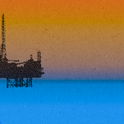
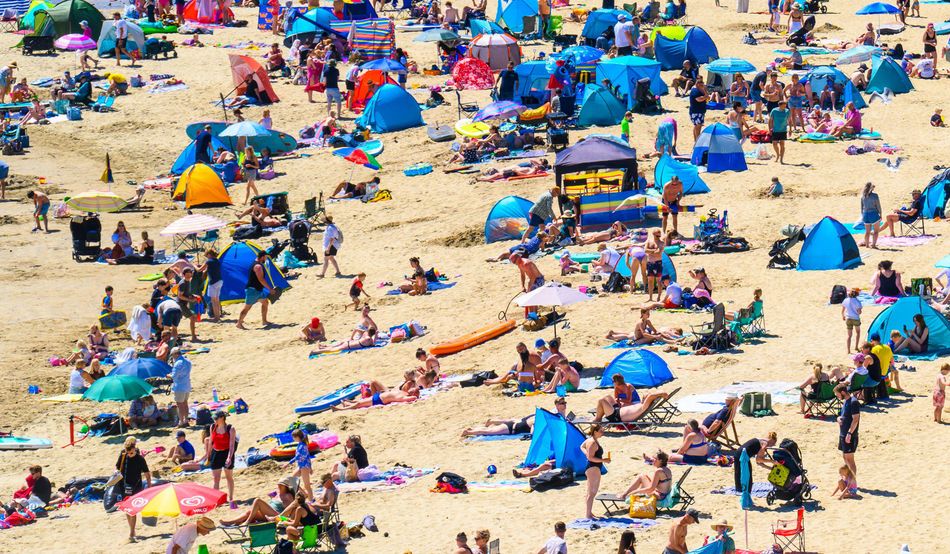
As a society, we are ignoring the urgency of this crisis. As Alan Rusbridger wrote in these pages last week, we missed the year’s biggest story because it was hidden in the papers among “pictures of joyful kids leaping into lidos to celebrate the warmest May on record! Beachgoers basking in the glorious sun! Hotter than Barbados! RUM-BELIEVABLE!”. Tony Blair chose the same week to release an essay and 10-point agenda urging the government to “use what is left of our North Sea oil and gas resources” because it is “essential for our competitiveness and for taking advantage of AI”. And on 24th May, as the heatwave struck, Robert Colvile used his Sunday Times column to bemoan “our neglect of the North Sea” oil fields, and the decline in our number of oil refineries. “Industry figures suggest that the new field at Jackdaw could be pumping out gas by Christmas, with oil from Rosebank following in the new year,” he said. The message being, drill baby, drill!
Colvile’s limp coup-de-grâce was that net zero (a phrase which, as Simon Sharpe writes for Prospect, is an easier political punchbag than its synonym “tackling climate change”): “would be all very well if we weren’t importing a quite staggering volume of fossil fuels, and fossil fuel-derived products, to run our cars, our kitchens, our industries and our agriculture. In short, our lives.” But there are immediate fossil-fuel-free alternatives to all of these. For our cars, there are EVs. For our kitchens, induction hobs. For our industries, electrification (yes, even steel smelters). And in agriculture, there are organic regenerative methods. In short, our lives can avoid being cooked.
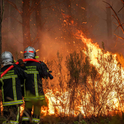
Of course, our past pollution is already having dire real-world climate consequences. Last week, India and Pakistan saw temperatures top 46°C, with some areas running between 5 and 8°C above seasonal norms—extremely likely to have been caused by manmade climate change. India Today reported that a five-day heatwave could now be “associated with nearly 30,000 deaths, many times the number the government records in an entire summer”. More than 60 per cent of the United States was officially in drought by mid-May. Meanwhile, the coming 2026 El Niño—defined by a sustained warming of sea surface temperatures in the Pacific which disrupts global weather patterns—is expected to be the strongest in decades, if not ever. The conditions it creates “will pour fuel on the fire of a warming world,” warned UN Secretary-General António Guterres on 2nd June, adding that we “must treat it as the urgent climate warning it is.”
Meanwhile back in dear old England, a surprising voice piped up this week, finally acknowledging the damage climate change is having here, too. Appearing on Times Radio, Jeremy Clarkson—the veritable pin-up idol of Middle England—admitted that, in his days in London as a Fleet Street hack, he was barely aware of the seasons. “It was either winter or summer,” he said. Now an Oxfordshire farmer, he told presenters Kate McCann and Stig Abell, “last year we had the driest spring ever and we had the second worst harvest in terms of yield since records began… That was once in a lifetime… and [yet] it is happening again.” He added, “Look, it took me a long time to get my head around climate change… [but] in the last seven years it's changed, the weather. Records are broken every day, so there’s no question that it’s changing.”
When pressed whether this kept him up at night, however, he said no: “there’s absolutely nothing I can do about it”.
This is no time for complacency, however. Just before those record temperatures were being recorded at Kew, the Gardens opened a new exhibition highlighting that the summer of 2022, which set the overall UK temperature record of 40.3°C, killed 400 trees there. One of them, a large oak, has been painted red for the event’s duration. “We’re going to be very clear in the messaging: this was killed by climate change”, Richard Deverell, the chief executive of Kew Gardens, told the Times. “Climate change is here and now and it is killing oak trees, the iconic tree of Britain.”
The Met Office say another 40°C day is now “over 20 times more likely than it was in the 1960s” with temperatures of even 46°C degrees now “plausible” on these shores. They used to call it summer, back in the day. Only, it was summer. And the temperatures didn’t kill ‘em.