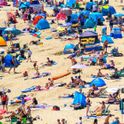
How will history judge this week’s front pages? The pictures of joyful kids leaping into lidos to celebrate the warmest May on record! Beachgoers basking in the glorious sun! Hotter than Barbados! RUM-BELIEVABLE!
Did editors not pause to think, “There’s something a bit jarring here?” That these increasingly common freak weather events may frighten people more than cheer them? That it may be time to reassess the fluid concept of “news values” when it comes to the climate crisis?
Covering the science, economics and politics of global warming is difficult—and may explain why arguably the most important story of the year received barely a flicker of interest. We’ll come on to that.
But first, it’s worth asking why climate change became part of the so-called culture wars. How did it come to pass that to be on one side of the “argument” was “woke”?
When it comes to tackling cancer or other diseases which threaten life we, by and large, leave scientists to get on with the job—and may even cheer them from the sidelines. But some journalists are much less willing to give climate change scientists the benefit of the doubt.
Facts matter less than which side you’re on.
For many years, one of the most prolific commentators on climate change in the British press was a Spectator critic called James Delingpole. He had an English degree from Oxford and a sub-Wodehouseian gift with words, which he still deploys in writing about television. He was also an out-and-out climate change denier and ignorantly opined on the subject for the influential Trump-adjacent news website Breitbart.
He would regularly tell the readers of the Sun, the Express, the Mail, the Telegraph, the Spectator and other outlets that global warming was a hoax and that people who pretended otherwise were “crooks, liars, idiots or shills.” He made a good living out of it.
And then there was Christopher Booker, a commentator for the Sunday Telegraph with a Cambridge degree in history, who for years was allowed to spout rookie nonsense on the subject. He was billed as a “Fleet Street giant” by editors who must have known that he was, in fact, often deceiving the public.
It was as though journalism had a death wish. Just as our craft was suffering an existential crisis due to the ability of billions of people to self-publish, we went out of our way to give them reasons not to trust us, the supposed professionals.
On the one hand, we were telling people that journalism was a craft. Unlike all the headbangers on social media, we had a toolkit for getting to the truth by following the facts. You should trust us, not them. On the other hand, when it came to arguably the most important issues of our time, we published people who didn’t give a toss about the facts.
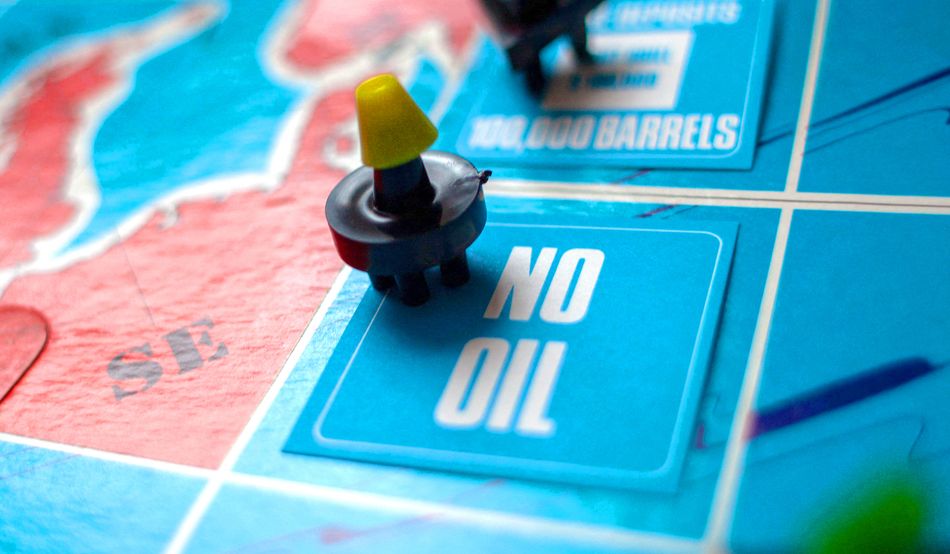
There’s less outright climate denialism in mainstream media today. But there are still oceans of climate scepticism. A thousand different excuses for attacking net zero as a goal. A dozen different ways of suggesting Ed Miliband is a bonkers fanatic. Hundreds of deluded articles arguing that, if only we could restart drilling for oil and gas in the North Sea, our energy prices would immediately plummet. Even Tony Blair has jumped on that particular bandwagon.
And then there’s the stuff we quietly ignore.
Six weeks ago, a group of scientists published an alarming paper which should, by rights, have featured on most front pages and high in most news bulletins. In the Guardian it appeared under the headline “Critical Atlantic current significantly more likely to collapse than thought”. In the Independent, it was headlined “Vital Atlantic current likely to collapse with catastrophic consequences, scientists warn”.
Most news organisations, however, ignored the story.
Now, there are reasonable excuses. The original paper, in a journal published by the American Association for the Advancement of Science, is virtually incomprehensible to the average reader. You’d need a highly scientifically literate journalist to begin to do justice to such findings. Many news organisations can no longer afford to employ a wide range of specialists.
Next, the language of the original paper was carefully nuanced. It did not make for a full-blown Shock Horror! headline. And that’s not good if your news organisation is geared up for clicks and viral content.
Some editors would no doubt further argue that their readers don’t really want to read about climate change. Psychologists acknowledge that many people find the subject too alarming and do their best to avoid it. The day I looked at the Guardian story it featured nowhere in the list of top ten reads. Top of the honours board that day were Meghan and Harry.
In an age before newsroom metrics, editors felt freer to publish stories they felt their audience should read as opposed to the ones they wanted to. Nowadays, that’s easily dismissed as paternalistic self-indulgence.
But there are less defensible reasons for ignoring such stories. To put it kindly, there is little chance of confusing the average billionaire media baron with Greta Thunberg. Several have been quite vocal in dismissing the overwhelming scientific consensus over global warming. Even more so, once Trump made his second coming.
Ambitious would-be editors working for such people don’t need to be told what line to take in covering climate change: they read the room.
A combination of all these factors has led us to where we are today. We celebrate cuddly David Attenborough’s milestone birthday. But, as fellow colleagues in the information business, we’re collectively doing a pretty mediocre job.
We’re downplaying the stuff that should be banner headlines. We’ve been trapped into thinking of climate change as woke. We—wrongly—think our readers don’t care. And when we get the hottest May on record we, once again, miss the real story.