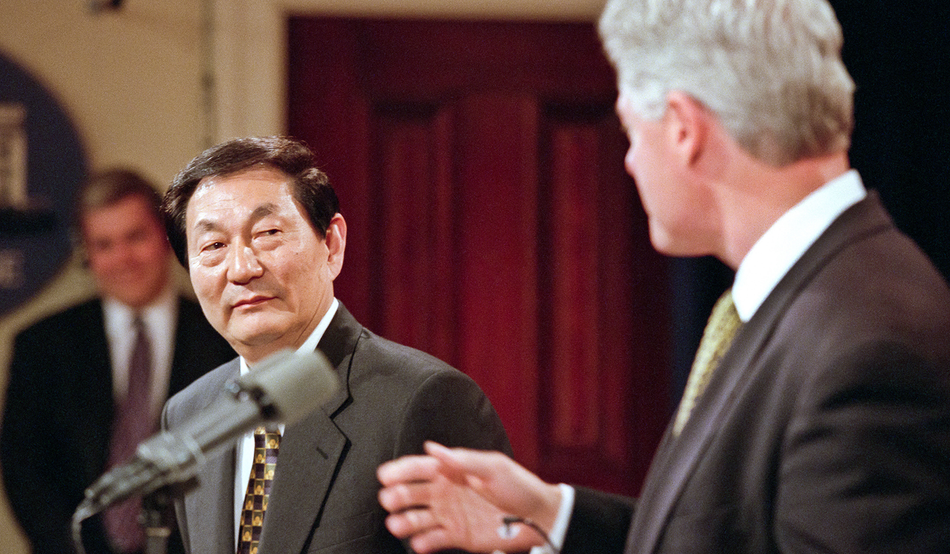
There is a temptation when a public figure dies to indulge in collective nostalgia. But celebrating past achievements can also highlight present disappointments. Nostalgia was much in evidence in China as citizens remembered Zhu Rongji, the former Chinese premier who died aged 97 in August after a life of exemplary public service. As citizens recalled the 1990s, when Zhu’s economic reforms changed many lives for the better, there was also an unmistakable sense of regret for the loss of optimism today.
Zhu, a protégé of Deng Xiaoping, the architect of modern China’s economic reforms, helped to set the country on a path of dizzying growth and development. It was a time of hope and cautious political liberalisation: in 1998, when Zhu praised a television series that exposed bureaucratic corruption, he seemed to signal that after the many nightmares of Mao Zedong’s dictatorship, China would become a more open and less repressive place to live.
Today the optimism that accompanied Zhu’s reforms is replaced by a simmering and sometimes truculent disappointment as China’s once-buoyant economy slows. The promise of future prosperity is increasingly faltering for many of its citizens. And in one of history’s many ironies, at least some of today’s unease can be traced back to the unintended consequences of some of Zhu’s successful reforms.
In 1978, when Deng brought Zhu back from internal political exile, both were men in a hurry. They had been engaged in a decades-long ideological struggle with Mao, who had justified his repeated and often brutal purges with the charge that men like Deng wanted to “take the capitalist road”. Zhu’s career was to suffer from similar accusations.
Orphaned as a child, Zhu was raised by two paternal uncles, going on to win a place at the elite Tsinghua University in Beijing. In 1949, the year the Chinese Communist Party came to power, he was admitted to its ranks.
An engineer by training, Zhu built his career in administration and economics, joining the State Planning Commission after graduation. He was quickly promoted but met his first political roadblock in the mid-1950s, when his criticism of Mao’s economic policies saw him branded a “rightist” and later expelled from the party during the 1958 Anti-Rightist Campaign. This “rightist” label was removed in 1962, but it was impossible in Mao’s China to fully recover from political disgrace. Between 1970 and 1975, in the midst of the Cultural Revolution, Zhu was sent to a school for banished party members, where he was forced into manual labour and “reeducation”.
With Mao’s death in 1976, however, Zhu’s prospects brightened again.
Deng was impatient to initiate economic reforms and open China up to the outside world, courting inward investment and a place in global markets. In 1979, he appointed Zhu to a role in the State Economic Commission, an entity that managed China’s industrial production, transport and economic planning. Once again, Zhu was rapidly promoted and in 1983 became vice-minister of the commission. From there he was appointed mayor of Shanghai where, unlike the central authorities in Beijing, he successfully managed the 1989 student protests without bloodshed. He was rewarded in 1991 with the position of vice-premier of the State Council and a year later joined the all-powerful Politburo Standing Committee.
The political scientist Minxin Pei calculates in his book, China’s Trapped Transition, that Zhu’s economic policies led to an eightfold increase in the size of the Chinese economy between 1978 and 2002, along with a 600 per cent increase in per-capita income over the same period.
Zhu steered China through the 1997 Asian financial crisis and weathered the political blowback from mass layoffs following the painful reform of China’s state-owned enterprises. Promoted to premier in 1998, he pursued what many consider his most important achievement: securing the necessary global support for China’s 2001 entry into the World Trade Organization, which helped Chinese exports soar from $253 billion in 2000 to $1.65 trillion in 2010.
He finally stepped down from public life in 2003 and enjoyed a retirement of largely cultural pursuits until his death.
China is still struggling with the long-term consequences of that bargain
Zhu’s work was foundational to propelling China into its current position as the world’s second-largest economy. But it was Zhu’s earlier reforms on tax and banking that have come back to haunt Chinese leaders today. In trying to bolster much-needed funds for central government projects in the early 1990s he had pushed through a recentralisation of tax revenues from provincial authorities. But to get their agreement he struck a deal that allowed provinces to set up their own banks, raising and spending revenues without close supervision from the central government. China is still struggling with the long-term consequences of that bargain.
Provincial governments compensated for the dramatic drop in their tax revenues by embarking on a building spree. New roads, bridges, business parks, airports and housing rose up across China, creating a property boom that, for several years, appeared to make the provinces and citizens rich. Local governments had the power to re-zone agricultural land and lease it to developers, collecting revenue from the land lease and taxation on completed housing and commercial projects. Over two decades, China’s property companies, in particular Evergrande and the Tomorrow Group, became behemoths. It was a disaster in the making.
The crash, when it came in 2021, was devastating. China’s middle classes had thrived in the decades of rapid economic growth, and many had seen property investment as a rational choice: bank interest rates were miserable, many mistrusted the stock market and property prices just went on rising. Until they didn’t: Evergrande and other developers slowly collapsed under a mountain of debt, leaving thousands of properties that had been paid for in advance unfinished. The collapse of the market destroyed an estimated $18 trillion in household wealth, wiping out the life savings of millions of citizens.
One prominent Chinese economist recently described the crash as the most severe housing market crisis in human history. It was worse, he said, than the US subprime collapse. It left local governments not only burdened by debt but without the property development income that they had come to rely on.
The central government has encouraged industrial production to keep the economy growing, but in the long shadow cast by the property collapse China is producing far more than it can consume at home. Its surplus production is flooding into export markets, causing shockwaves to economies around the world.
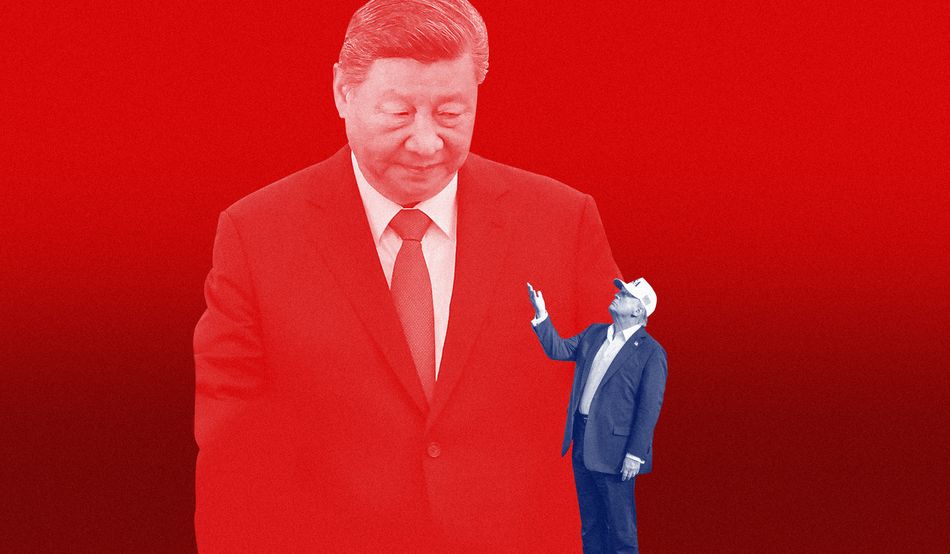
Is Zhu to blame for this rolling crisis? One consequence of the bargain he struck, allowing local authorities to set up their own financial institutions and conduct their own affairs, was that Beijing did not fully audit local finances until 2013. By that time local and provincial debt had grown alarmingly. Today, China is locked into a strategic competition with the United States and is heading for a showdown with its major market in Europe as “China shock 2.0” reaches crisis point.
But to blame Zhu is to miss the point. His policies made sense at the time. The difficulty was not that they were ineffective but that his successors failed to deal with the unwanted effects. Perhaps the real lesson from Zhu’s career is that few of those who followed him had his ability to diagnose problems and the skills required to negotiate timely and effective responses.