Every now and then a word comes along with a charming provenance. Veep, meaning a vice president or second-in-command, is one of them.
Formed from the initials VP for “vice president”, it was first coined in 1949 by Alben Barkley, the Democratic politician who became affectionately known as the Veep when he served under Harry Truman as the 35th vice president of the United States from 1949 to 1953.
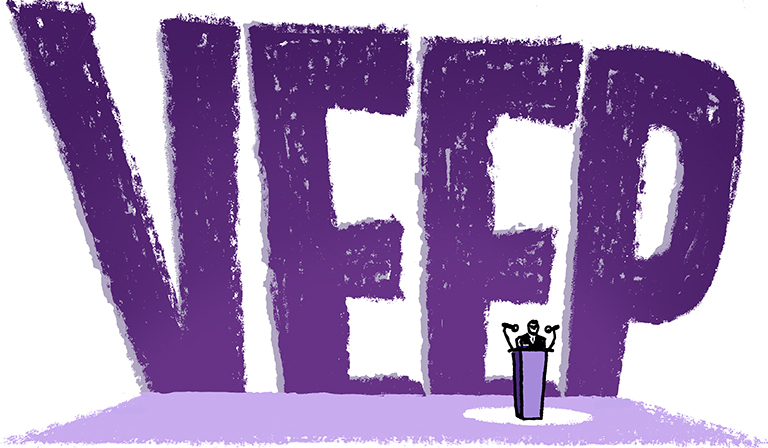
Looking back on his life, he recalled how his nickname started: “Everywhere I went people would say, what should we call you? One night I was out at my daughter’s—she had four boys—and the youngest kid says to me, ‘Gramps, why not put two little Es in there between those two big letters and call it VEEP?’” Barkley announced the name to the press corps the next day, and thus veep entered the national lexicon.
Just because someone calls themselves something does not guarantee the success of the word—think Snoop Dogg’s attempt to rename himself Snoop Lion. The word veep may have caught on in the mid-20th century because it was influenced by the sound of another popular term at the time: jeep, a sturdy four-wheel drive army vehicle, named in 1940 after the initials GP for “general purpose”. Veep would have also been helped by the coining in 1952 of veepstakes, a blend of “veep” and “sweepstakes”, to describe the notional competition among politicians to be chosen as a party’s candidate for vice president.
Popularity of the term spiked from 2012 to 2019 because of the success of the American comedy show Veep, which followed the daily political games of a fictional female vice president of the US, Selina Meyer, played by Julia Louis-Dreyfus. The show won several Emmys and inspired countless memes and shitposts when Biden endorsed his veep, Kamala Harris, as the Democratic nominee in 2024. Veep Meyer’s refrain to her PA—“Sue, did the president call?”—became a catch cry for the essence of a veep: a middle-aged woman who is capable of leading the whole organisation but finds herself ignored and kept out of the real power-broking and decision-making—until some unexpected drama happens. The veep steps in and cleans up the mess, but usually only until some other president can take the reins again.
Could the word be making a comeback in the corporate sector? We have already seen headlines in the Financial Times following the abrupt dismissal of Laurent Freixe: “Nestle’s CEO ousting makes case for corporate ‘veep’”. Could the veep-less BBC learn from the void created by Tim Davie’s sudden departure, and include a new veep in its restructuring?