Andy Burnham has a chance most new prime ministers never get: to redefine the UK’s role on the world stage at the exact moment the world needs a country willing to lead differently. The defining challenge of our age is that crises no longer arrive one at a time. Conflict drives displacement. Climate change fuels food insecurity and wrecks infrastructure. Epidemics divert scarce resources from routine care. These shocks compound one another, cascading across borders, and are now simply the conditions in which governments must operate. A new prime minister does not get to choose whether to face that. He gets to choose how the UK responds, and whether the systems needed to withstand the next crisis get built before it arrives, or after.
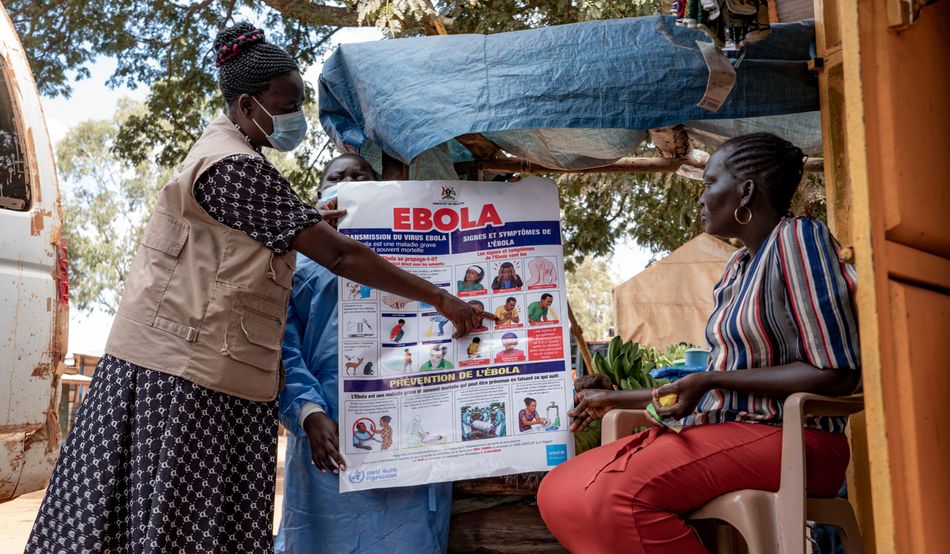
Consider what is happening right now in eastern Democratic Republic of Congo, where years of armed conflict had already emptied clinics and undermined public health surveillance. When Ebola began spreading there in May, it found a health system already weakened by years of conflict. And it has since become the largest and deadliest outbreak the country has ever recorded: nearly 5,000 infected, more than 2,300 dead, surpassing the previous record set between 2018 and 2020. A related cluster crossed into Uganda, but was contained within weeks. The virus was the same. What made the difference was the health system around it.
The lesson is bigger than Ebola: outbreaks become harder to contain in places already weakened by conflict, displacement or poverty. The UK helped build the surveillance networks and vaccine alliances that make containment like Uganda’s possible. That expertise still exists. The question is whether Burnham’s government is willing to keep investing in it.
And Ebola is only one example of what happens when crises collide. Hospitals targeted in conflict zones mean women give birth without skilled care. Floods that destroy roads and clinics halt vaccinations. Drought that forces migration lets disease spread faster. Each looks like a separate emergency, with its own summit, its own department, its own news cycle. But they all arrive at the same door: a person trying to get care, and a system trying to hold. Health is where every crisis becomes visible.
Investing in health systems abroad is not charity. It is solidarity that happens to also be self-interest
The better question, then, isn’t which crisis deserves our attention most. It’s which investments help people withstand all of them at once. A resilient health system saves lives whether the emergency is a hurricane, a war or a pathogen nobody has named yet. This offers a rare thing in politics: a choice that pays off regardless of which future arrives. Countries with strong primary healthcare, real surveillance, trained health workers and reliable supply chains recover faster from shocks. Investing in resilience is cheaper than responding once disaster unfolds, and reduces the cost of the next global shock.
The UK knows how to do this. For much of the past two decades, the country earned international respect through its leadership on global health: helping build vaccine alliances, strengthen disease surveillance, and support health infrastructure across lower-income nations. That reputation has been weakened in recent years, but Burnham’s government has something rare: the chance to decide what kind of country the United Kingdom wants to be. Investing in health systems abroad is not charity. It is solidarity that happens to also be self-interest: protecting lives, strengthening international partnerships and rebuilding the UK’s credibility as a country willing to tackle problems that no country can solve alone.
Politics often rewards leaders who respond dramatically once disaster strikes. Far less credit goes to the quieter work of preventing crises from becoming catastrophes. That is where the UK can lead: investing in partnerships that strengthen local health systems, championing preparedness over perpetual emergency response, and treating access to healthcare as a foundation of a more stable, safer world for everyone in it.
The next global emergency will almost certainly wear a different face: a novel virus, a failed harvest, another armed conflict. But it will reach the same place: an overcrowded clinic, an exhausted nurse, a patient who can no longer get the care they need. Governments cannot do this alone. Lasting political change depends on whether the public sees global health not as someone else’s problem, but as a shared concern. Burnham’s task is not to predict which crisis comes next. It is to make sure the UK is helping to build a world ready for it.
Call on the Prime Minister to stand for healthcare #InEveryCrisis