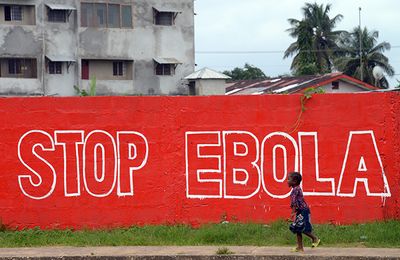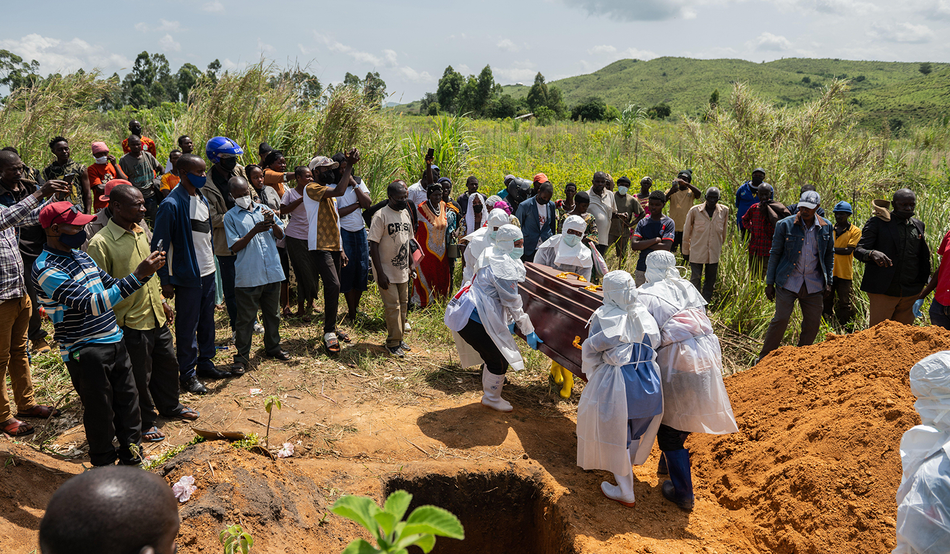
When the World Health Organization (WHO) declared the latest Ebola outbreak in the Democratic Republic of the Congo (DRC) and Uganda a public health emergency of international concern earlier this month, it created a sense of deja vu in global health circles. Yet for many observers, the decision will also have come as a surprise.
Ebola, after all, is no longer an unknown terror. When it was discovered in 1976, it was one of the most feared infectious diseases, with mortality rates that initially approached 90 per cent. The 2014–16 West African epidemic, which claimed more than 11,000 lives, reinforced these fears. However, it also spurred unprecedented investment in preparedness. We hoped that the world had learned its lesson.
In many ways, it had. Over the past decade, there has been significant progress in controlling Ebola. Public health systems have refined contact tracing, monitoring exposed individuals for 21 days to identify new cases quickly. Isolation protocols are stronger and better understood. Above all, ring vaccination strategies (targeting all those around identified cases) with vaccines that confer immunity within two weeks have transformed responses to the most common strain of Ebola, Zaire. These advances have enabled recent outbreaks to be contained far more rapidly than before.
So why, in 2026, are we once again facing a situation serious enough to merit a global emergency?
The answer lies partly in the nature of the virus itself. This outbreak is caused by the Bundibugyo strain, not Zaire, against which current vaccines were developed. Four of the six known strains can infect humans; the others are the Sudan and Taï Forest variants, each with distinct characteristics and, crucially, different responses to treatment and prevention.
This matters enormously. The tools that have underpinned recent successes are largely unavailable for Bundibugyo. There is no approved vaccine, no established treatment, and standard diagnostic tests initially failed to detect it, allowing the virus to spread unnoticed. Health workers were forced to respond without the instruments developed over the past decade.
The situation is further complicated by the location of the outbreak. Ituri province in eastern DRC is marked by insecurity, displacement and fragile health systems, all of which hinder efforts to control disease. Contact tracing is harder when populations are mobile; isolation is more difficult where healthcare is weak; trust, essential for public cooperation, is often fragile.
Containment might still have been manageable with early detection, but here too the response faltered. The virus appears to have circulated for weeks, perhaps months, before being identified. Diagnostic challenges and logistical failures, including problems in transporting samples, delayed recognition. By the time the alarm was raised, the virus had already spread, including into neighbouring Uganda.
These factors help explain the difficulty of responding, but not why the global response has appeared weaker this time around. That points to a more troubling reality: this crisis has unfolded amid a marked retreat from international engagement, particularly by the United States, whose withdrawal from the WHO has undermined the global health system.
For decades, the US played a leading role in Ebola responses, providing not only funding but also technical expertise, surveillance infrastructure and logistical support. Programmes coordinated through the US Agency for International Development (USAID) helped to build disease surveillance systems, train health workers and maintain supply chains capable of rapid deployment in times of crisis. In an unprecedented act of global vandalism, the current US administration has dismantled these systems.
At the same time, the capacity of the US Centers for Disease Control and Prevention (CDC) has been eroded, with hundreds of staff lost, including specialists in high‑consequence pathogens such as Ebola. This is a potentially disastrous weakening of a key pillar of the global health architecture.
It is important, however, to recognise just how far things have changed in Africa. The DRC, with its long experience with Ebola, has pioneered many innovations to deal with the disease. African scientists and public health professionals have built substantial expertise in methods once confined to the Global North. The Africa Centres for Disease Control and Prevention (Africa CDC), first established by the African Union in 2016, is now a major force in outbreak response, building substantial technical and operational expertise across the continent.
Yet expertise alone is not enough. Previous Ebola responses relied on a combination of local knowledge and international resources. The logistical support provided by external partners, particularly the US, was often decisive. Without it, even the most capable local systems are stretched to their limits.
Recent scientific advances offer grounds for cautious optimism. Rapid progress in genomic sequencing, accelerated during the Covid-19 pandemic, allows new pathogens to be identified and characterised with unprecedented speed. In this case, scientists in DRC and Uganda did so within 16 hours of receiving samples. Advances in vaccine technology, particularly mRNA and viral vector platforms, make it possible to develop effective vaccines for previously neglected strains in two to three months.
The challenge is not scientific capability, but political will. The tools exist, or can be developed quickly enough, to control outbreaks like this one. What is lacking is the sustained commitment to ensure they are deployed where and when needed.
The latest Ebola outbreak should therefore be seen not simply as a public health crisis, but as a warning. For African countries, it underscores the importance of strengthening their capacity to respond to health emergencies, investing in surveillance, laboratory infrastructure and local manufacturing of vaccines and diagnostics. Recent progress shows that this is both possible and effective, and initiatives like the Accra Reset, spearheaded by the president of Ghana to strengthen country ownership, align donor support, and improve accountability on crucial issues, including health, demonstrate political will.
For the Global North, the lesson is equally clear. The US’ retreat from its traditional role in global health leaves a gap that others must help fill. Infectious diseases do not respect borders. Weakening the systems that detect and contain them overseas is not an act of prudence, but of short-sightedness.
Ebola has always been a test of global solidarity. The world has, in the past, risen to that challenge, albeit imperfectly and often belatedly. Whether it does so again will determine not only the course of this outbreak, but our readiness for the next.