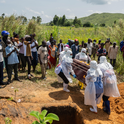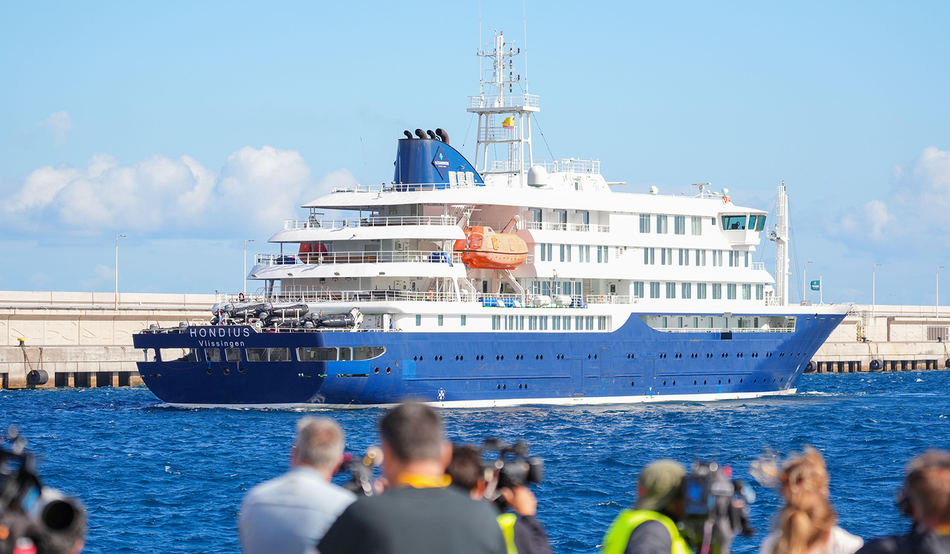
As so often happens with infectious diseases, the Hantavirus outbreak on the Dutch cruise ship MV Hondius arose from a series of chance encounters. Its rapid containment, meanwhile, depended on a large dose of luck.
Hantaviruses occur worldwide and, while sources differ, there are known to be around 40 known variants (and likely many more), each adapted to coexist with a specific rodent species. Most, though not all, can infect humans, causing illnesses of varying severity. Broadly speaking, variants in Europe, Asia and Africa tend to cause haemorrhagic fever and kidney damage, while those in the Americas primarily affect the heart and lungs. Only one, the Andes virus (ANDV), has been shown to spread from person to person.
Zoonotic outbreaks, in which infections pass from animals to humans, arise for three main reasons. First, genetic changes may confer new advantages for microorganisms, such as the ability to infect humans. Second, changes in animal hosts, such as populations of infected rodents growing, can increase exposure to the disease. Third, and now most common, changes in human behaviour also play a role. History offers many examples, from the emergence of measles following cattle domestication, to the wildlife trade implicated in the Covid-19 pandemic. I first encountered Hantavirus during the war in Bosnia in 1994, when soldiers came into contact with rodent droppings while digging trenches.
In this case, the first couple to be infected were travelling in a region where ANDV is present. There are typically fewer than 100 cases of human infection by ANDV in Argentina each year, but in the past year, that number has increased. As avid birdwatchers, the couple was looking for places where birds would congregate. Unfortunately, these are the same places that rodents also seek out for food. While ornithology is not usually considered a dangerous pastime, in certain circumstances, such as these, it can be.
A second factor also helped the virus to spread, however. Any facility where people are crowded together, especially when they are breathing the same air, can act as an amplifier. We have previously shown how this set of circumstances can create hotspots of tuberculosis in Eastern European prisons and African mines. More recently, in 2020, a cruise ship called the Diamond Princess, quarantined in Yokohama, Japan, had 700 cases and nine deaths from Covid-19 among the 3,700 people on board. The combination of factors that would create both a high risk of infection and a high risk of disease spread proved fatal.
As we now know, on the Dutch ship several passengers fell ill with respiratory symptoms during the cruise. That is nothing unusual, and common things being common, suspicion first fell on possible influenza or Covid. However, once again, chance intervened. When the ship reached the island of St Helena, the widow of the first man to die, along with more than 28 other passengers and crew, disembarked and took the only flight out, to South Africa. She had briefly boarded a plane in Johannesburg, but was removed in light of her medical condition and died soon after. Another passenger, who also fell ill, was evacuated to Ascension island and onwards to South Africa. By great good fortune, both infected individuals who had reached South Africa came to the attention of Lucille Blumberg at South Africa’s National Institute for Communicable Diseases. Initial tests for other causes were negative, but, displaying the curiosity that is a core public health attribute, and knowing the ship’s path, she and her team tested the pair for Hantavirus. The positive results triggered an extensive international programme to trace all those who had been in contact with people on the ship.
So far, it seems that this outbreak has been contained. Yet, it could so easily have been otherwise, so it offers a good opportunity to reflect on what worked. The first lesson is that we had a much better understanding of how ANDV has spread among humans than in the past. Until 1996, it was thought that infected humans could not spread it further. Then, an investigation of an outbreak in Argentina in 2018 showed that it could be. However, what really made a difference to our understanding was a very detailed paper on another outbreak in Argentina in 2018. We owe an enormous debt to the researchers involved. Their meticulous detective work documented chains of transmission with unusual precision.
The findings were unambiguous. Human-to-human spread of Hantavirus did not require prolonged or intimate contact, and transmission could occur in settings that many would have dismissed as low risk. Unfortunately, some of the early commentators on this latest outbreak seemed not to have read their paper. This was a reminder of a recurring problem in health crises, most recently with Covid: inconvenient findings are overlooked in favour of comforting assumptions.
The second lesson relates to the samples from those affected reaching a laboratory with the tools and expertise to make a diagnosis. This underlines the importance of investing in laboratories and those who work in them.
The third is that there was a highly effective response once the cause of the outbreak was identified. This was led by the World Health Organization (WHO) and the European Centre for Disease Prevention and Control, the latter because all of this started on a Dutch ship. Information was shared, contacts were traced and guidance was coordinated across borders. That matters because it shows that much of the technical machinery built after earlier crises, including the Covid pandemic, still functions.
Yet there are no grounds for complacency. These events unfolded against the backdrop of a weakened global health architecture. Donald Trump’s withdrawal of the United States from the WHO, followed by Argentina under Javier Milei, has had both practical and symbolic effects, given that it signals retreat from collective responsibility. The lingering legacy of Covid-19 is evident too, with eroded trust, the emergence of conspiracy theories, and a diminished US role in global health at precisely the moment when coherence is most needed.
This outbreak is best seen as a near miss, which is why it deserves attention. It has functioned as a dress rehearsal for a pathogen with genuine pandemic potential. Some elements worked well: rapid diagnosis, painstaking previous research on the virus and international coordination that prevented wider spread. But we were also very lucky. When the next outbreak arrives—and it will—the stakes may be far higher, and the margin for error much smaller.