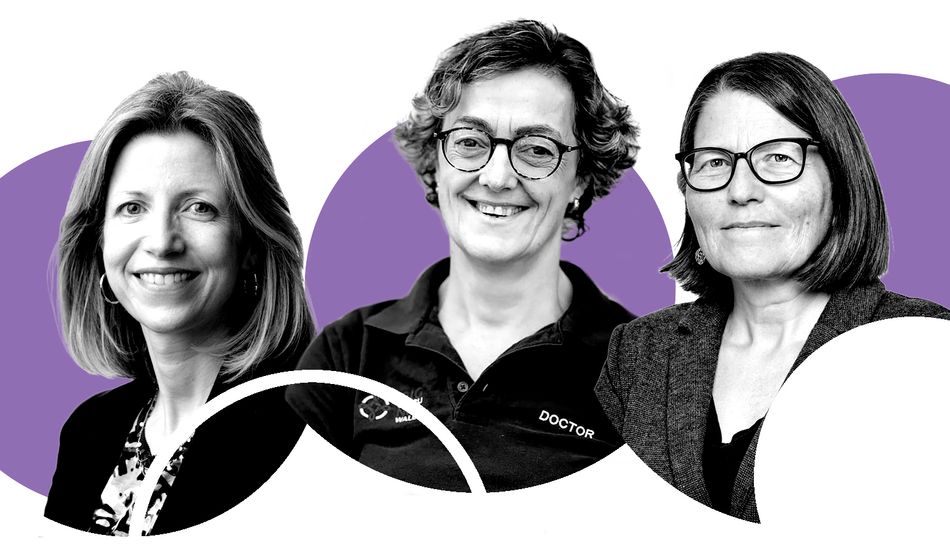
Sarah Woolnough, chief executive at The King’s Fund
Having previously helped to develop a national cancer strategy, like many, I am eagerly awaiting the new, upcoming National Cancer Plan. Here are five key areas I believe the government should prioritise.
1. Boosting prevention measures. A staggering 40 per cent of cancers are preventable and bold action on risk factors, such as passing the Tobacco and Vapes Bill into law, will be significant in reducing the numbers of cancer cases.
The plan will need to get to grips with tackling risk factors and wider determinants of health including measures on alcohol consumption, obesity, physical inactivity, air pollution and excessive UV exposure. Clear targets on these will be vital so that progress can be measured effectively.
2. Driving down health inequalities. You are more likely to be diagnosed with, and die from, most cancers if you live in poverty. Our research shows, for example, that for bowel cancer, people living in the UK’s most deprived areas have a 25 per cent higher mortality rate compared to people in the least deprived areas. The plan must not shy away from targeted action on boosting screening uptake and help those at the greatest risk get the support they need.
3. Innovating at pace. By 2035, the government has pledged that half of our interactions with the NHS will be informed by genomics. If this happens, and it’s a big if, it will have a huge impact on cancer care. However, to achieve it, the health system will need to keep up with the science. A good example is cancer genomics where the NHS has had to ensure that it can screen tumour biopsies for genetic mutations at a scale not previously imagined.
4. Improving performance. Amidst the talk of broader system changes and tackling the wider determinants of health, the plan cannot lose sight of the fundamentals. Less than 70 per cent of patients are being treated within 62 days of referral. The 85 per cent national standard the NHS has set has not been met for a decade. Behind these numbers are real people, living with the stress of waiting for cancer treatment. The plan must lay out measures to increase diagnostic and treatment capacity and be honest about any trade-offs.
5. Fostering public trust and satisfaction. There needs to be a better understanding about what matters to patients. I’ve heard stories of patients who say they received good quality treatment, but their wrap around care was poor. Equally, analysis of the excellent Cancer Patient Experience survey shows that good admin is crucial. Our recent report on NHS admin highlights that around 70 per cent of people living with cancer have one or more serious health conditions and dealing with multiple appointments and test results can be a significant burden if not managed well.
Let’s hope the ambitions of the new plan will be bold enough to change the future of cancer survival, and can be implemented at scale to tackle the unacceptable and inequitable access and variation in cancer care.
Dr Hilary Williams, clinical vice president and consultant in medical oncology at the Royal College of Physicians
UK cancer care can be world class but we lag behind Europe, and within the UK there is significant variation. Fifteen years ago, I moved from working in an affluent area to a deprived city; there were stark differences for women with ovarian cancer. I met too many who came to A&E as a last resort. High cancer burdens combined with frustratingly complex steps meant women died before they could start effective treatments.
Locally, things have improved but national data tell us 40 per cent of women with ovarian cancer are still diagnosed as an emergency and of those, four out of 10 don’t start treatments. Sadly, the chances of experiencing the best treatments vary widely for many cancers.
The starting point must be the workforce. Chronic staff shortages, particularly in areas of deprivation, limit access to diagnoses and treatment, worsening outcomes. We must invest in the medical speciality places we need to meet cancer demand in future. We have access to effective new cancer drugs but not the staff to manage unpredictable side effects, leaving patients reliant on over-stretched emergency care to pick up the pieces.
The National Cancer Plan must confront the realities of a system that too often fails patients. A funded, long-term strategy to train, retain and expand the cancer workforce is essential for faster diagnosis and treatment access.
Prevention to stop people getting cancer must be central. Smoking remains the leading cause of preventable cancer and obesity-related cancers are rising sharply. I treat bowel cancer and five years ago I hardly met a patient under 50. Now, patients with bowel cancer in their 30’s aren’t a surprise. While government has made progress—with the Tobacco and Vapes Bill going through the Lords and plans to restrict junk food advertising before 9pm—more must be done on smoking cessation and preventing obesity. It’s a win-win. Preventing the things that make us ill in the first place is critical to reducing cancer rates, and reduced heart and lung disease helps people through treatments.
Whether you are living with or cured of cancer, it’s time to highlight a proactive community focus on living well. During treatments, wherever practical, people should have flexible access to tests and medication, close to home as well as virtually. During recovery we need to help people regain fitness, live well in their communities and return to work.
A commitment to medical academic research is key. Government must reverse the decline in clinical academics and clinicians must have protected time for research. We have an excellent track record on clinical research improving care—let’s build better.
The UK can close the gap with comparable nations, but it requires the National Cancer Plan to set out concrete steps across these areas to improve patient outcomes.
Sarah Scobie, deputy director of research at Nuffield Trust
The NHS is some way off from meeting the targets that were set in the previous cancer plan. It’s timely therefore to consider what might be in the upcoming plan which will be framed within the government’s three shifts for the NHS—from treatment to prevention, analogue to digital, and hospital to community.
Successfully delivering these shifts could result in improved cancer care and outcomes. There are shared, modifiable risk factors—such as smoking, obesity and alcohol consumption—across many cancers, and they could be prevented by public health measures and cross-government action. Digital technology could also improve cancer care by speeding up diagnosis and treatment—including improving administrative processes—which could improve outcomes for patients. Shifting services to the community could also reduce inequalities and help remove the barriers to accessing care.
However, the NHS’s performance on cancer has lagged behind government targets for over a decade. In October 2025, only 69 per cent of people started cancer treatment within two months of referral, against a target of 85 per cent. The target for faster cancer diagnosis—for 75 per cent of people to be diagnosed within 28 days—introduced in 2021 is also not being consistently met.
In 2019, the NHS set an ambitious target to diagnose 75 per cent of cancers at stages 1 and 2 by 2028, but this is unlikely to be met. In August 2025, only 59 per cent of cancers were being diagnosed at stage 1 and 2. Importantly, people in more deprived areas are more likely to be diagnosed in an emergency, which reduces the chances of successful treatment.
The persistent gap between aspiration and reality for cancer care will need to be addressed if the new plan is to make a meaningful difference for patients. This means tackling a long-term gap in investment in NHS buildings and equipment—including scanners and other diagnostic equipment—and the staff to use them, which has resulted in lower-than-average provision relative to EU countries. Compared with similar countries, the UK also lags behind in outcomes for cancer, despite improvements in survival.
Underlying these challenges is a growing gap between what the NHS can deliver—within tightly managed funding—and the demand for care. There are a mix of reasons driving demand, including population growth and ageing, and new treatments. It is going to be increasingly difficult to fund new cancer treatments without affecting other services, including the aimed-for shifts to prevention and out-of-hospital care.
To navigate these constraints, the plan should be realistic about what the NHS can achieve without more investment. While new technology can speed up treatment and improve care, it takes time and resources to implement it successfully. The plan will need broader government action to address the risk factors for cancer, and it must also tackle the obstacles that stop more deprived groups from getting the care they need.