“There is a hoary quotation from Benjamin Franklin that begins most analyses of taxation: ‘In this world, nothing is certain except death and taxes.’ One might, however, add a third certainty: that any British government attempting major tax reform faces political death.”
I wrote these sentences as a wry opening to a policy paper I authored earlier this summer for the Institute for Public Policy Research. How clever, I thought, to frame the dilemma over tax increases as one of courage in the face of political mortality.
I was soon to discover that “political death” can come for us all. Within days, I was castigated as never having had a private-sector job, and as being one of those “left-wing academics who only hobnob with like-minded middle-class lefties”. I even received a handwritten all-caps note in the post asking me to “SHOW SOME HUMILITY”.
How had I become Trotsky of the Upper Thames? I had had the temerity to argue that British people over the age of 65 should pay an extra 2 per cent in national insurance. But only if they were still working. And if they earned over £50,000. (Just like everybody else under 65 earning that much.)
An employed pensioner making £60,000 a year would thus pay an extra £200 annually under this Ansellian dictatorship of the proletariat. That’s a little more than the cost of the monthly Zones 1-2 travelcard they would need to purchase in London to get to said job. Wait, what’s that you say? They also don’t pay for public transport?
Now, there was lots of other stuff in the report for people to get angry about: merging council tax and stamp duty in a proportional property tax; taxes on artificial intelligence tokens (the units of data processed by AI). Most were bigger hitters in terms of their impact on the government’s bottom line, but it was my asking for a slight shift in the intergenerational balance of the tax burden that led to a week of tabloid denunciation and angry emails.
Still, I remain unchastened. Younger Brits who went to university after 2012 face an extra 9 per cent surcharge on their income tax to pay back fees. If they earn above £60,000, they start losing child benefit. Above £100,000, they lose tax-free childcare and the personal allowance. Now, you might not feel bad about a millennial doctor, making £105,000, paying more in taxes. But does it really make sense for them to pay tax at a rate of 71 pence in the pound? There’s only so many foregone avocado toasts that can make up for that.
What is our national political response to the challenges of an ageing population?
It seems neither tabloid columnists nor the UK’s major political parties share my concern that taxes are piled ever-higher on the backs of the working-age population. Indeed, as we undergo party conference season, politicians are competing to ensure pensioners are protected from the UK’s rising fiscal bill. By 2075, this will be some 10 per cent of national income higher because of—you guessed it—the spending demands of our ageing population.
What is our national political response to the challenges of an ageing population? Guaranteeing the triple lock, of course (even, in Andy Burnham’s case of unprecedented political bravery, until 2030) . Oh, and since the state pension now exceeds the income tax personal allowance, pushing that up so that no one earning just the state pension will pay a penny in tax.
Indeed, there is an arms race going on. You might think of Reform UK and the Liberal Democrats as the (cliffs of Dover) chalk and (soft continental) cheese of British politics, but on taxes they have an entente cordiale. Both want to raise the personal allowance to £15,000, paying for it by hoping that punishing immigrants and/or closer relations with Europe magics it up.
As budget day approaches, it seems unlikely the government will risk political death by taxation. Under Rachel Reeves, budgets had already shifted many of the tax rises needed to satisfy the Office for Budget Responsibility to the eve of the next general election. John Healey will face the same pressures to somehow pay for increased defence spending, the pensions triple lock, climbing interest payments—all without raising taxes on anyone who might not like it.
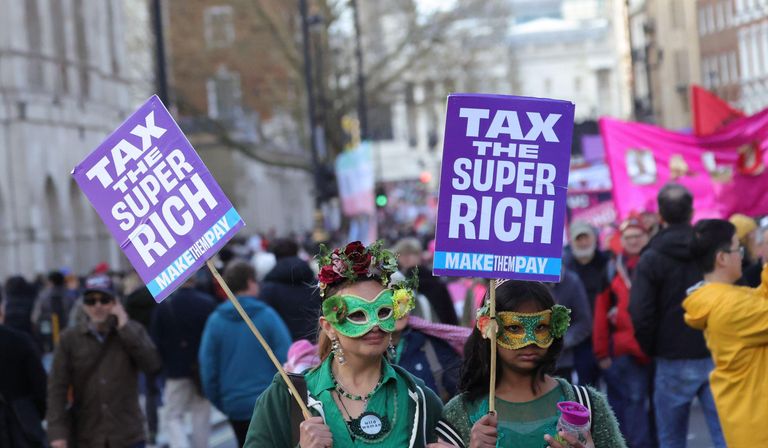
British politicians live to fight another day by coming up with ever-more tendentious arguments about how to make the budget add up. Maybe there’s some undiscovered tax evasion. Or we could cut welfare fraud. Or just find someone, anyone who is not the average British voter, who could pay. In extremis, one wonders if the British state could simply be funded by taxing foreigners and 12 rich people.
Big-ticket taxes have, of course, been raised before without catastrophe. In 2010, George Osborne managed to increase VAT and capital gains tax. What do people remember instead? An ill-fated pasty tax two years later, which might have increased the price of sausage rolls. The answer appears simply to be: just go big and raise taxes that are too boring and broad-based to create good tabloid headlines.