Once there was a time when becoming a government minister was the high point of a politician’s career. They could pilot a bill through parliament. They could effect reforms and change spending priorities. They could point to a ministerial record and say, “I did that”.
Perhaps there are politicians who still think like that. Perhaps there are politicians who still achieve worthwhile things as ministers which would otherwise not be done. Perhaps there are those who even now make a difference.
But nowadays a minister seems most likely to have any influence by resigning. That is their one moment of significance, their 15 minutes of wider import. Few interventions by ministers are as extensively read as their resignation letters: posted on social media, republished on the live blogs of national media and earnestly dissected by the commentariat.
In a way, the entirety of a ministerial career is what can be plausibly summarised in a couple of paragraphs of a resignation letter and by what will be conceded in return in any prime ministerial reply. It used to be that an account of achievements was something that went into an application letter or a manifesto. Now it is what can be said at the end of a job and not at the beginning.
The premiership of Boris Johnson ended in a flurry of resignation letters. At one point there were so many being published on Twitter that the political live blogs could not keep up. One department lost all but one of its minsters, with only resignation letters in their place. Resignation letters everywhere.
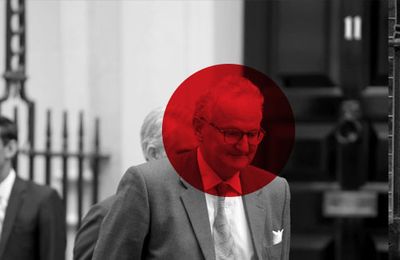
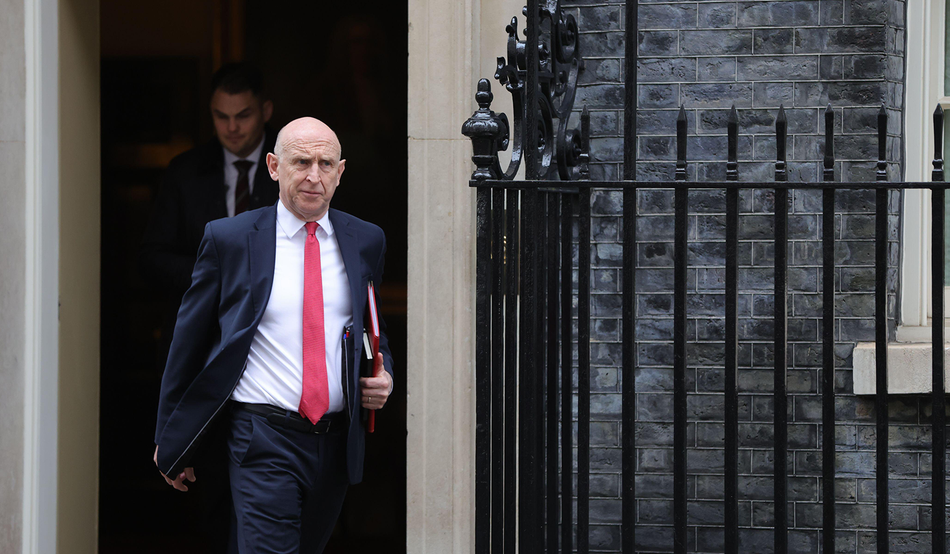
The premiership of Keir Starmer looks as if it will end in the same way, albeit at a slower pace. We have already had the resignation letters of health secretary Wes Streeting and safeguarding minister Jess Phillips. And this week we got the resignation of the defence secretary John Healey and armed forces minister Al Carns. Each of these letters has had a political impact, but tellingly the letters of Phillips and Healey also set out significant policy points. The letters told not of policy-making, but the unmaking of policy.
Of course, there is nothing new in politics being in part about the gaining and losing of confidence of ministers. Indeed, it is a fundamental principle of our constitutional arrangements that a prime minister must be able to form a cabinet and a wider government. And when that confidence goes, so does the PM: HH Asquith in 1916, Neville Chamberlain in 1940, Margaret Thatcher in 1990, Liz Truss in 2022.
And it is also true that powerful resignation statements are not a novelty. The parliamentary speech of Geoffrey Howe in 1990 was one such example, its effect heightened by it being one of the first major speeches televised from the House of Commons. Ministerial resignation statements to the Commons are still a thing, though by the time they take place the media interest in the resignation has often diminished.
What resignation letters posted on social media and discussed in the national media do is add immediacy and detail to the act of the resignation. They ensure that the splash of the departure has meaningful political and media ripples within minutes of it happening. The missives are well suited as missiles in the frenzy of constant news loops. The letters have power.
And ministers often do not have power, or at least a sense of any power. This is especially the case with a government such as the current one where, notwithstanding a substantial majority, there is an impression of drift and inactivity. But it also true of the overall majority governments of David Cameron and Johnson. The political story of the last 10 or so years is about successive governments that have wasted their large majorities.
Resignation letters are therefore likely to be here to stay, even if the ministers who issue them are not. They are perfect for modern political and media culture. They are the one thing by a politician which will actually be read and may have real consequences. This is not an ideal way to conduct national politics, but we will have to get resigned to it.