In exciting north London news, the philanthropist Dale Vince has announced that he is ready to invest in a “rescue package” to help save the doughty local paper the Camden New Journal from going belly up.
What will happen next? Will Vince purge the Journal’s comment desk and install an editor who will dance to his tune? Will he intervene to stop the paper endorsing the “wrong” candidate in the forthcoming Holborn and St Pancras by-election? Might he demand favours for his businesses from Camden Council in return for kissy-kissy coverage?
Unlikely. The CNJ’s readers this week seemed more preoccupied with stray cats and traffic congestion than who will succeed Sir Keir Starmer as MP. On the face of it Vince sincerely admires a struggling local paper and wants to help out, no strings attached.
Compare and contrast with the Ellisons, the unlovable family who have cosied up to Donald Trump and who, as of this week, own both CBS and CNN. Daddy Ellison gave around $45m to help get Trump re-elected in 2024. Father and son promised to root out the “ideological bias” in CBS and eliminate DEI initiatives if successful in taking over the channel.
They were. A messy $16m libel payout to Trump helped ease the deal which gave the Ellisons control of CBS. Son David promptly installed as editor-in-chief Bari Weiss, an ideological fellow traveller with no previous television experience. Mass firings and resignations followed. But Trump is happy. Back in November he reportedly discussed with Larry Ellison how the new owner might axe some of the CNN hosts the president is said to loathe.
And now David Ellison is running the channel. Which will please not only the president, but his so-called war secretary, Peter Hegseth, who earlier this year exclaimed, “The sooner David Ellison takes over that network, the better!”
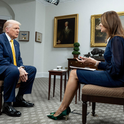
Trump recently found his own way of showing his displeasure with the pre-Ellison CNN by simply banning it from the White House, along with MS Now and Politico. He posted that they “shouldn’t be able to constantly write or report FICTION and LIES when they’re covering the President of the United States”. Later he described the established news channels as “corrupt, purposeful, pervasive, fully coordinated, and totally out of control”. Meanwhile, he keeps press seats warm for a motley bunch of fanboy outlets, social media influencers and assorted lapdogs.
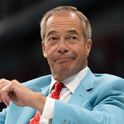
Where Trump leads, Nigel Farage poodles along behind. Earlier this month he banned three journalists from attending the Reform Conference on account of their displeasing coverage. His deputy, Richard Tice, seems to think there is a left-wing conspiracy, which includes the Murdoch press, out to smear his party.
Donald Trump has launched Trump TV—described as a “24-hour fever dream of self-soothing propaganda for the Maga faithful”. Not to be outdone, Farage is reportedly investing some of the £72m showered on him by crypto billionaires on launching his own Reform YouTube channel.
None of this should surprise anyone who has been following the clever autocrat’s playbook. The clever autocrat knows that outright government censorship is a bad look. So the pioneers of modern media management—I’m thinking of Narendra Modi, Recep Tayyip Erdoğan, Viktor Orbán and their like—developed more sophisticated techniques.
Typically this involves a businessman adjacent to the political leader buying a media business and then doing the dirty work on their behalf. In Hungary, for instance, a businessman close to Orbán’s party, Fidesz, bought 50 per cent of the Indamedia Group,a partner of Index, the country’s largest independent news outlet. Three months later the editor-in-chief of Index was dismissed for voicing his concerns about its independence. Almost the entire staff subsequently resigned, and Index resumed with a completely new editorial team.
In Turkey, according to the Committee to Protect Journalists, “contractors, shopping mall owners and healthcare or energy magnates view press ownership as a sort of levy for doing business with the government. Some pay this tribute reluctantly and after bitter complaint. The result is that the great bulk of the Turkish media is under the control of proprietors who have no interest in holding government up to scrutiny. Far from speaking truth to power, editorial control is willingly surrendered to political superiors.”
The result is, in the words of Freedom House, “an atmosphere of complicity, censorship, and outright stenography on the part of a large segment of the media”.
Couldn’t happen here, right? But, in a sense, it’s already happening. Most of our information environment—the platforms, the data and the algorithms, together with how we discover, consume and share content—is in the hands of just six men: Elon Musk, David Ellison, Mark Zuckerberg, Jeff Bezos, Sergey Brin and Larry Page. And that’s before Sam Altman and Dario Amodei truly floor it.
Nigel Farage may or may not get near Downing Street after the next election, but he’s spelled out what he would do to the only British news organisation which has any chance of competing with these gargantuan beasts: gut it. He’s graciously said he wouldn’t abolish the BBC entirely, but he envisages a “very much slimmed-down” broadcaster. He has promised “a rude awakening” under a Reform government.
It’s odd how a party which champions nationalism and sovereignty should proudly trumpet the intention to decimate the British Broadcasting Corporation, which has already suffered a 37 per cent real-terms cut in funding since 2010, but there we are.
Channel 4 is currently a sickly thing. The ITV television network looks likely to end up in the hands of Sky, which in turn is owned by Comcast/NBCUniversal. GB News is substantially owned by an entity based in Dubai. The Daily Telegraph is now the property of a German publisher, which this week celebrated the Palantir founder Peter Thiel by presenting him with the Axel Springer Award. The main speech was delivered by Bari Weiss. Wheels within wheels.
The future of the BBC is clouded in uncertainty. At this rate, regardless of Farage, it may simply wither away from benign neglect. Anyone inclined to shrug at that prospect should recall Hilaire Belloc’s couplet “Always keep a-hold of Nurse/For fear of finding something worse.”
You will recall the tale features a small boy called Jim, who is devoured by a lion. There are a lot of them about.