One feature of gangsterism is that it is less about breaking the law, and more about using—abusing, misusing—the law and legal system to benefit oneself and to harm others. That is why many of the more successful protection rackets are run by the police or other state organs.
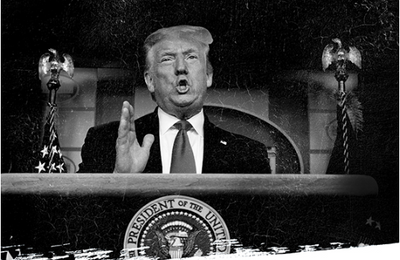
In this way, the approach of United States president Donald Trump and his administration is akin to gangsterism, but on a governmental rather than a street level. On one hand the law is used to prosecute or otherwise disadvantage perceived enemies. Weak indictments are made against some, some are sued, while others face losing licences or contracts. Here the law is used as a weapon against opponents.
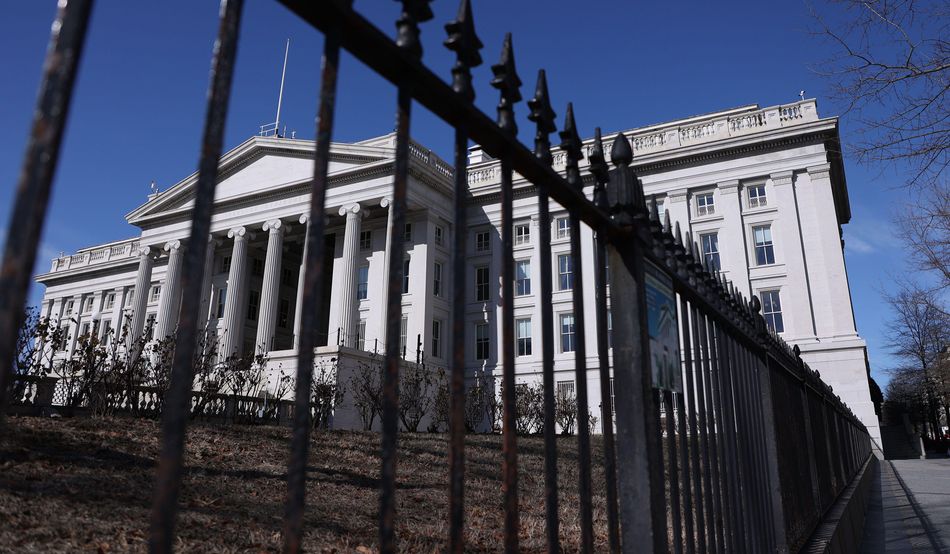
And we have the extraordinary sight of Trump suing his own government—the Treasury and the Internal Revenue Service (IRS)—for $10bn, thereby being able to effectively negotiate with himself for a settlement sum. It is difficult to imagine a greater abuse of the legal system.
The case is about the leaking of Trump’s tax information by an IRS worker, who was convicted for what he did in 2023 and was sentenced for five years in prison. The leaked information indicated that Trump had not paid income tax in ten of the previous 15 years.
Technically, Trump is suing in his personal capacity, and not as president. And legally Trump has a good point. His tax information should not have been leaked. The political fact that previous presidents have published their tax returns does not change that legal position. The leaker may have believed he was acting in the public interest, but there is no public interest defence for this offence.
What makes this lawsuit problematic is not that there is no legal case for Trump: there is. It is the position of the parties. As head of the government Trump effectively controls the Treasury and the IRS. And so when it is revealed that Trump is seeking “resolution” of the dispute by means of an early cash payment one can only be cynical.
And when Trump’s lawyers asked this month for a “pause” in the litigation for negotiations to take place, the judge was indeed sceptical. Judge Kathleen Williams of the federal district of southern Florida queried whether the court had jurisdiction.
A court only has jurisdiction to hear a case, she pointed out in a fascinating four-page order, if there is a controversy: an issue to be determined between the parties. But here, she observed, it looked as if the parties were not sufficiently adverse to each other.
She stated that “although President Trump avers that he is bringing this lawsuit in his personal capacity, he is the sitting president and his named adversaries are entities whose decisions are subject to his direction.” Accordingly, she continued “it is unclear to this Court whether the Parties are sufficiently adverse to each other”.
And the lack of sufficient adversity is not just in the respective positions of the parties, but also because of the effect of Trump’s presidential order of February 2025 that no federal body can put forward a view of any law that contravenes the president’s view of the law. That would cover the IRS and Treasury in this case, as well as the attorney general, who usually defends those bodies in court.
Judge Williams did not, however, dismiss the case. She instead has invited the parties to make legal submissions on this point. She has now also appointed independent lawyers as “friends of the court” to make submissions on the general law on whether the court indeed has subject matter jurisdiction.
That this issue has come to a head appears to have been the result of a tactical blunder by Trump’s lawyers: had they not applied for an extension, the court order states that the jurisdiction issue would only have been looked at by the court after the defendants’ response had been filed.
But by trying to delay that defendants’ response, Trump’s lawyers have forced the court to tackle the issue now. And in so doing they have risked the very case itself. By overreaching, Trump’s lawyers may have jeopardised the complaint.
That said, it may well be that the plaintiff lawyers satisfy the court at the now scheduled hearing on jurisdiction at the end of May. Or this order may be appealed or stayed. Rarely are such interim decisions the end of the matter. Trump may still get his big settlement from his own administration (though he claims he will give the monies to charity).
For at its heart, this is not really a legal problem. The courts can only deal with the cases brought before them. The problem is the political culture that leads to these cases being brought and then to be settled. If Trump has a sound case then it should be stayed until he is no longer in office, or litigated on his behalf with him blind to the case.
It is a fundamental principle of law that a person should not be a judge in their own case. From this it follows that a person cannot control both sides of a purported dispute and to decide their own settlement amount. Otherwise we get sham litigation, with contrived settlements being used as a way to transfer monies and to unjustly enrich beneficiaries.
But if the Florida court rejects jurisdiction, and this determination is not stayed nor appealed, then there can be no basis for a settlement of this dispute, for there is no dispute to settle. And so Trump will have to find another way to obtain the monies he is seeking.