Seven years of legal proceedings, generations of persecution: the United Nations’s highest court has ruled that Myanmar committed genocide against its Rohingya Muslim minority in 2017. For the Rohingya, this is a historic turning point. But their long struggle for justice isn’t over—and needs global support to succeed.
Yasin Arfat stayed up overnight to watch the livestreamed International Court of Justice (ICJ) judgment from the United States, where he now lives, having fled majority-Buddhist Myanmar after the military launched its brutal 2017 crackdown. When I speak to him two days earlier, he says a genocide ruling would offer recognition of what survivors have been saying for years. But he is clear that “justice must go beyond a judgment”.
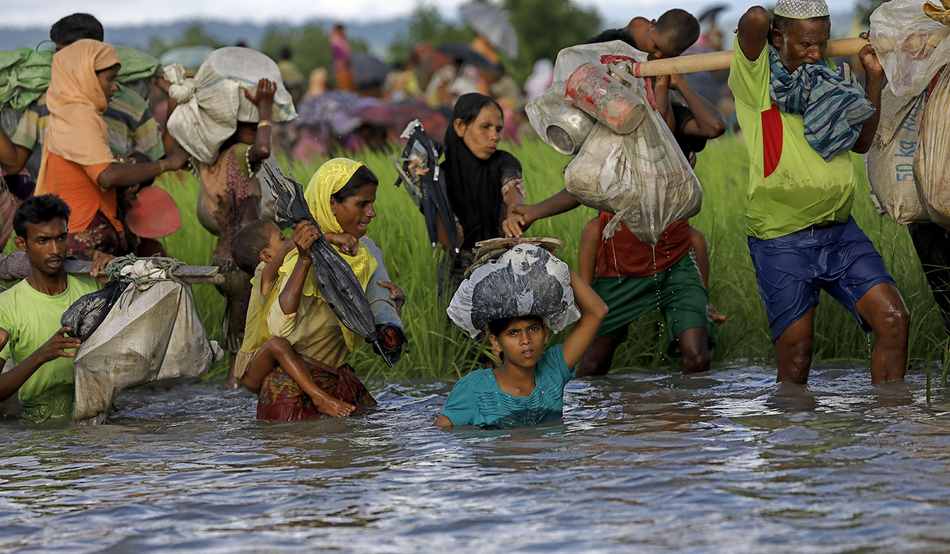
“It must include accountability, reparations, and concrete steps to ensure that we can return to our homeland with dignity, security, and equal rights,” says Arfat, one of more than 730,000 Rohingya Muslims forced to escape their homes in Rakhine state, western Myanmar in 2017.
Earlier this year witnesses testified at court about mass killings, rapes and the burning of entire villages. The atrocities are also detailed in a 2018 UN fact-finding mission report. A series of Reuters investigations unearthed evidence of Rohingya massacres by security forces and showed how authorities bulldozed houses to erase all remnants of Rohingya lives.
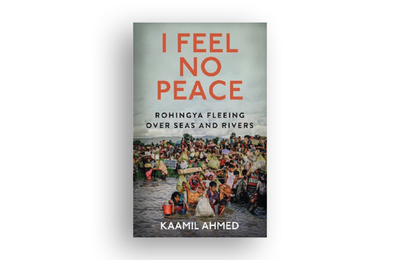
Arfat, his parents and three siblings walked for two days to cross the mountainous border into Bangladesh. They then spent more than five years living in refugee camps in Cox’s Bazaar, the world’s largest refugee settlement, before being resettled in the US in 2022. “Leaving my home was never my choice. I left because I wanted to survive,” Arfat tells me. “I left behind my home, childhood memories, and the place where my identity and roots began.” More than one million Rohingya refugees, including people who fled before the 2017 crackdown, remain displaced in Bangladesh. Smaller numbers of Rohingya have sought refuge in other countries including Malaysia, Indonesia and India.
Photos of Rohingya watching the verdict from camps and holding up banners saying, “THANK YOU GAMBIA!” brings into focus the truly extraordinary series of events that led to this moment. The Gambia, the smallest country in mainland Africa, brought this case to the ICJ in 2019, with backing from the intergovernmental Organisation of Islamic Cooperation. It did so, at least in part, because it felt a moral responsibility due to its own experience of authoritarian rule, despite having no connection to the crimes.
The case is a testament to what international solidarity can achieve when few other options for accountability exist. The judgment is the first time the ICJ has found a state responsible for committing genocide. It is also the first time a state unaffected by a genocide has brought a case against another state under the 1948 Genocide Convention.
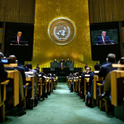
The nearly three-hour ruling delivered by Judge Yuji Iwasawa at The Hague, addressed one of the most difficult parts of establishing that genocide has been perpetrated—proving “specific intent”. Without this finding even the most awful atrocities may fall short of the legal definition of genocide.
In the two previous instances in which the ICJ ruled on allegations of genocide under the convention, the court found that the cases brought against Serbia by Bosnia and Herzegovina in 2007 and by Croatia in 2015 did not meet the threshold for finding Serbia responsible for committing genocide. But Iwasawa ruled that Myanmar acted “with an intent to destroy a substantial part of the Rohingya population”. He pointed to key evidence including indiscriminate killings, the separation and execution of men, the widespread rape of women and girls and the systematic destruction of Rohingya homes.
I began reporting on the systematic persecution of the Rohingya in 2014, when I became Agence France-Presse’s Southeast Asia correspondent in Bangkok. At first, I was mostly editing stories from colleagues in Myanmar documenting the deteriorating conditions for members of the Muslim minority in Rakhine after deadly sectarian violence in 2012. Many were forced to live in segregated camps and stripped of opportunities to work, study or move freely. Without travel documents, more Rohingya risked dangerous sea journeys to neighbouring countries. Then in May 2015, Thai authorities cracked down on the most common people-smuggling route to Malaysia, and I saw the fallout of Myanmar’s repression first-hand.
Our bureau began hearing about boats full of Rohingya migrants stranded in the Andaman sea, abandoned by traffickers escaping arrest. We set off to find them, though it felt unlikely that we would actually track down a boat in the middle of the ocean. When we did, I was unprepared for what I saw: a rickety green vessel crammed with hundreds of emaciated children, women and men pleading for help.
This boat became one of the starkest symbols of the Rohingya migration crisis that year. We reported as it was pushed back out to sea by Thailand and forbidden from docking in Malaysia. It signified to me the international disregard for the suffering of a stateless and persecuted population, denied citizenship by Myanmar despite the Rohingya’s centuries-long presence in Rakhine. Eventually it was the kindness of Indonesian fishermen who towed this boat, among several others, to shore. Indonesia allowed them to land.
Around the same time, at a protest in the city of Yangon in Myanmar, the leader of a nationalist party aligned with the military called for the Rohingya to be shot and their boats sunk. He stood by those calls during the genocide hearings at The Hague earlier this year. The ICJ judgment put on the record what reporters and rights groups have been chronicling for years: the scale of the dehumanising language used against the Rohingya in Myanmar and how in 2017 “military-sponsored hate speech fuelled hostility”, portraying the Rohingya as “sub-human” and as “a violent threat”.
Someone who raised the alarm about the military’s atrocities against the Rohingya before what we can now unequivocally call the 2017 genocide was Yanghee Lee, the UN human rights envoy to Myanmar from 2014 to 2020.
When I interviewed Lee after the 2021 Myanmar coup led by Min Aung Hlaing, the same general who led the 2017 clearance campaign, she told me how the international community’s failure to respond to the treatment of the Muslim minority had “emboldened” the military to use “those same tactics” against the Buddhist-majority (who they supposedly saw as their own) who later resisted the coup.
“Today is a watershed moment for every Rohingya,” Lee says after the judgment. But her emphasis was on what should happen next. Earlier, she tells me that Min Aung Hlaing was “not going to punish himself” and that the international community must step in. “This is not the end to the decades of suffering experienced by the Rohingya. But the beginning of a call to action,” says Lee. She points to the role of the UN Security Council in following through on the judgment and for the General Assembly to pass another resolution on Myanmar. The Special Advisory Council for Myanmar, the group she co-founded to campaign for democracy, is urging countries and blocs like the European Union to tighten arms and jet fuel embargoes on Myanmar.
The Myanmar judgment has been closely watched for the potential implications it might have for other genocide allegations. The most widely discussed is the case South Africa has brought against Israel, accusing the country of committing genocide in Gaza, an allegation Israel rejects.
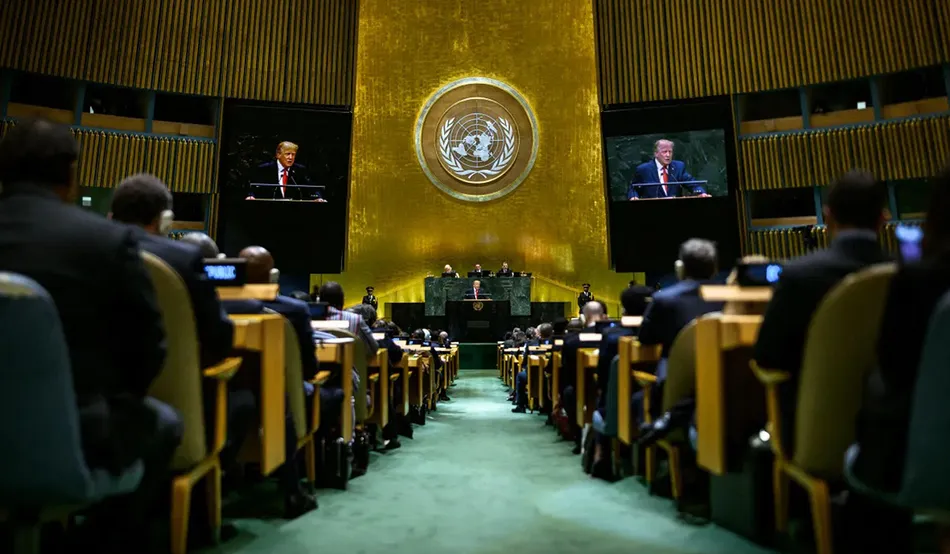
Last month Mike Waltz, the US ambassador to the United Nations, wrote on X that “The ICJ must not be allowed to lower the legal threshold for proving genocide so that weakened and false standard can later be weaponized.” His remarks were widely seen as a reference to the ongoing case against Israel, which the US has criticised, at a time when the Trump administration has also been pushing to dismantle the International Criminal Court.
But the judgment today belongs to the Rohingya. Its significance should not be overshadowed by the political argument surrounding other cases. What the Myanmar judgment has demonstrated is how international law can provide a route to advancing accountability for those with little other recourse. And it shows how states can play a role in helping to secure accountability for those outside of their borders.
I am left wondering how the judgment will play out in Myanmar. Few following this case can forget the sight of Aung San Suu Kyi at The Hague in 2019, when she was seen as Myanmar’s de facto leader, defending the military against charges of genocide. Just two years later she was jailed by the very same military she sought to defend.
One unprecedented development in the aftermath of the 2021 coup was that the National Unity Government, a multiethnic coalition that formed in exile to oppose the coup, pledged to include the Rohingya in a future federal and democratic Myanmar. This was a marked shift from its leaders’ earlier stances, but civil war continues to ravage Myanmar and gains made by opposition forces a few years earlier have diminished. Rakhine state is now mostly controlled by the insurgent Arakan Army, not the military, and the Rakhine population does not broadly support a return for displaced Rohingya. But people are still fighting for democracy in Myanmar, and the hope for a different future has not been quashed.
For Arfat, representation in that future is one of the most important goals in the quest for accountability. “The world must support a long-term political solution that recognises the Rohingya’s identity, citizenship and equal rights,” he tells me. “We are asking for justice, recognition—and the opportunity to live in our homeland with dignity.”