When the economic history of the 2020s is written, a major theme will no doubt be how the decade witnessed a series of huge shocks to global supply chains in a relatively short period of time. The pandemic and its associated lockdowns in 2020 and 2021; Russia’s invasion of Ukraine in 2022, which caused global energy and food prices to rise even higher; Donald Trump imposing the highest US tariffs in a century in 2025; and the closure of the Strait of Hormuz in 2026.
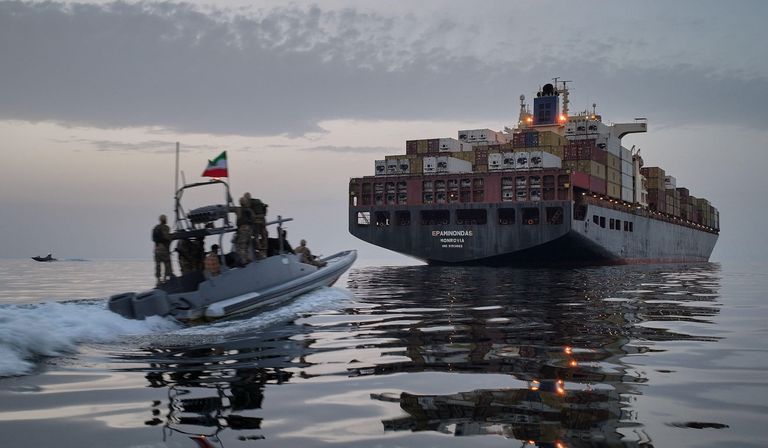
The war in the Gulf has the potential to be as severe a hit to global economic activity as the fallout from Putin’s aggression against Ukraine. Indeed, it is not hard to envisage it being materially more damaging. While geopolitical tension and outright fighting in the Middle East aren’t new, they rarely rattle the wider global economic system. The novel, and worrying, element at play is the closure of the Strait of Hormuz.
In normal times, somewhere between 120 and 150 vessels a day would transit this vital waterway. Since early March that has slowed to a trickle. Before the war around 20m barrels of crude oil and refined oil products passed through the Strait daily, around one-fifth of total global daily consumption. Saudi Arabia has managed to reroute some exports, via east-west pipelines to the Red Sea, as has the United Arab Emirates, via its more southerly ports directly on the Gulf of Oman. But depending on one’s preferred measure, somewhere between 10m and 14m barrels of oil each day are no longer supplied to world markets.
Nor is the issue confined to oil and its derivatives. Qatar’s exports of liquified natural gas have been shut into the Gulf, and its largest export facility was damaged by an Iranian attack. Outside of energy, around a third of global helium supplies—a vital component for making the advanced chips that underpin the latest AI models—originates around the Persian Gulf, as does a large share of fertilisers used globally.
For the world economy, energy prices are the most immediate mechanism through which the shock will be transmitted. Oil prices, which were around $65 a barrel before the war, averaged more than $100 in April. The price of refined products saw even sharper rises—jet fuel prices, for example, have doubled since the end of February.
After 2022, the world is uncomfortably familiar with the economics of an energy price shock. Broadly put, in these circumstances overall economic output is lower, prices rise faster and there is a broad redistribution from countries that are energy consumers towards those which produce energy. The nations most exposed are those which import energy and are already relatively poor. As global prices spike, they can often simply not afford to keep up their imports and are outbid by the rich world for supplies. Countries such as the Philippines, Pakistan and Bangladesh are already rationing energy.
The United States finds itself in an unusual position. The world’s largest economy, post the shale oil and gas revolution of the 2010s, may now be a net exporter of energy, but more Americans are consumers of oil products than are involved in their production. The soaring oil price might boost the profits of fossil fuel extractors and prompt a burst of growth in the oil sector. For most ordinary Americans, however, it just means paying more at the petrol pump when they fill up their car.
For the UK, like much of Europe, a global energy price squeeze is what economists usually dub “a terms-of-trade shock”. Simply put, the price of the things that the country buys abroad has risen and the price of stuff it sells overseas has not. That, as in 2022, means the country as a whole will now be poorer than it was expected to be.
But how much poorer? Answering that is not straightforward. Much depends on events in the Gulf. The International Monetary Fund, when setting out its new forecasts for the global economy at its annual Spring Meetings in April, spoke in terms of “baseline”, “adverse” and “severe” scenarios, with the most important variable being when the Strait was reopened.
In plainer language, it perhaps makes more sense to think of these possible outcomes as the good, the bad and the ugly. The good scenario, a short closure of the Strait and a rapid return in volumes to pre-war levels, is now impossible—whatever happens, economic pain lies ahead. The bad scenario is what now passes for an optimistic view. That is, the hope that a lasting end of hostilities will see freedom of navigation restored in the Strait of Hormuz. The key point is that even such a scenario would involve months of higher energy prices. For a start, as the flow of tankers dried up, many Middle Eastern oil and gas producers ran out of storage space and were forced to shut down production during March and April. Somewhere between 9m and 12m barrels a day are no longer being produced; switching that back on is far from instantaneous.
The US government reckons that about half of the volume shut down because of the war could be restored within two weeks, but some 30 per cent would take closer to six weeks and the remaining 20 per cent—mostly in older, more mature fields with lower pressure—several months. And even if production could be ramped back up (and leaving aside the issue of war damage to facilities) many tankers are now simply in the wrong place. Then there is the ugly scenario: the closure of the Strait dragging on for weeks or months more and global stockpiles being run down.
For a country like the UK, the best-case scenario now is economic growth being about 0.5 per cent lower than it otherwise would have been and inflation about 1-1.5 per cent higher than in a no-war world. Even under such a relatively benign scenario there could still be all sorts of disruptions and unexpected consequences. Distribution to petrochemicals has already, for example, seen the world’s largest manufacturer of condoms announce a planned 30 per cent price hike. Jet fuel shortages could well see thousands of summer breaks cancelled. In an ugly scenario things would get much, much worse. A prolonged closure of the Strait almost certainly means a nasty recession and a deeper squeeze on living standards.
One economic tragedy is that, in mid-February, things were starting to look up for the UK. Inflation seemed set to fall throughout the year, and investors expected the Bank of England to be cutting interest rates by the summer. Consumer confidence looked to finally be picking up. Now inflation will rise, rate hikes are more likely than rate cuts this year and consumer morale has plummeted.
There are no easy answers for an energy-importing country during a global energy price surge. The UK will be worse off than it hoped to be. The real political question is not how to avoid the pain, but how to spread it around. As 2022 showed, managing that is never easy.