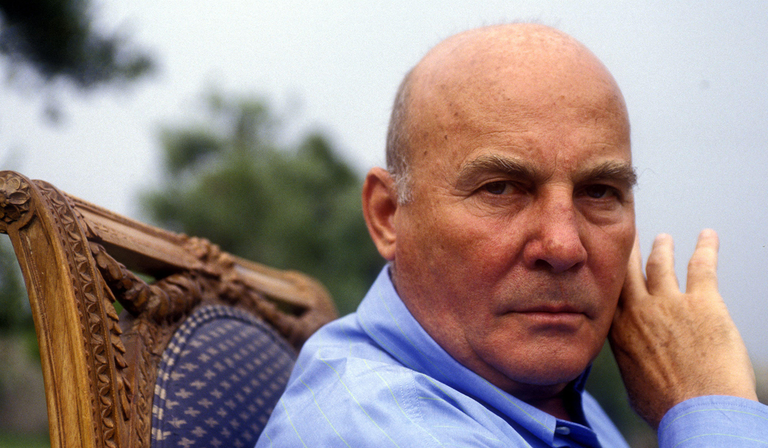
Last year, I had a bit of a rant about Pierre Boulez and his baleful influence on the postwar music scene. It was the centenary of his birth and—de mortuis nil nisi bonum and all that—I was perhaps a little unfair. My prejudice springs partly, no doubt, from my lack of a formal musical education. I wasn’t one of those singers who honed their sight-singing skills in an Oxbridge choir and I don’t have perfect pitch. As a result of these handicaps, I haven’t sung a lot of what we call “hardcore” contemporary music, the sort that comes from under Arnold Schoenberg’s 12-tone overcoat and ends up with the complexities of Boulez, Luigi Nono and Luciano Berio. It simply takes me too long to learn this stuff, wonderful as it can be, since the only way of dinning it into my brain is through sheer repetition (the French word for rehearsal, as it happens).
I feel guilty about this—but, at the same time, praise the Lord that, in Benjamin Britten, we have a postwar composer who wrote much more consonant, if no less inventive music; music that I can manage with less sweat. At the same time, I admire the two great Britten singers—Peter Pears and Dietrich Fischer-Dieskau—who made an enormous commitment to a wide range of contemporary music throughout their careers.
Pears felt it his duty to perform new works, and I’ve sung some of them. Witold Lutosławski’s Paroles Tissées for voice and string orchestra (relatively easy), for example, or Richard Rodney Bennett’s “Tom O’Bedlam” for voice and solo cello (a bit harder—he was, after all, a Boulez student). At the extreme end of the fiendishness range among Pears’s commissions, I’ve sung Hans Werner Henze’s Kammermusik 1958. It’s a setting for a small ensemble and guitar of verses by Friedrich Hölderlin, Romantic master of the psychotic sublime. One of the crucial lines of the text is “Gibt es auf Erden ein Maß”—Is there on earth a measure?—the answer being “Es gibt keine”—There is none. Struggling to learn the piece, Pears wrote a teasing note to Henze: “Gibt es auf Erden ein Tenor… ?” The question remained unanswered.
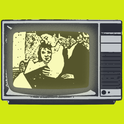
Before I met him, my idea of Hans Werner Henze—it’s the 100th anniversary of his birth this year—was that of a scary modern composer, based largely on a hazy memory of a photograph in which, Bond villain-like, his modernist bald head swathed in smoke, he brandished a cigarette in one hand and a pencil in the other. Looking back at the photo archive now, it’s difficult to believe I could have been so wrong. Hans was always a Romantic, with an urbane playfulness that you can see in the old photos and in two videos I managed to dredge up on YouTube. A serious German TV interview from the 1960s where he archly denies the use of “stimulants”—“Stimulanzien nehme ich überhaupt… gar keine” (I don’t take any stimulants at all)—cue wink. Or a film with the great guitarist Julian Bream that starts out with the two having a casual game of badminton, Hans in an unlikely yellow cap and bell bottoms. They go on to discuss Hans’s piece in progress, the Royal Winter Music for guitar, and Hans ends by offering a bon mot of characteristic collegiality: “The outcome is, I think, a very fruitful and healthy cooperation between a creative guitar player and a learning composer.”
‘I don’t take any stimulants at all…’
I’m celebrating Hans’s birth year by performing some of the Six Songs from the Arabian which he wrote for me to sing in the late 1990s. He’d composed a lot for voice—opera, orchestral works—but very little for the classic Lieder setup of voice and piano—only three settings of poems by his friend WH Auden, including a sublime version of the famous Lullaby, “Lay your sleeping head, my love, Human on my faithless arm”. I sang them for the Henze 70th birthday celebrations at Aldeburgh in 1996 and he promised me a cycle, originally intending to return to an old idea he had for Fischer-Dieskau to use poems by his dear departed friend Ingeborg Bachmann from her collection The Invocation of the Great Bear.
In the end, he wrote his own texts, spirited invocations of trips he had made to the island of Lamu off the coast of Kenya. The verses are populated by characters Hans had met, like the reckless seaman Selim in the first song; a closely observed praying mantis; the wailing Fatuma, abandoned by her lover. He even put in a little present for me, a quotation from the witches’ scene in Goethe’s Faust, since I’d published a book about witchcraft around the time we met. These are hard songs, with a ferocious piano part which I doubt anyone could bring to life with quite the electric fervour that my musical partner, then and now, Julius Drake, summoned up.
Looking back at my score, I find scribbled notes that remind how much, as a musician, Hans agreed with St Paul—“the letter killeth, but the spirit giveth life”. “Don’t sing,” he often advises or, advocating effect over accuracy, “the notes are not interesting enough to be played properly.” He’s always thinking about atmosphere and instrumental colour—“two basset horns” or an “Arab mandolin”.
We first played the last song, words not by Henze but by Friedrich Rückert, a hymn to the moon, in Hans’s house on the outskirts of Rome, with its own ancient olive grove where Michelangelo and Vittoria Colonna had walked and talked philosophy. As I sang, the moon rose on the balmy summer evening.