“A nice bit of scrag end” was something my grandma would have asked for at the butcher’s. I did not expect the day would come when a photo of this cheap cut of lamb would appear in my WhatsApp messages, but this was how Tim Ecott chose to illustrate his frustration about “the guff talked about ‘food security’ in this country”.
From the closure of the Strait of Hormuz to the recent heatwaves, various incidents have pushed the concepts of “resilience” and “security” to the fore, with experts warning of threats to food production from climate change and higher fertiliser and energy prices.
The modern food system is very much a global affair, while farming has often become the lonely pursuit of one man or woman and their tractor. Ecott’s Eva and the Island: Life at the Loneliest Farmhouse in the World tells a different tale, one of local food production and community agriculture.
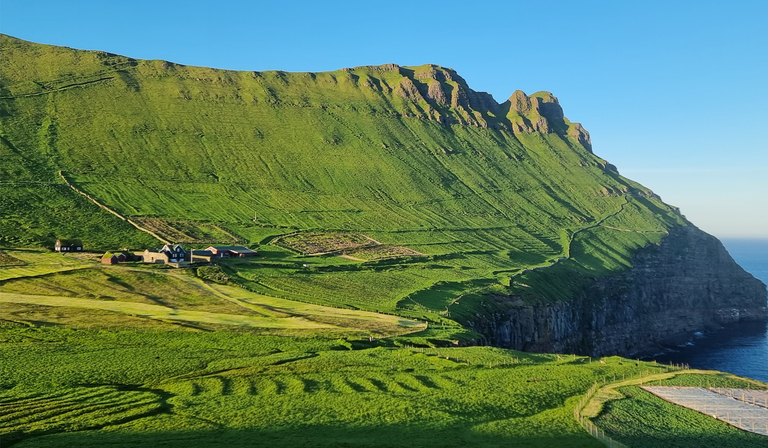
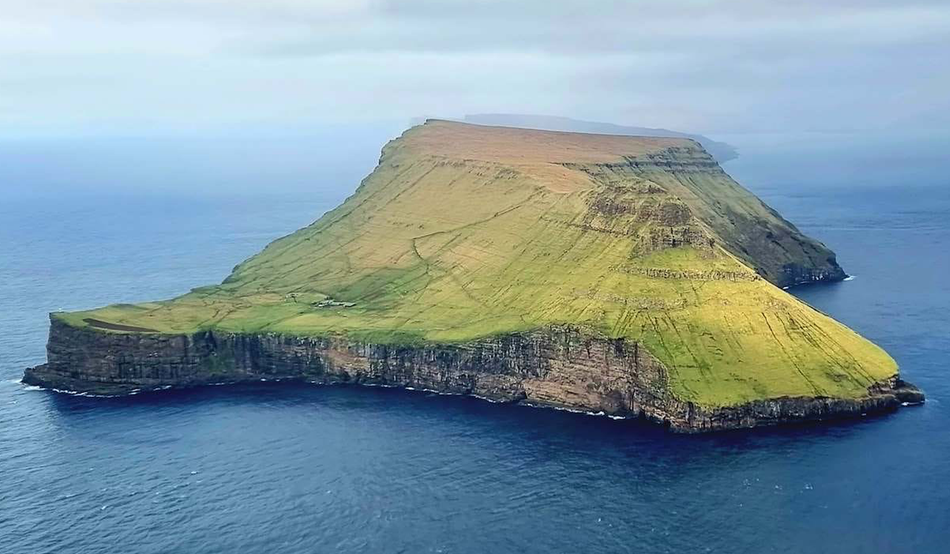
Stóra Dímun is a tiny, treeless basalt rock of just over a square mile. Lost in the Atlantic Ocean, it belongs, like all the Faroe Islands, to Denmark but sits geographically closer to Scotland’s Shetland Islands. Once home to as many as 35 people, the island’s sole residents today are Eva and her husband Jógvan Jón. Their children have flown the nest, but the couple plan to continue as long as they can, with the help of visiting friends and relatives, to work the land that has been in Eva’s family for eight generations.
Unlike farmers on the mainland, the way Eva and Jógvan Jón farm has largely not changed in the last 50 years. They use little machinery and no pesticides, just “a bit of granular fertilisers on the kohlrabi,” says Ecott. But they face the same problems and concerns as farmers everywhere, and, so far as climate change is concerned, they are aware that “things are not as stable as they were”, with storms becoming more frequent and more severe.
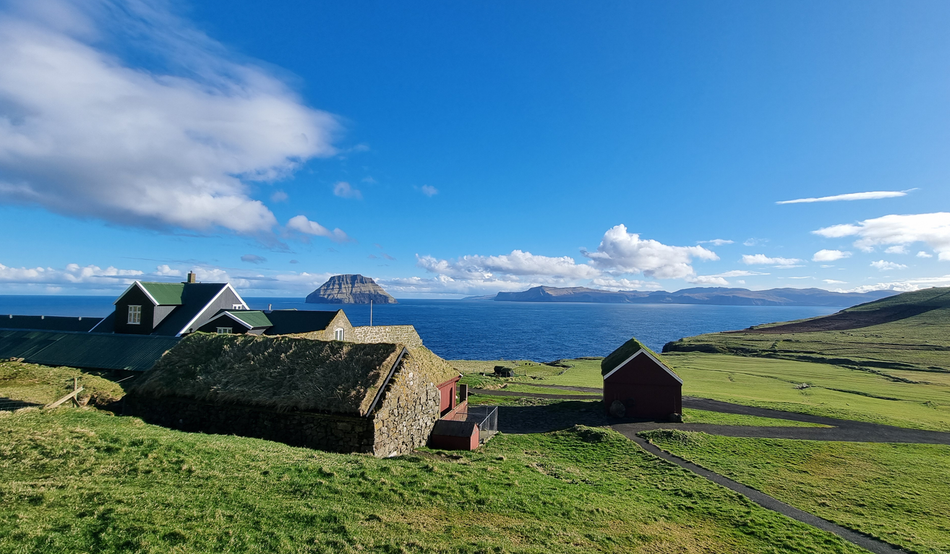
Ecott, a journalist and former BBC correspondent, has been visiting Stóra Dímun several times a year for 15 years, and his love of the island and its people is tangible. He is in thrall to its wild and unpredictable nature, in particular the birds—razorbills, guillemots, puffins, kittiwakes, fulmars, oystercatchers. He writes with deep affection, often anthropomorphising objects and animals. The farmhouse, which “keeps its back to the sea”, “wears a green corrugated metal roof”. A sheep’s fleece during shearing becomes a “bedjacket being unbuttoned” and the island’s pervasive clouds are “a swirling diaphanous skirt that dips its hem into the waves”.
He refuses, however, to romanticise the reality of living on the edge of the world, where every task is hard work and weather-dependent, and death and the dead are ever present. His descriptions of the island’s “frayed and crumbling” cliffs and the hazardous path down to the shore that has claimed many lives over the years are vertigo-inducing.
Ecott takes a similarly direct approach to food and farming, only drawing the line at the offer to catch and eat a puffin, admitting: “It’s the one bird I feel squeamish about killing.” Eva’s father says the puffin was a regular part of his diet as a child, and her grandfather is credited with proclaiming that “a proper lunch for a man was three puffins and one guillemot”. Even putting squeamishness and concerns about declining numbers of puffins aside, the idea of salted puffin “smeared with rhubarb jam, accompanied by boiled potatoes and a thick brown gravy,” as described by one visitor in the 1940s, is unlikely to appeal to many people today.
Lamb, on the other hand, is still widely consumed—yet, in the United Kingdom and other western countries, few want to think about how the animal arrives on their plate. The same goes for for other meat products, of course. Ecott says he gets “faintly irritated when people shy away. If people are repulsed, they shouldn’t eat meat.” Eva and her family definitely do not live the “sterile, disassociated life” Ecott rues as having become the norm in the UK. The September slaughtering of the sheep involves everyone, young and old. Ecott remembers Eva’s nephew “helping to collect the freshly severed sheep’s heads and placing them on a rock so that the blood would drain from them. He was six years old.”
Given such details, Ecott says he expects a similar reaction to his latest book as to his previous work, which was also about life on the Faroes. On the Goodreads website, “some readers, predominantly Americans, said [The Land of Maybe] was excellent, but that they could not deal with the descriptions of slaughter and death,” he explains. He describes this way of looking at literature as Victorian, comparing it with our ancestors’ actual or invented propensity for putting curtains around piano legs to avoid causing offence.
‘We expect someone to do the dirty work, but we expect food to be cheap’
This denial of reality is “part of a bigger societal problem” which explains why farmers feel devalued, adds Ecott. “We expect someone to do the dirty work, but we expect food to be cheap,” he says. “We want high animal welfare and fewer pesticides. The intelligentsia wants biodiversity. But we don’t want to pay. No government is brave enough to say we should be paying twice as much for our food.”
That said, Ecott insists he isn’t a campaigner, but simply writes about what interests him. “I just describe things as they come to mind,” he says. He also practises what he preaches. He isn’t on the island to observe but to get stuck in and is game for practically any task. The only time Ecott nearly comes undone is when slaughtering the geese. He is fine with killing them and “reaching up inside and pulling out their innards, saving the heart and livers, snipping off their feet and their lower wings, but… I begin to think the cloying feathers are about to send me over the edge into some kind of panic attack,” he writes.
Despite such experiences, which would send most of us running for the hills, Ecott has only praise for the island and its people. “I feel very at home there,” he says. “I admire the way people deal with each other. It has changed me, made me more patient and a lot less confrontational when dealing with people with different opinions.”
Access to Stóra Dímun is by helicopter from Tórshavn, the capital city of the Faroes on the island of Streymoy. Ecott says friends from there send messages after he has left to check whether he has gone stir crazy with only Eva and Jógvan Jón for company. Ecott says it is Stóra Dímun, not Tórshavn or his home in the south of England that “feels like the real world”.
He asks Eva, who is in her forties, whether she ever feels lonely. “No,” she says. “There is a difference between being alone and being lonely. I can feel lonely in a city at night when I look at all the houses with their lights on and realise I don’t know any of the people who live in them. I never feel like that here.” It is this sense of community, of pulling together, of working with, rather than against, the elements that attracts Ecott to the island. His book echoes this collective spirit. His wife Jessica drew the wildlife illustrations and his daughter Ilona sketched the map of the island that both help bring Ecott’s writing to life.
The threats to food and farming in Britain and elsewhere are very real, and successive UK governments have done little to grapple with the problem. In January, a government report warned of the threats to national security if climate change and the destruction of nature are allowed to go unchecked. “Without significant increases in UK food system and supply chain resilience, it is unlikely the UK would be able to maintain food security if ecosystem collapse drives geopolitical competition for food,” it states. UK food production is vulnerable to what happens domestically but also to what happens outside its borders, given that the country imports two-fifths of its food. Industry forecasts suggest that the climate change-driven extreme heat and drought this summer could have wiped out 9m tonnes from Europe’s grain harvest—which is especially sobering when you consider that around 15 per cent of the UK’s food imports came from southern Europe in 2024.
Polling from the Food Foundation and the independent Food, Farming and Countryside Commission, published as Andy Burnham took over as prime minister, found fewer than one in 10 people in the country think that the food system works well and should be left as it is. Ninety per cent of respondents said farmers deserve a fair price that covers the real cost of production; over 70 per cent claimed that they would feel more positively about a politician who talked about food grown in their area.
In this context, Ecott’s book is a timely reminder that nothing comes for free and that any attempt to create a more resilient food system will mean engaging with people, not just agreeing top-down policies. As he says, “We may have heard our parents or grandparents talk about ‘scrag end’ but do we know what it is, and would we like to see it on our plates?”