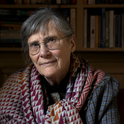
Twelve years ago, in a speech at the National Book Awards in New York, Ursula K Le Guin was explicit that society needed authors to imagine our way out of impending “hard times”. She intended her words to spur writers into coming up with ever bolder “alternatives to how we live now”.
Le Guin wanted to see more books tackling the sort of environmental issues she had been raising since setting her 1969 classic, The Left Hand of Darkness, on the icebound planet of Gethen. Amitav Ghosh wanted much the same thing when, two years later, in his essay collection The Great Derangement, he said the world needed more literary fiction about climate change.
An unscientific poll of my inbox—an overcrowded resting place for publicists pitching The Next Best Book—would suggest that both Le Guin’s and Ghosh’s wishes have been heeded. Ben Eastham’s debut, The Floating World (about “grief, late capitalism and imminent climate collapse”), coming this October from Fitzcarraldo Editions, was the subject of but the most recent email I received matching the brief for this essay while I was writing it. Others ranged from M John Harrison’s The End of Everything and Claire Vaye Watkins’s Yellow Pine to Deb Olin Unferth’s Earth 7 and Ash by Louise Wallace—all out this summer.
Climate fiction, the subgenre of novels responding to the Anthropocene moment, would appear to be in rude health. It even has its own shiny literary award: the Climate Fiction Prize, now in its second year. Hum, by Helen Phillips, about a mother struggling to connect with her children in a near-future world scorched by climate change and semi-populated by intelligent robots called “hums”, was recently named the 2026 winner, an accolade that came with £10,000. Hum is an inspired titleholder: a poignant, disturbing read that makes you value the world we still have, faults and all. I read it lying in my garden one warm afternoon this spring, feeling grateful that—unlike the protagonist, May—I didn’t have to pay an extortionate sum to access my greenery.
Elsewhere, books about the climate emergency have become staples of lists both long and short for major literary prizes. Megha Majumdar’s A Guardian and a Thief, where protagonists live in a broiling near-future version of Kolkata, and Charlotte McConaghy’s Wild Dark Shore, which unfolds on a drowning subantarctic island in the Southern Ocean, were both among this year’s Women’s Prize top dozen; while Maria Reva’s Endling made it to the Booker prize longlist and Climate Fiction Prize shortlist. Richard Powers’s Playground, which saw the American writer move on from the forests of The Overstory to oceans, was on the 2024 Booker longlist. Literary heavyweights including George Saunders, Ian McEwan and Ali Smith have all put the climate disaster at the centre of recent works.
Ansa Khan Khattak, editorial director at Sceptre, is seeing more submissions tackling the subject. “In fiction, climate change often seems to come couched in terms of what it says about us as humans. In Ellena Savage’s forthcoming The Ruiners, pollution and illegal dumping tie into questions about legacy, responsibility and power.”
And yet, I suspect Le Guin might be disappointed. She wanted writers to “see through our fear-stricken society and its obsessive technologies to other ways of being, and even imagine real grounds for hope”, but that vibe has yet to infiltrate work being published. Solarpunk narratives, a sort of sci-fi sub-subgenre that conjures a better world, are far from mainstream.
This year’s Climate Prize, which is open only to full-length novels originally written in English, proved that we are not done with dystopias. Tim Winton’s Juice, An Yu’s Sunbirth and Susanna Kwan’s Awake in a Floating City were just some of the long- and shortlisted novels with environmentally oppressive backdrops. Even Hum—which (not to risk spoiling the tense plot) has elements of hope—is distinctly dystopian, with its oily, unswimmable seas and burned out forests, even if Phillips is careful not to overdo such imagery.
“I get cross with my colleagues who write dystopia,” says Manda Scott, a vet-turned-novelist. “We don’t need them. They’re not useful [because they] give people more internal ammunition for imagining a future that will take us over the edge into mass extinction.”
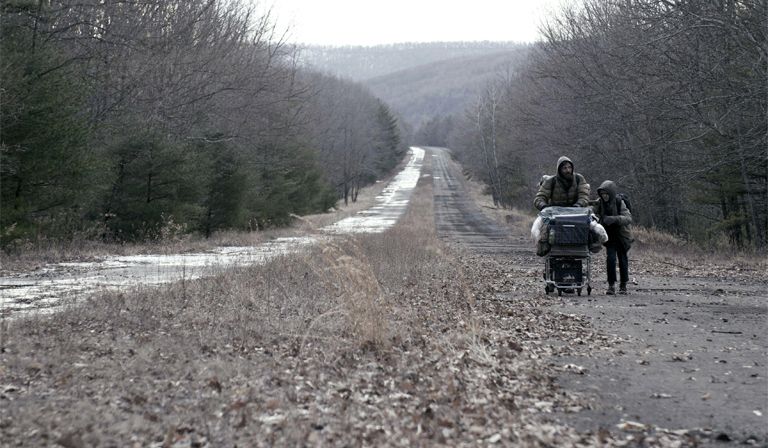
Think of The Road, Cormac McCarthy’s cataclysmic 2006 fable set in “a world without a biosphere”. Glossing over the fact that it took me years to face reading this horror show, what I struggled to fathom was how anyone could have survived whatever happened to wipe out most of humanity.
‘One thing climate fiction gets really wrong is depicting so many small groups of humans roaming a post-apocalyptic landscape’
Scott would agree. “One thing climate fiction gets really, really wrong is depicting so many small groups of humans roaming a post-apocalyptic landscape. If we kick ourselves over into mass extinction, humanity will be gone. That’s really hard to get your head around. We can’t get to something that we can’t imagine, which is one of the reasons we are in a dystopia now because it’s really easy to imagine that,” she says. In Any Human Power (2024), she explores a way out of the current mess, a “thrutopia”, to use the term coined by Rupert Read, philosophy professor at the University of East Anglia.
“Does dystopia motivate readers to choose a different path?” asks Sarah Hall, who is exploring the subject ahead of delivering the Faber lecture on the impact of dystopias later this year. Her own work has ranged from the post-apocalyptic (The Carhullan Army) to biodiversity (The Wolf Border), while her latest novel, Helm, about Britain’s only named wind, was written during the “nature-rights era”, she says. “I came out of my dystopia thinking, I can do more; I can add to the conversation in a different way. The challenge is finding a way of making really interesting fiction that is doing things more dynamically and more positively.”
Friederike Otto, a professor of climate science at Imperial College London and one of the judges for this year’s Climate Fiction Prize, puts it simply. “We need books that ask us, ‘What actually is the world we want to live in?’”
There is some change, though, in how novelists are approaching climate issues. Texas-based Deb Olin Unferth thinks writers are taking responsibility for the world we are losing by trying “to figure out where we went wrong”, adding, “I see all these different moral questions being asked; but if I look at the early climate-change books, I don’t.”
For Claire Vaye Watkins, “climate fiction has got less remote, less future tense, less speculative. It may be undergoing a genre shift from sci-fi to realism, though the best writers have always blurred that line,” she tells me over email.
Watkins’s own work has certainly pivoted. While her debut novel, Gold Fame Citrus, was set in a water-starved near-future in which desertification has forced most Californians to flee their state, the action in her new novel, Yellow Pine, named for an actual solar power plant in the Mojave Desert, takes place shortly after the pandemic. “Where Gold Fame Citrus imagined a collapse that was just out of sight, around the corner perhaps, Yellow Pine looks at the carnage happening all around us today, and wonders how people who are attuned to that loss carry on,” she explains.
Phillips has long written in the speculative space: Hum is the Brooklyn-based author’s sixth book. Not writing about the climate isn’t an option if you cast your characters ahead in time, she says via a video call from New York. “When I think about the near future and the world my children will live in, I am confident it will have climate impacts that are already unfolding. If I wanted to write in the near future, regardless of whether I wanted to write about climate or not, I don’t think I could have avoided it.”
In 2024, a New Yorker podcast asked if science fiction was the new realism, given how tech founders such as Elon Musk and Jeff Bezos have cited classic sci-fi texts as inspiration. Now, it turns out, climate fiction itself is increasingly drawing on real life events, as Phillips makes clear in the endnotes to Hum. The “wet-bulb” temperatures (a heat index that combines heat and humidity) that kill 20m people during an Indian heatwave in the opening chapter to Kim Stanley Robinson’s The Ministry for the Future (2020) have already happened. Likewise, Stephen Markley grounded The Deluge (2023) in real climate science.
But, with apologies to Ghosh, too much realism can make climate fiction a hard sell. Who wants to sink into an eco-disaster novel when they can read the headlines? I’ll admit to putting off opening some of the books in my own cli-fi stack. I worried most would feel too similar; an overheating planet is only ever going to mean soaring temperatures and rising sea levels. Past encounters with books like Gold Fame Citrus meant that I’d had my fill of sandswept landscapes and parched protagonists. Memories of films such as Interstellar (2014), with its Dust Bowl imagery, only added to my eco-angst fatigue.
Research into the impact of climate fiction is scarce, but a 2018 Yale-affiliated study found that only 26 per cent of respondents reported a positive emotional response to the genre, with many expressing feelings of futility and hopelessness.
Arifa Akbar, chair of judges for this year’s Climate Fiction Prize, shared this sentiment. “I wanted to judge this, but a part of me dreaded this massive encounter with books that put climate fiction at the foreground, because I thought the experience would be depressing and gloomy and hardcore and earnest,” she says.
Fellow judge Otto, who is also the cofounder and lead of World Weather Attribution, an international effort to analyse and communicate the possible influence of climate change on extreme weather events, was blunt. “If I hadn’t been on this jury, I would not have read these books—because most climate fiction I’ve read before was either very dystopian or like The Ministry for the Future, which I find very dry.”
Even Lucy Stone, executive director of Climate Spring, the company behind the prize, which also consults on climate-related film and TV projects, had reservations. “We debated the utility of calling it a ‘climate’ fiction prize,” she admits. “Climate, as a word, has a lot of baggage. But that’s why we set up the prize—to ask, ‘What is fiction doing in a time of climate crisis?’”
Happily, the 50 or so entries this year—twice as many as for the inaugural prize—were a mixed grouping. Akbar was surprised by the range of submissions, finding the stories “compelling”. “I liked how climate bled into every kind of story, whether it’s about AI, or the idea of community and whether to flee or stay, or how you love each other during a time of crisis.” Otto also highlights the variety of texts, which included Jon McGoran’s thriller, The Price of Everything, which she gave to her partner. “There are people who really love reading thrillers, but they would not read a different kind of climate fiction,” she says.
There was even something for Otto’s scientific colleagues: Reva’s Endling, a contemporary metafictional heist novel about a suicidal Ukrainian malacologist intent on saving a particular species of snail. “Not only can you spend your energy trying to solve something that matters longer term, like a biodiversity crisis, when there is an immediate disaster [like war] in front of you, but it is really important that you do,” says Otto.
Simon Savidge, a broadcaster and seasoned literary prize judge, whose YouTube channel Savidge Reads has more than 2.5m views, says being on this judging panel opened his eyes to the multiplicity of books in this area: “I actually think climate fiction is a whole wide-reaching genre in and of itself.” He singles out Dusk, another shortlisted title, by the Tasmanian-based author Robbie Arnott: “This could be seen as a historical climate-fiction novel, an origin story if you will, or possibly a world trying to heal post-climate crisis. That’s the wonder of these books, they can subvert readers’ expectations.”
Dusk was the shortlist revelation for me, but was barely reviewed on its UK release last summer. Set sometime in the 19th century, it is about two siblings, 37-year-old Iris and Floyd Renshaw, who head to the Tasmanian highlands to track a puma that is killing everything in its path. Rather than exterminating the puma, a metaphor for wildness, Iris falls for the land itself. “Instead of harshness or bleakness she felt a freeing, lung-emptying openness,” Arnott writes of Iris’s first impression of the highlands.
I’d worried that a prize with an underlying activist agenda might reward stories that incite action rather than succeed on the power of their prose and the quality of their stories, but books like Dusk convinced me that my concerns were unfounded. My only quibble was whether Dusk met the prize’s own criteria, which require climate issues to drive the narrative.
Does the science have to be right? ‘That’s an interesting question…’
Not that it matters, because one point of the prize—any prize—is to get readers, myself included, into different types of books. “For me, a good climate-fiction book just has to tell a good story. That’s what I kept pushing. It’s all about the power of the story,” says Akbar.
Was it also about the power of the science? Does the science have to be “right”? “That’s an interesting question,” says Otto, pointing out that good climate-fiction books can get the science “clearly very wrong”. One is Kwan’s shortlisted Awake in the Floating City, which takes as its premise a flooded San Francisco after permanent rain. “That’s not what we’re expecting to see. But it works very well as a metaphor, because [the flooding] makes the city very hard to live in and means we have to rethink how we deal with the weather. Climate fiction is more about asking questions, such as: what does this changing environment mean? How do we live? And how did we get there?”
Science gets writers only so far, in any case. In Earth 7, Unferth’s fictional sky is “full of sulphur and diamonds, shot into the air by cannons to scatter the sunlight”, an image drawn from real suggestions about how to block the sun’s force, but dramatised for narrative effect. Climate fiction is, after all, just that: fiction
Hum may not have contained all of Le Guin’s alternatives but, says Phillips, “For me, a novel is a question, not an answer. But to have questions about how we are going to have to live alongside these changes circulating in people’s minds is important.”
For my own part, I emerged from months of climate-focused reading with a renewed appreciation for the world around me—and a conviction that if we have to rethink our approach to the weather, rethinking our approach to reading couldn’t hurt either.