Around 15 years ago, together with two colleagues, I was compiling and translating an anthology that was eventually published as The Penguin Book of Russian Poetry. We were eager to include previously published translations, but few were good enough. Late in the day, however, I came across a small collection: Poems from the Russian (1943), translated by Frances Cornford and Esther Salaman. Nearly all the translations seemed accurate and musically perfect; we included nine and could happily have included more. Few translated poems—especially those in rhyme and metre—sound so natural. Here, for example, are the last two stanzas of “The Hay Harvest” by Apollon Maikov (1821–97):
The poor old horse who draws the cart
stands rooted in the heat,
with sagging knees and ears apart,
asleep upon his feet.
But little Zhuchka speeds away
in barking brave commotion,
to dip and flounder in the hay
as in a grassy ocean.
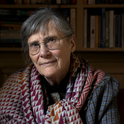
I noted that one of the co-translators, Esther Salaman (née Polianowsky), was born in 1900 in Zhytomyr, a city in western Ukraine (then part of the Russian Empire) with a predominantly Jewish population. The daughter of a moderately well-off Jewish timber merchant, she had come to England in 1925 and published two “autobiographical novels”: Two Silver Roubles (Macmillan, 1932), which covers the years 1917 to 1919; and The Fertile Plain (Hogarth Press, 1956), which covers her childhood and adolescence. I bought secondhand copies of both, put them on my shelves—and more or less forgot about them. There were always other tasks that seemed more pressing, and I allowed myself to slip into the lazy, half-conscious assumption that if the books were worth reading, then I would already have heard more about them.
A few months ago, however, I happened to read a little more about Esther Salaman. I learned that she had shown extraordinary resourcefulness during the pogroms that swept Ukraine in late 1918; that, after two years in British Mandate Palestine, she had returned to the Polish-Soviet border and paid a forester to extricate her mother and siblings from what was by then the Ukrainian Socialist Soviet Republic; and that she had then returned to her long-interrupted studies, travelling to Berlin to study physics under such figures as Albert Einstein and Max Planck. In 1924, she published a long article in an important newspaper, the Frankfurter Zeitung, about the Zhytomyr pogroms; this article deeply impressed Einstein.
Einstein encouraged Esther to move to Cambridge and continue her studies under Ernest Rutherford. Soon, however, after marrying Myer Salaman, a Jewish pathologist, Esther turned to what she had always seen as her true vocation: writing. After her two novels, she published two books about the complexities of memory—long before what we now call “memory studies” had been recognised as an independent academic discipline.
Esther died in 1995. She had witnessed several of the most dramatic events and developments of the 20th century—the Bolshevik Revolution, the Russian Civil War, the first Jewish settlements in Palestine and the heady excitement of the early days of nuclear physics—and she had known many of the century’s most important figures; it was Ludwig Wittgenstein, a close friend of her sister Fanya, who suggested she look on her memoirs as “autobiographical novels”.
Learning a little about Esther Salaman’s life was enough to prompt me, at last, to take Two Silver Roubles down from my bookshelves; my wife was ill and so I began to read the book aloud to her. We were both astonished by the subtle texture of the prose, by the freshness of the perceptions and vividness of the details. Esther takes little for granted; she interrogates and layers her memories. More than once, she relates her initial memory of an upset between her and a family member and then adds a crucial and painful detail, emphasising that she remembered this only many years later. She is acutely aware of the difference between her own memories and what others have told her about her early life. Her own recall of the distant past is astonishing. It is as if a scene is passing before her eyes as she writes; she remembers how the light fell in a room, the colours of people’s clothes. She has a particular gift for conveying an emotional state through physical detail; one memory of her father, for example, is of him resting his elbow on the table and his forehead on his outstretched fingers, “as if trying to come to grips with his thoughts”.
She also knows the power of simplicity. She writes of the morning when she and her companions return to Zhytomyr after a brief absence: “We walked in a row in the middle of the road. We did not speak. A thousand Jews had been murdered here while we had been away.”
Esther’s parents are observant Jews, but assimilated enough to send Esther to a Russian school, although this entails studying on the Sabbath. Two Silver Roubles begins with the February 1917 revolution, seen from the perspective of senior schoolgirls. Though irony is never far away, there is an unusual sweetness in the details through which Esther presents this brief, intoxicating period of optimism. On the day of the tsar’s abdication, the girls sense that the authority of the little-loved school governess—known, on account of her long neck, as “the Giraffe”—is “somehow impaired”. The girls correctly assume that “a progressive government” will simplify the complexities of Russian spelling. When their final exams are cancelled, “the girls were delighted, it dawned on many of them for the first time what a pleasant and sensible thing the revolution really was”.
Much of Esther’s irony is directed towards herself. Several of her friends and schoolmates are Bolsheviks and they invite her to a political meeting. The main speaker has spent several years in a notorious prison. Esther writes, “I felt a gnawing doubt. I feared I should never have been brave enough to be a revolutionary in the Tsar’s time, because of a deadly terror of imprisonment. As a child it used to make me ill to be shut up in a room for a few hours as a punishment. To die for the people seemed to me noble and sweet; but to live for them for years within four walls – unbearable.”
On the whole, though, she portrays these months as a happy time. In the final chapter of The Fertile Plain, she writes, “I never afterwards met young people with so much hope as in Russia on the eve of the revolution. It was not that they were more able or talented than people in other countries: nor were their political ideas, whether Socialism or Zionism, Russian discoveries. But they believed there was going to be a world in which man will mean to man something quite new and wonderful. This belief was not discussed, people were not fully conscious of it: it was everywhere around us.” This is well put: the young had to make difficult choices, but few doubted the transformative potential offered by whichever path they chose.
The second section of Two Silver Roubles—an account of spending the summer of 1917 with her family in Krupchenko, a village 20 miles west of Zhytomyr—gives us a clear sense of what it is like to live in a country that is falling apart. The central government is in chaos and the German army is inflicting repeated defeats on Russia. Large numbers of hungry, demoralised deserters from the Russian army are passing through towns and villages. Against this background, routine disagreements all too easily escalate. Esther witnesses conflicts between a local countess and peasants wanting to gather brushwood in the forest she owns; she learns of the intractability of class barriers; she tries to sympathise with a peasant neighbour whose cow has died, but realises that she has merely appeared crass and condescending. The final chapter ends with this enigmatic reflection:
“What have I learned this summer?” I asked myself. […] My answer was: nothing. For, that people are human I knew before I went to Krupchenko. Indeed, only an idiot could not have known it after reading Russian literature.
And yet I was wrong. The Krupchenko experiences sank deep into me: they worked as a poison sometimes, and sometimes as an antidote.
Part, at least, of what Esther means by this becomes clear in the third section of the book, her account of a single week of the late 1918 pogroms in Zhytomyr. This is the book’s dark heart; it differs little from what she had previously published first in Hebrew translation and then in the Frankfurter Zeitung. At one level, it is a gripping adventure story, with unexpected horrors and moments of deliverance on nearly every page. At the same time, it is a profound parable about how to meet evil—an issue initially raised in the book’s first chapter, in a discussion with her literature teacher about Fyodor Dostoevsky. Esther had read Crime and Punishment at the age of 12, and Dostoevsky is a background presence throughout both her novels.
Two factors help Esther to survive the pogroms. The first—and simplest—is that she does not look in the least Jewish. The second is that she engages on a human level with almost everyone she meets. When a marauding Cossack (a member of an irregular military unit known as “The Hut of Death”) comes to her front door and asks, “Do Jews live here?”, she says, “Yes, they do.” Because she looks so un-Jewish, the Cossack and his Ruthene companion assume she means that Jews live in the neighbouring house. Esther, however, invites the two men into her own home to drink tea with her and her obviously Jewish family. She even adds that: “The order to stop the pogrom won’t come yet—you will still have time to kill us.” The amazed Cossack soon becomes her resolute defender.
Later, Esther rationalises her behaviour: “When danger was over, all the reasons for my actions swarmed into my mind so rapidly that they must have been there all the while, keeping below consciousness for fear of burdening the mind and delaying action. It was essential to hide from the Cossacks that you knew the true nature of their request or, even better, not to believe that they came to rob and murder. Tell a blackguard that he is one and he will certainly act as such. It was sufficient to say: ‘Have pity on us, don’t kill us!’ and they would have gone wild.” She also realises that the Cossacks would certainly have found out, sooner or later, that hers was a Jewish family and that, if they had returned, knowing that she had lied to them, she could not have found her “way to their hearts”.
For all this, there is a paradox about the openness with which Esther welcomes these two potential rapists and murderers. On the one hand, she says she acted naturally and spontaneously. On the other, she seems aware that she is putting on a performance. This is how she describes her reaction to the Cossack’s initial question: “My mind stopped working; I did not feel the breath of death, only a hard struggle in front of me. A spark lit in me. It was as though I held a violin in my hand; everything hung on the first touch of the bow. ‘Yes, Jews live here,’ I said.” And then, a few lines later: “He was quite sober now. I knew I had touched the string of his soul.”
The paradox, perhaps, lies in the fact that her performance—like any virtuoso musical performance—springs from the depths of her being. She goes on to write, “And I was in a rare state of mind, and thought, not of death near at hand, but that we are all responsible for the evil of all the world, and that this murderer was not more guilty than I whom he intended to murder. And a great joy welled up in me. Ideas, profaned and cheapened by everyday life, which we have to hide deep in us to keep them alive, were now triumphantly real.” A page later, she continues, “To love one’s neighbour, to love the truth—I should have been ashamed to profess such a misused, dead creed. And yet my faith in mankind had saved our lives. To find that love and truth were elements of our nature, to be compelled by them, was a great happiness to me. I lived on it for years afterwards.”
Five years before this, in 1913, she had written a long letter to her Uncle Baruch. She did not keep a copy of his reply, but preserved most of it in her memory and quotes from it in The Fertile Plain. After making himself out to be inconsistent and perhaps unreliable, Baruch writes: “You are going to be different; your letter makes me think that you are going to live from a centre. […] To give you an example: we Jews have lived from a centre, at some periods more than others—that centre was our faith in God. […] Now for a bit of advice: do not hurry, be patient, and let things mature quietly, and meanwhile love everything that gently blows warmth and light on your soul and body.”
It may, perhaps, have been Esther’s ability to live “from a centre” that enabled her to survive that terrible week; she carried herself with equal poise during several other encounters with murderous Cossacks. She also relates how one morning she found herself walking the same way as a “very corpulent” Orthodox priest. He complains about the length of the walk from the station to the governor’s house, saying he is “on an important mission from Kiev to the future Commandant”. He accepts Esther’s offer to carry his bag. Not realising that she is Jewish, he says, “‘This pogrom is only a beginning. We have a plan to wipe out the Jewish race altogether. A great secret.’ He grinned: ‘We will solve the Jewish problem in the simplest way.’”
Esther wrote this in the late 1920s, before Hitler came to power. The priest’s words suggest that the pogroms of 1919, during which at least 100,000 Jews were murdered, should be seen as the first stage of the Shoah; like the Armenian Genocide four years earlier, they did much to make the inconceivable conceivable. Esther concludes, “I pointed out the Governor’s house. Handing him the bag, I had to restrain myself from flinging it into his self-satisfied face.”
Kate Polak, one of Esther’s granddaughters, has told me that she once asked Esther how she managed not to say anything to the priest. After a pause, Esther replied, “That would have been quixotic.” Esther was a fighter and, like any good fighter, she knew when it was best to avoid giving battle.
Aged about 11, Esther had been shocked to discover from her father that Jesus was a Jew: “Why hadn’t they told me before? I was called Judas Iscariot by the little Ulianovs before I was five, and I soon learned that it was not meant only for me and my family, but for all Jews. But why didn’t anyone tell me that Jesus was a Jew too?” Her bewilderment prompted her to start a diary, in which she wrote, “But if Jesus was a Jew as well as Judas, what right have they to rage against us?” Throughout her life, she retained this disconcerting ability to home in on the questions that most people prefer not to ask.
The most protracted fighting of what is known as the Russian Civil War took place in Ukraine. Vying for control of the country between 1917 and 1921, in addition to a variety of ad-hoc peasant bands, were six larger forces: the Germans, the Bolsheviks, the Whites, Nestor Makhno’s anarchists, the army of the Second Polish Republic and the Ukrainian government forces commanded by Symon Petliura. There was also a short period when Odesa was occupied by British and French forces. Zhytomyr was relatively fortunate, seeing only seven changes of government in the first half of 1919; there were smaller towns that changed hands five times in a single day.
The allegiances of individual military units also shifted unpredictably. It was often difficult for railway controllers to move a train even a short distance forward because they were unsure who controlled the next section of track. At the end of the fourth part of the book, as Esther and her companions are struggling to cross the country in order to embark for Palestine, they are surprised that a railwayman advises against getting out of a train that has finally reached Zhytomyr. “‘Aren’t the Bolsheviks in town?’ someone asks. ‘They are,’ the linesman answered, and put out the candle in the lantern. ‘But at this hour and in the hours of twilight the red turn white; when the sun is high in the sky they go red again.’”
Esther succinctly conveys the confusion of these years, saying of Petliura, “After he had been a few months in power, the whole Ukrainian area was his frontier. When he advanced, he pursued shadows. The Bolshevik leaders disappeared, the men retreated, dispersed, and hid in private houses, to return on the morrow when he was gone. Whom was he to punish when he had taken a town? The peaceful Russian citizen?”
During her last weeks in Zhytomyr, Esther was an active member of “the Defence”, an initially non-partisan Jewish self-defence organisation. She was the first woman to serve in it and it seems, from an article published in Tel Aviv in 1966, that she downplays the courage and initiative she showed. An especially memorable passage in this fourth section of the book is a story told to her by Lubomirsky, a former White Army colonel who has gone over to the Bolsheviks. He had been placed in charge of two prisoners, a man and a woman, both important Communist Party members who were being kept for interrogation. When the two were allowed to meet, all they did was discuss Marxist theory, with absolute calm. This made a deep impression on Lubomirsky. “I’ve seen men die bravely in the war,” he tells Esther, “but this was different. In the war one was often compelled by circumstances to be brave: one’s common sense dictated bravery. But to defy death as these two did was something I had never heard or seen before.”
Lubomirsky then has to execute the male prisoner. He is shaken by the man’s refusal to turn his back to him: “His eyes seemed to grow and come closer to me. I saw only them. They became as large as wheels and filled with a humid darkness. Round the pupils they shone like pearls, and they trembled.” A few hours later, Lubomirsky overhears a fellow officer, his superior, boasting about how he gave the woman “a lesson in Communism”, taking the firing squad into her cell and encouraging the men to gang-rape her. Appalled and enraged, Lubomirsky hits his superior on the cheek—“on the right cheek, then the left, then the right again. I tell you, I saw red.”
Lubomirsky was put under arrest; surprisingly, he was not executed. His account of this “earthquake” in his life ends, “Now I’m a Bolshevik […] because I believe that men are beasts and ought to be forced to live decently.” Esther concludes wrily, “This did not seem to me very logical.”
The fifth and last section of the book begins with Esther, her boyfriend Schlomo, Schlomo’s sister and several others setting out for Odesa. After the first day of travelling, they arrive at an important railway junction. It is swarming with Red Army soldiers. Esther writes, “They looked forlorn, desperate men. As a mass they had a purpose, but each individual was like a soul lost in hell.”
On one occasion, at least, Esther loses her usual surefootedness. As they were about to leave Zhytomyr, Schlomo’s mother had given him a package of white bread and chicken that she had just prepared for the Sabbath. Esther and Schlomo start to eat this in a station waiting room full of hungry soldiers; they are lucky to escape with their lives.
Later, Schlomo endangers his and his companions’ lives by wearing a Star of David, which some anti-Bolshevik peasants mistake for a Bolshevik commissar’s Red Star. Two of their companions are murdered by other peasants, who believe them to be Whites. Esther herself nearly dies of typhoid, but she recovers just in time to board the Ruslan, a ship often referred to as the Israeli “Mayflower”; many of its 600 or so passengers went on to play important roles in Mandate Palestine and, later, in Israel or the US.
The Fertile Plain, the second of Esther’s autobiographic novels, is less dramatic but equally well written. What impressed me above all was Esther’s portrayal of the richness of her family life. She had a particularly warm relationship with “Baba”, her maternal grandmother. Though brought up in a very different world from Esther, Baba consistently showed a deep, intuitive understanding of her Russian-educated granddaughter. After describing Baba’s “lovingkindness”, Esther adds that these words do not bring to light all that is expressed by the Hebrew hesed, a word she had known from earliest childhood: “It was used often, yet it never became stale. Like mercy it was not exacting, but it was tenderer; it could not be made into a commandment: one did not say ‘have loving kindness’, as one said ‘have mercy’. To attempt to sum up its meaning I would say it is the fresh tender kindness, a wonder that does not age, that man knows for a moment, and God forever.” Esther soon ceased to be an observant Jew, but these lines exemplify the respectful, quietly lyrical tone of all her descriptions of Jewish beliefs and rituals. Her narrative of a family Passover deserves to be included in every anthology of accounts of traditional Jewish life in Eastern Europe.
For all the moments of horror, Esther’s writing is suffused with a great deal of joy. It is possible that the love of her mother and grandmother is what enabled Esther to survive the traumatic years from 1917 until her marriage to Myer Salaman in 1926: “Mother’s smile I saw again and again; it was very special: a gift of gratitude. I have a memory of her sitting at the table: a glass of tea is on the white tablecloth in front of her, a piece of lemon is floating in it. We are both watching the tea as it turns pale. Mother is resting, relaxing. She sees me, smiles, handing her happiness to me.”
For the sake of simplicity, I have used for this article the real names of Esther’s family and friends, rather than the fictitious names she gives to many of them in the two novels. Both novels deserve to be handed on to new readers, along with a commentary noting differences between their accounts of events and Esther’s accounts of the same events in the privately published The Autobiography of Esther Polianowsky Salaman, written at a later date with the help of her daughter Thalia Polak. The novels are better written, but the Autobiography is important insofar as it covers not only Esther’s 19 years in Ukraine, but also her years in Palestine and Berlin and her first year in England.
Sadly, it does not cover the remaining 70 years of Esther’s life in England; her memory began to fail while Thalia was helping her to compile it.