In January 2004, Jürgen Habermas, the German philosopher of the public sphere who died in March at the age of 96 (see Obituary, p83), entered a dialogue with Joseph Ratzinger, the year before the latter was elected as Pope Benedict XVI. Habermas, a self-proclaimed atheist who had been ungenerous to organised religion in the past, conceded to Ratzinger that he had come to think that no culture of liberty was possible without tolerance of religious thought in the public square.
Tolerance is a liberal virtue which, in the time of hysterical, instant overreaction, is in short supply. We must defend it strongly. On Monday 16th March, 3,000 people attended an open iftar—a meal with a short break for prayer—in Trafalgar Square, London, to mark the end of Ramadan. Nick Timothy, the Conservative MP for West Suffolk and shadow justice secretary, took to social media the following day to describe the public prayer as “an act of domination” which took place, “provocatively” he added, next to a church. There has followed an unedifying debate, mostly about the trivial issue of whether Timothy should be censured or sacked, which is hardly the most significant principle at stake.
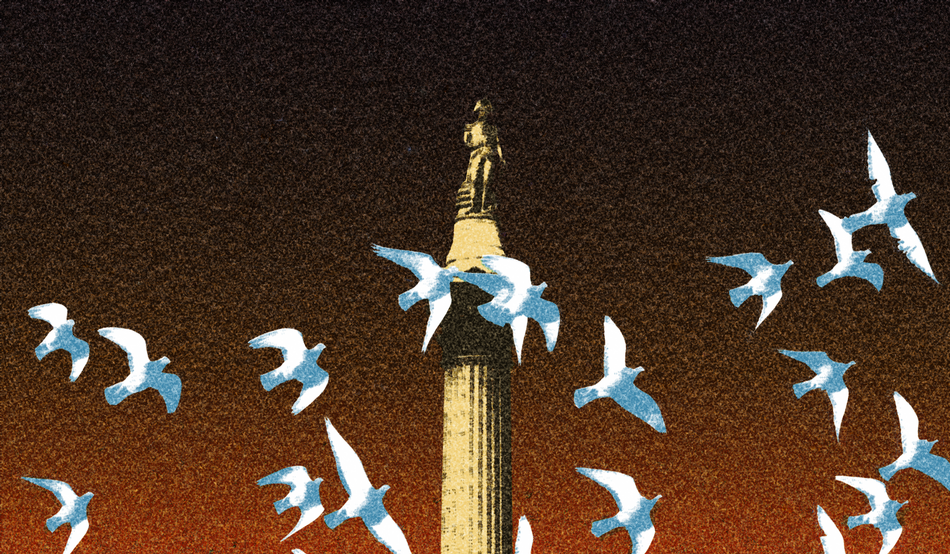
The question that counts, for a liberal society, is the nature of a public square. In this case, the territory of Trafalgar Square is one with a radical history. It was the site of a famous political demonstration in 1887 known as Bloody Sunday, the culmination of the first Aldermaston march in 1959 and the site of the riot against the poll tax in March 1990. It is also a place which hosts a litany of religious events. On Good Friday the Passion of the Christ will be performed in public there. On 18th April there will be a Sikh celebration. There have often been evangelical Christian events made up of nothing but prayer. Presumably when Justin Welby, in his former capacity as the archbishop of Canterbury, turned up at one in 2019 this was not considered an act of domination.
Besides, the iftar in question was an open, ecumenical event, to which a devotee of any religion and none was welcome. Its very purpose was a conversation with those of other faiths. To call it an “act of domination” is foolish and inflammatory. Too many on the right enlist Christianity to make the absurd claim that British identity is being hollowed out by immigration and the higher birth rate in the British Muslim community. Such a claim has real consequences for people in this country.
Tolerance is a liberal virtue which, in the time of hysterical, instant overreaction, is in short supply
On the streets of British cities we are starting to see the cross of St George with a crucifix superimposed over the top. This suggests a deep insecurity. Behind its aggression, there is something beleaguered about the Christian right. The Christian heritage of Britain is a fact which is not threatened by the existence of people of other faiths. The central point about the liberal public sphere is that nobody dominates. There is room in Trafalgar Square, and in every other public square, literal and metaphorical, for everyone. A National Gallery full of Christian art, St Martin-in-the-Fields, an iftar open to all. Any viable multicultural nation has room for all this, and cherishes the fact.
So that is why we join the Jewish News, the Anglican bishop of Willesden, the bishop of Kirkstall and the prime minister in defending the right of people, whatever their religious devotion, to gather in prayer and celebration. The freedom of one group is the freedom of all.