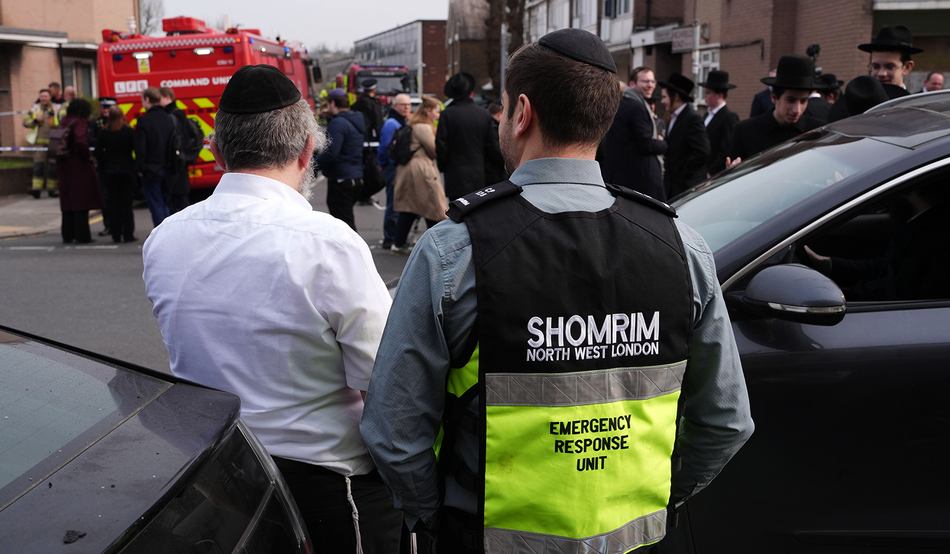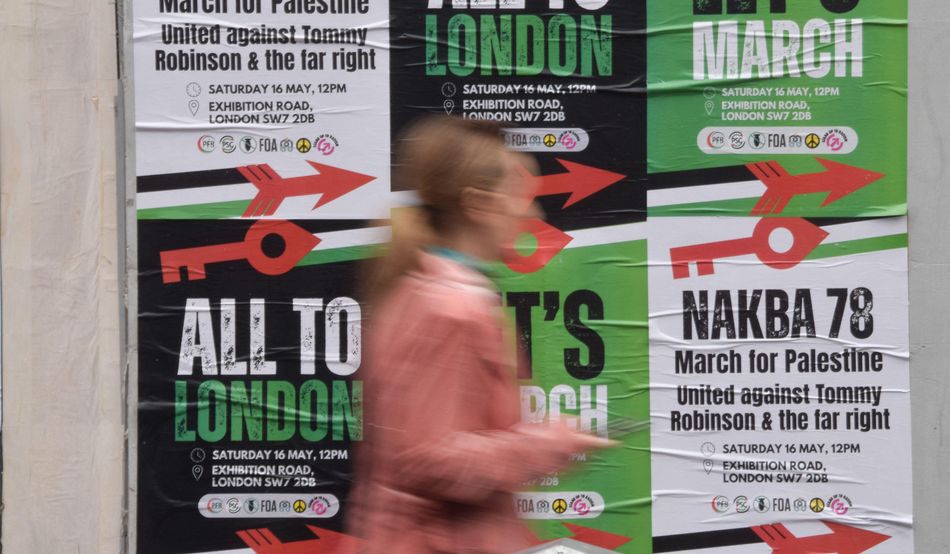
Many words have been spoken since the stabbing of two Jewish men in Golders Green last week about how to protect the Jewish community. The attack followed a string of incidents: firebombings of synagogues and Jewish buildings, the destruction of ambulances belonging to a Jewish charity, and arrests linked to surveillance of major Jewish sites. In October 2025 two Jews were killed in a terror attack at a synagogue in Manchester on Yom Kippur, the holiest day in the Jewish calendar. A few months ago, two men were jailed for plotting a mass-casualty attack on Manchester’s Jewish community involving firearms and hundreds of rounds of ammunition. It feels like it is open season on the Jewish community.
That fear is not abstract. Dropping my children at our synagogue days after a firebomb attempt against it, I found myself calculating whether my infant son was safer left in the car or carried inside. These are not normal decisions, but they are becoming normalised. Spend even a few moments on social media and you will find not just clear condemnation of such attacks, but also denial, minimisation or even justification.
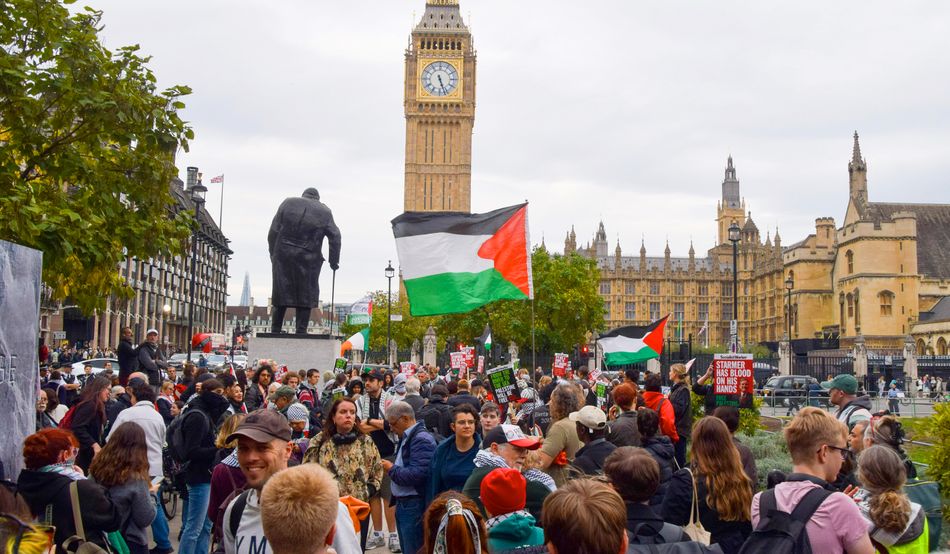
Yet the debate about how to respond has quickly collapsed into a false binary: protect Jewish safety or protect free speech. In a recent BBC interview, Keir Starmer suggested banning some pro-Palestinian protests. News interviewers have lined up to try to push politicians into choosing a side. Whichever side they choose is the wrong one. They are either for protecting Jews and against free speech or for free speech and against ensuring the safety of the Jewish community. Of course, this is is a trap, and a dangerous one.
It is dangerous not only because it oversimplifies a complex reality, but because it actively distorts any decision-making. Politicians are forced into performative positioning rather than serious policymaking; communities are cast as having competing interests rather than being fellow citizens; and bad-faith actors are handed exactly the polarised terrain in which they thrive. Once the question is framed as “which side are you on?”, nuance is treated as weakness rather than necessity.
Curtailing the right to protest in the name of Jewish safety risks casting the Jewish community as beneficiaries of repression, feeding precisely the conspiratorial thinking that has historically placed Jews outside the democratic order. Plus, history offers a clear warning: when civil liberties are eroded, Jews are rarely the long-term beneficiaries.
Many members of the British public simply want to express legitimate outrage at the actions of the Israeli government, driven by the images of suffering in Gaza they see daily. Attempting to shut down that expression will only provoke a backlash, pushing some towards more disruptive forms of protest and drawing the police into confrontation. And when images of grandparents being dragged into police vans start hitting our screens, the Jews will be blamed.
It is also not clear such measures would even address the threat posed by rising antisemitism. To the best of my knowledge, there is little evidence that those responsible for violent antisemitic attacks are drawn from peaceful protest movements. Most likely the perpetrators live in ecosystems and internet rabbit-holes of radicalisation, conspiracy and grievance. Banning marches will not dismantle those networks, nor will it reach individuals already predisposed to hatred. They will still be recruited to firebomb my synagogue in north London.
It is equally untenable to ignore what is happening within sections of the protest movement. Antisemitic language and imagery are present—whether in chants invoking historic violence against Jews or placards recycling conspiracies about Jewish control of media and government. These are not ambiguous signals; they echo some of the oldest and most dangerous antisemitic tropes, familiar from texts such as The Protocols of the Elders of Zion. When such expressions go unchallenged, they contribute to a climate in which many Jews genuinely feel unsafe in public spaces.
The issue is not that every protester endorses these views—far from it. Many people marching are motivated by genuine concern for Palestinian civilians and a desire to see an end to suffering in Gaza. But when offensive or threatening rhetoric is tolerated, it shapes perceptions of the whole. For many in the Jewish community, the sight of large crowds marching alongside such messaging, without visible objection, creates a sense not just of exclusion but of indifference to the safety of Jews.
It is entirely possible to protest the war in Gaza among hundreds of thousands of people and neither see nor hear anything antisemitic. But it is not credible to suggest that no one has. And insisting that there has been no anti-Jewish rhetoric at pro-Palestinian protests means that those who do espouse racism against Jews have, in effect, been given a free pass. So, what is to be done?
First, politicians and commentators should abandon the lazy framing that pits Jewish safety against fundamental freedoms. This is not a zero-sum choice and presenting it as such inflames rather than resolves tensions.
Second, there must be clearer guidance on the boundary between offensive speech and incitement. In a democracy, people will inevitably encounter language they find objectionable, but existing laws and social norms against incitement, the amplification of age-old antisemitic conspiracy theories, and support for violence must be consistently and visibly enforced. Establishing those boundaries requires consultation across communities, not unilateral definition. It also requires a recognition that disagreement is inevitable. It would help if those involved in creating such guidance do not themselves have skin in the game.
Third, protest organisers must take greater responsibility for the environments they help create. A willingness to engage seriously with concerns about antisemitism—rather than dismiss them outright—would go some way towards rebuilding confidence. And those who march for entirely legitimate reasons must ask themselves why they have not challenged hateful rhetoric when they have encountered it.
Finally, and perhaps most crucially, we must look beyond the protests themselves. The rise of online conspiracy cultures poses an enduring threat, as does the capacity of extremist movements to radicalise individuals in the UK. Without confronting these dynamics, any response will be partial at best. The fact that individuals running in this week’s local elections think that sharing social media posts that justify synagogue attacks as revenge is compatible with holding public office illustrates just how serious these problems are.
Some will argue that only the most drastic measures—such as banning protests altogether—can ensure Jewish safety. Such demands are not only unworkable, they risk making the situation worse, both for Jews and for British democracy.
Nuance is difficult in a political climate that rewards simplicity. But leadership demands the ability to hold two truths at once: antisemitism is a real and growing danger, and the protection of freedom to protest the actions of the Israeli government is a democratic right. If we cannot find a way to act on both of these truths, then those who seek to divide us need not do much more. They will already have won.