The origins of the American attack on Iran lie not in the behaviour of Iran or the complex politics of the Middle East, but in the profound constitutional changes currently occurring in the United States.
In a letter to Thomas Jefferson, written in 1798, James Madison reminded his friend why the constitution vested the right to declare war in Congress and not in the president. “The constitution supposes, what the history of all governments demonstrates, that the executive is the branch of power most interested in war and most prone to it,” he wrote. “It has accordingly with studied care vested the question of war in the legislature.”
This was an important insight. A president who is given command of all the armed forces of the state is liable to become trigger-happy unless the occasions for using them are subject to wider controls. More generally, there is an unhappy relationship between domestic power and foreign conquest. Louis XIV, Napoleon, Kaiser Wilhelm II, Hitler, Stalin and Putin all illustrate the old lesson that despots at home tend to be predators abroad.
Many things that the founders of the United States ordained with studied care have not worked out in the way they intended. One of them is the war power. Before the Second World War, there was a binary choice between war and peace. Since then, the boundary between the two has become porous. The US has not declared war since 1942, but it has engaged in many military operations. Some of these, including those in Serbia and Afghanistan, were essentially large-scale police operations involving high levels of violence but falling short of war. Others—for instance in Korea, Vietnam and Iraq—were wars by any standard.
The War Powers Act 1973 was designed to deal with this problem in the aftermath of the Vietnam war, which notoriously was never authorised by Congress. The act requires the president to notify Congress within 48 hours of deciding on military action, and to withdraw all US forces after 60 days unless congressional approval is obtained. It was a bipartisan measure passed after Congress overturned President Nixon’s veto. Presidents have sometimes ignored the War Powers Act just as they had previously ignored the war clause of the constitution, but Congress can always intervene with a resolution requiring him to pull out.
These restrictions are necessary because the president is not otherwise answerable to Congress for the way he uses his awesome powers, except by way of impeachment. His position is completely different from that of, for example, a British prime minister answerable to parliament for everything they do.
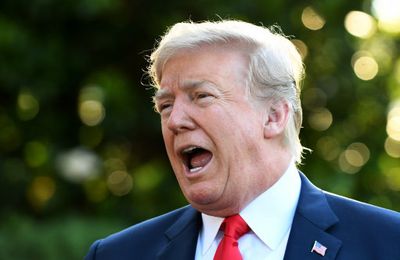
The restrictions are more necessary now than ever before. In the first place, while past presidents have generally been men of stature, cautious and well advised with a normal measure of self-control, we are now confronted with a president who is amoral, narcissistic, impulsive and impervious to expert advice. There is plenty of evidence of Donald Trump’s megalomaniac view of both the role of the United States in the world and his own as its president.
These defects of character are exemplified by the Iran war, which appears to have been started with no real understanding of Iran, no realisable political objective, no discernible endgame and no appreciation of the consequences for the US or anyone else. The US is attacking Iran because it can. The childish glee shown by Trump, Pete Hegseth and their spokesmen at the scale of the unfolding destruction speaks for itself.
Secondly, in an age of acute political polarisation, Congress is no longer capable of the bipartisan spirit which inspired the War Powers Act. The Republican party in Congress has become a tribe committed to its erratic leader, unable or unwilling to fufil its constitutional role as a check on an irrational or misguided president.
We tend to forget how much the peace of the world depends on the domestic constraints on national governments. The vesting of unrestrained control over the armed forces of the world’s most powerful country in a man answerable to no one, a man whose judgement and mental stability are questionable, has made the world an exceptionally dangerous place. The decline of American democracy is not just a problem for Americans.