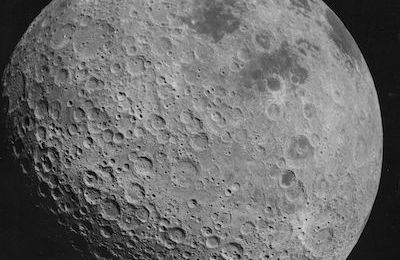
Growing up in the countryside, I was accustomed to doing things by moonlight. When one of my horses had an eye infection, it was by the light of the full moon that I treated her, as it was too difficult to hold a torch, her halter and the eye drops at the same time. I still remember walking down the bitumen road, across the creek and into her paddock, and how bright the landscape was—how easy it was to find her dark hide against the Kikuyu grass. The frosty grass crunched beneath my feet and the stars took up the whole sky. I could see all the casuarina trees along the riverbank, not just shapes but individual fronds. I always walked home from parties by moonlight too; I was drunk and alone for three kilometres of dirt road—but had more than enough illumination to navigate the potholes and save my ankles. When the moon waned it was more difficult and I had to trust the feeling beneath my feet to guide me. Sometimes in the pitch-dark nights I would open my flip phone to make sure I wasn’t at the very edge of the road, where it dropped off into the valley, with no barriers to mark or stop the fall.
When I first moved to Sydney as a 19-year-old I thought there was something wrong with the sky at night. It never got fully black and the clouds were a strange orange colour. I kept asking people about it, asking if there was a storm coming, and no one could answer me, until I realised that the sky always looks like that above a big city, because of the light pollution. When I bring friends back to my hometown, they always comment on either the darkness or brightness of the night, depending on where the moon is in her cycle. The former is obviously better for star gazing, with whole galaxies opening up above you. But I prefer the latter, when the world opens up around you, and whole vistas are as clear as they are in the daytime but just in a different colour scheme—much like the night-time scenes in the 1964 Japanese film Onibaba. You can see how farm workers used to be able to harvest by the full moon, and how it was perfect for a rendezvous and imperfect for a robbery. I think of Tess of the D’Urbervilles being taken advantage of by moonlight, and Bill Sykes waiting for the cover of darkness to use Oliver Twist to burgle a house.
Perhaps because of this country upbringing, my relationship to the moon is more pragmatic and less romantic than it is for other people. A high school friend recently told me that he still had a letter I wrote to him when I was 16, and he commented that I said that I was writing by the light of the moon, which I often did after my parents had gone to bed; turning on a lamp would have woken them up, but fortunately the moonlight fell directly through my window and onto my pillow. To my friend—living in suburbia with streetlamps—that was a magical, whimsical line. To me it was pure practicality. Another friend told me a guy she was involved with had written to her from prison, and she insisted that I read the letter (which had been uploaded to a digital medium) as she said it was so “romantic”. In it he complains about being mistreated by the screws and how they mess with his food and turn his cell light off, so he is writing to her by the light of the moon coming in his window. I couldn’t see any romance in this, simply deprivation and making do.
Although we are unable to properly experience the moon’s incredible strength in the city, she still looms large in people’s imaginations, supposedly dictating not only the tide but people’s moods. The word “lunatic” stems from the idea that the moon causes insanity, and in-house sex workers also believe that the full moon brings out the most bizarre clients. Watching the 1985 film After Hours the other day, which is set in New York, I noticed one of the characters saying it “must be a full moon out there” when they spotted the protagonist’s unusual behaviour. This shows that the mythology around the moon’s power still very much exists, even when she is blotted out from visibility by a city’s smog and silhouettes.