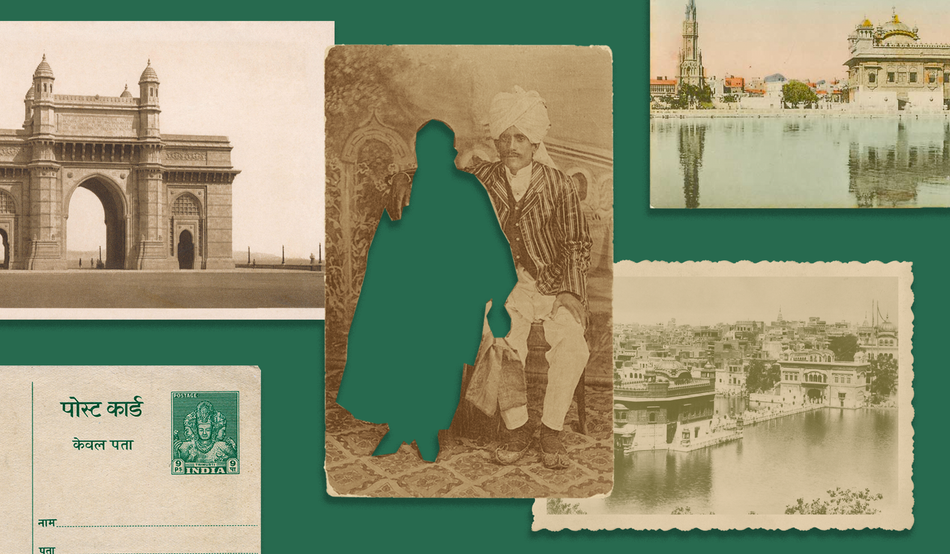
A marbled pink early morning sky, a scene made perfect by the piercing call of a peacock, the national bird of India. The sun sits like a jewel but is somewhat obscured by the imperishable haze of rural Punjab, which tell stories of burning wood fires and incense. Fields of sugarcane, wheat and rice bask in a heat that has not yet reached its oppressive heights. A thick smell of vegetation, buffalo, goat and spices hangs stubbornly in the atmosphere like a fat Maharaja. In this small moment, the beginning of dawn, everything is still.
Travel broadens the mind, exposing us to new cultures and ways of doing things. For a brief time, we are foreign, not just to a new country, but perhaps, to ourselves. But that’s not why I went to India, almost a decade ago. Along with an aunt who lives in the UK, I was invited to a distant relative’s wedding in the Punjab. I had lost my 62-year-old mother to cancer on Christmas Eve 2014, and I felt a desperate and inescapable need to connect with her and my heritage. A trip to India made perfect sense.
My arrival was met with something of a fanfare; I was grasped tight in the bosom of family. In those days of grief, I longed to be held; as if my bones, which felt broken, were being put back together. Distant relatives in the village invited me to their homes, and over delicately spiced pakoras and sweet cardamon-infused tea, they told stories of my mother; her infectious laugh, her warm nature and how much she was loved. This filled my need to be understood; for people to know what I was missing so they could understand the magnitude of my injury. In the end, we all just want to be understood.
Even though I had visited India a few times with my parents, it felt both foreign and familiar. Like a book from childhood, it existed in my mind, but the details were vague. At the bridal house, where I was staying, crates of vegetables, tomatoes, garlic and ginger were delivered in preparation for the wedding. They’d been bought at an early morning visit to the market, where an elephant sat eating the spoilt fruit and vegetables. This was land of my parents’ birth; a dusty, colourful red hot earth. And I had an insatiable appetite for it; to feel part of it—to have India run through my veins. I wanted to swallow India whole. Looking back now, I understand what this feeling was. I wanted India to nourish me, just like the mother I had lost. The role of mother exists, not just as a state of being, but as an idea in our minds.
My first few days in the Punjab reminded me of the halcyon family visits of the past: seeing relatives, laughter and the retelling of old stories that held us all together like bookends. But not long after the topic of my mother had fizzled out, the focus of conversation turned to me. I was proud to talk about my vocation as a writer, a childhood dream. However, this wasn’t of interest. Instead, the fact that I was a woman in her forties and child-free was marvelled at. I expected the topic to come up in my conservative and very much family-orientated culture—it would have been naive to think otherwise—but when the wedding day arrived, this scrutiny made me feel naked. It was the first time I went to a family wedding without my mother by my side, and an aunt helped me with the complicated business of putting on a sari, something my mum used to do.
At the wedding, my child-free status became a thing of fascination. Women dripping in jewellery and wearing sumptuous, fluorescent gowns asked me where my children were. They either vocalised this or gestured it by pretending to cradle a child. When I said I didn’t have any, I was offered potions and lotions to get me “fixed”, even though I expressed no desire for help. Clusters of women lamented my “empty” life. I had expected to be asked about children—what I didn’t expect was for this conversation to be constant.
To them, my life was purposeless, void of meaning, redundant. A full stop. My child-free status was a boulder that they couldn’t get over.
Even though I speak Punjabi, it wasn’t good enough to fully explain the life that I have lived. And even if I did, our lives were so radically different that mine would have been hard for the wedding guests to imagine or appreciate. I felt a chasm between me and them. Between me and India. I felt my singularity in this new yet archaic world; a feeling of being alone among others. A disconnect so acute it made me feel “other”. And I wondered why I was even there.
When my week in India was over, I was glad to leave. I could clearly hear my mother’s voice saying: “this isn’t the place for you”. There was no maliciousness from the relatives, just genuine curiosity. But their reaction made me wonder, had I made a mistake to think that I could find a complete understanding from relatives who lived very different lives to me? Perhaps both they and I had miscalculated in believing that our similarities made us the same. Here were two separate worlds that couldn’t quite get close enough to each other. And I wondered whether this was inevitable. It’s not possible to feel close enough to those who we love and who are gone to satisfy our need.
I have learnt of others who have made similar journeys to a deceased parent’s birthplace. British journalist Amol Rajan made a documentary about travelling to India after he lost his father.
When a parent dies, there’s a tendency to go back to the beginning. We venture on an odyssey for something beyond ourselves and the here and now. When in search of truth we look for something other. Who doesn’t relish the story of the unhappy lottery winner? The understanding that money is not a short-cut to happiness can feel freeing. It forces us to recognise that there is more to life than what many of us have been told: that money or other shallow markers of success are what bring us joy.
My mother came to the UK when she was a girl of 12. Everything she really cared about was here, in England. But I wanted to connect with her history, which is also part of mine, and which started in India. It wasn’t until her death that I really felt the passing down of history; when the story of her life became mine.
The Danish philosopher Søren Kierkegaard said: “Life can only be understood backwards; but…it must be lived forwards.” It’s hard to do that within our own lives, to examine the beginning, middle and the end—it’s easier to do that with the lives of others.
I didn’t find my mother in India and I didn’t feel in harmony with my heritage. But the thing with feeling “other” is that it reinforces your sense of your own individuality. Even when I thought I had found nothing I found something. Growing up, we are constantly told that others can’t complete us. It felt different to learn that lesson again in my 40s.
Maybe the exchange of stories about my mother on those hot hazy evenings in Punjab was enough; in those weaved recollections, a small connection was made. I’m happier for it. And although I felt a schism between myself, my relatives and India itself, there was a moment when there was a quiet consensus between the Punjab and me; an offering of a new dawn.
That moment is etched into my mind: it was in the early morning, under a marbled pink-hued sky, when the Punjab, usually a place filled with cacophony, slept like a baby.