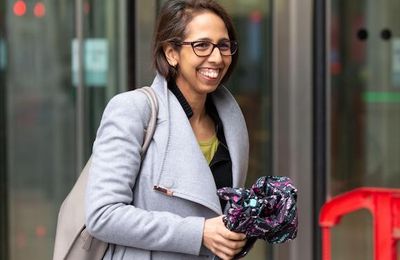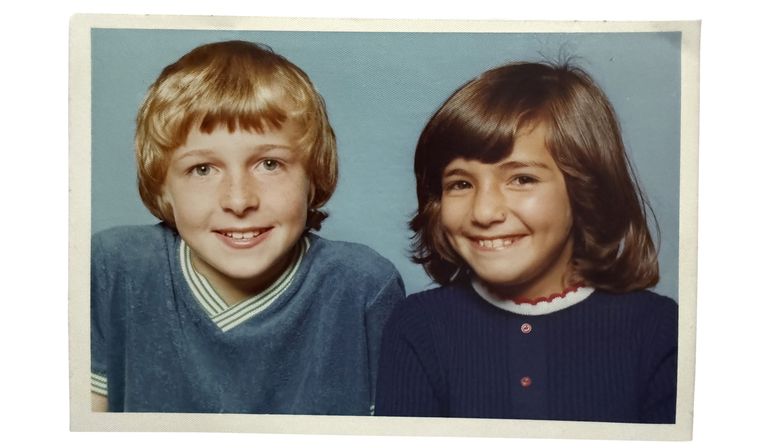
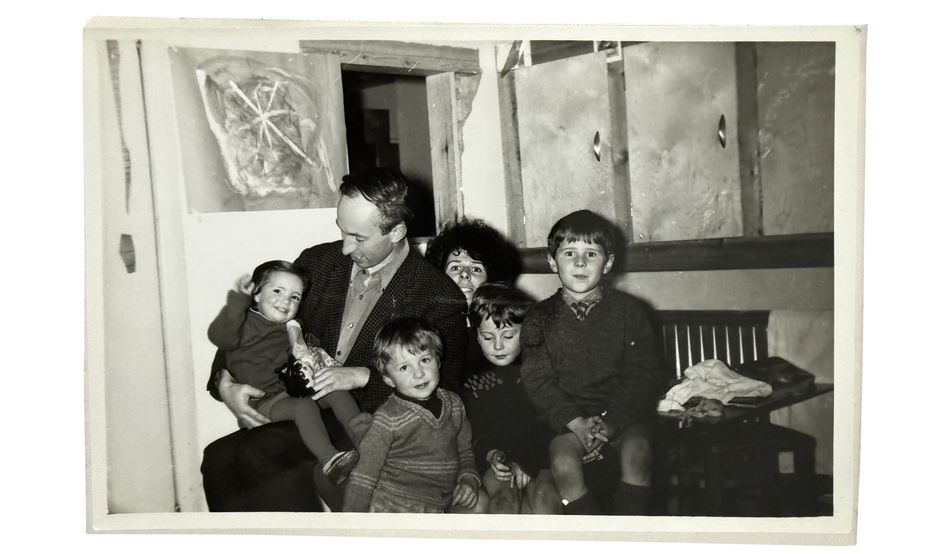
When she was only eight months old, the actor and screenwriter Siân Ejiwunmi-Le Berre was taken from her parents in London. Her father “came home from work one day and his landlady came running out and just said, ‘they’ve taken her to the hospital and they’ve taken the baby,’” she says.
It was 1968, and Ejiwunmi-Le Berre wouldn’t see her father again for 44 years. “I would describe it as a forced adoption,” she says. “Actually, I’d describe it as state kidnap and social engineering… completely unrecognised in our society.”
“Me, as a baby, doesn’t really exist in the story,” she adds. “I’m a parcel that gets moved around. The story is of the collision between two sets of parents. And I can tell you that story. The story of me, in that, I probably can’t tell you.”
Adoption—and the stories told about it—threads its way through the course of a life. As it did for Ejiwunmi-Le Berre, it has for me since I was adopted in 1967 at three months old. I have reflected on the impact of that many times, including for Prospect. The story that adoptive parents are urged to repeat is that adoption is the gold standard for children like me, who are unable to live in their original families. Yet a more complex narrative emerges from the history of adoption. A growing number of adoptees now critique what some call the “adoption industry”. In some cases, they are asking whether adoption should continue at all.
In 1926, the Adoption of Children Act created the first legal framework for adoption in England and Wales, closely followed by similar legislation in Scotland and Northern Ireland. Adoption had been legalised as early as 1851 in some US states, but most of Europe followed a similar timeline to the UK. The new law was designed to regulate a largely informal practice but, according to the historian Jenny Keating in her 2008 book A Child for Keeps, the numbers remained relatively limited until after the Second World War. Driven by a postwar moral conservatism which framed adoption as the ideal solution for “illegitimate” children, the supply of infants met rising demand from prospective married parents. Michael Lambert, the historian of the welfare state from the University of Lancaster, estimates that, of around 500,000 babies adopted between 1949 and 1976 across the UK, some 185,000 to 215,000 were adoptions where no relative of the child was involved.
Although no national figures were collected at the time, postwar British and US adoption was largely organised around the needs of involuntarily childless married couples. Just over half of adopters still cite this as a reason for adoption. Adoption was first marketed as “rescuing” children, relying heavily on the idea of the “chosen child”, a phrase popularised in the mid-20th century by adoption organisations to explain adoption to young children, reassuring them that they were special. An American adoptive mother, Pearl S Buck, coined the phrase “birth mother”, replacing “natural” in the 1950s. Adoption agencies embraced the phrase, reducing birth family roles to biology. This was the seed of what is known as “positive adoption language”. (Now, many adoptees prefer the phrase “first family” for their “birth family”.)
Mothers who had relationships with men of colour faced a double knot of prejudice
In the decades after the Second World War, many adoptions in Britain were arranged through voluntary agencies, a substantial proportion of which were run by churches and religious charities. The Church of England was a significant provider of mother and baby homes in the mid‑20th century, many of which facilitated adoption between 1949 and 1976, when the rate of adoption peaked due to continuing social stigma attached to unmarried mothers, who were pressured by institutions and their families to relinquish babies. The Church worked alongside the Catholic church, the Salvation Army and Methodist organisations as part of a religious ecosystem of adoption. Historians estimate that there were close to 200 such homes, and possibly many more, in the UK.
Diana Defries, chair of the Movement for an Adoption Apology, had her baby daughter forcibly adopted in 1974, when she was a teenager. She stayed in a Catholic mother and baby home and recalls being treated cruelly before her baby was removed at just 12 days old, which felt “like an amputation”. Mothers were exhorted to put the past behind them, but Defries, who knows many other women forced to give up their children, says forced adoption has a lifelong impact on those involved.
“There are numerous behaviours that often we don’t understand till much later in life… looking in pushchairs to see the child in case it’s yours… not being able to walk past schools without feeling a huge physical, emotional pain… we all have these things we carry with us.”
The 1926 act ushered in a new regime. Once an adoption order had been made by a court, the legal relationship between the child and birth family was all but extinguished. The adopted child was “as if born” to adoptive parents; a new birth certificate reinforced what was a legal fiction. Adoption records were effectively sealed, although the Children Act (1975) gave adopted adults new rights to obtain information about their original birth records.
Unmarried fathers, often described as “putative”, had a weak legal position and were almost always excluded from decisions made about adoption, with their consent not usually required. The Adoption Act (1976) increased recognition of paternal interests but did not give unmarried fathers a veto. Fathers were finally awarded more substantial legal recognition in the Children Act (1989).
For some, adoption marked the joyous formation of a new family—but for many first families and adopted adults, it might be better described as a wound that never quite healed. Indeed, the system may pay lip service to centring adoptees, but many to whom I have spoken feel instead that they were akin to heavily marketed products, with birth mothers reduced to the status of producer.
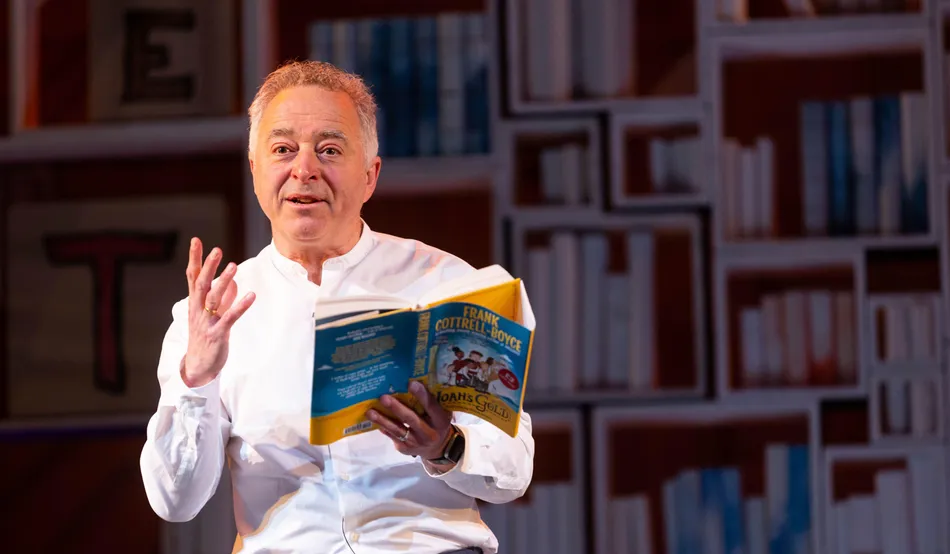
Other adoptees and experts remain stoutly in favour. Perhaps the most famous British adoptee is Michael Gove, the Conservative life peer and now editor of the Spectator, who was adopted as a baby. As education secretary, in 2012, he pushed for adoptions to be speeded up and for ethnic matching—where efforts are made to match adoptive parents with adoptees of a similar racial background—to be scrapped. I meet him in the Spectator offices near the House of Commons. He still believes adoption is vital. “A child finding a loving home with parents who are committed to that child’s welfare and to permanence is a good thing, and it’s still the case that too few children are adopted.”
Gove, now 59, has never wanted to search for his birth family, in sharp contrast to many others, showing how all adoption stories and perspectives are different. In any case, adoption has changed hugely since we were both adopted, in an era of relinquishment and forced adoption. After adoption was legalised, step-parents often used it to formalise de facto arrangements, but it erased birth family ties and started to decline after the 1975 Children Act curbed its use in those circumstances. Focus shifted to adoption being considered as an option for children who were in the care system. More recently, there has been welcome support for kinship care, where relatives, such as grandparents, aunts and uncles, as well as friends in some cases, raise a child when parents can’t or in cases of abuse or neglect.
There are many loving families formed through adoption, including my own, and there will always be children who cannot live with first families. And yet, the system is one where the gain of one family is the loss of another, and love can blend with a lifelong sense of bereavement.
Accounts of the process often lean heavily on the story told by adoption organisations, many of which were formed to support adoptive parents and so have a particular lens. What of the adoptees themselves? How has the process impacted them? And what about transracial adoptees like me, who are of one, or mixed, ethnic background and were adopted by a family of another? Our losses are not greater than any other adoptees, but there are additional layers of dislocation, such as the loss of a first language, homeland and culture, and the lack of a visible connection to people who look like us.
There’s another reason, too: adoption organisations historically made a problem out of the fact that adoptees might look different to their adoptive families. Some of the policies enacted because of this shape our lives, even today.
Ejiwunmi-Le Berre understands that life was challenging for her young parents. Her father, Bola, came from an elite Nigerian family but, when the Biafran war broke out in 1967, he was cut off from family support. He ended up working two jobs to support his family. Her mother, Angie, had been in foster care after heart surgery as a child. Both loved their baby daughter and, for Ejiwunmi-Le Berre’s Nigerian family, from the matrilineal Kalabari group, she was a prized first daughter, given the names of Bola’s mother and grandmother.
When Angie had a mental health episode, social workers swooped in and, without informing Bola, took their baby away from the home they shared in London. Bola never gave up looking for his daughter.
Ejiwunmi-Le Berre was swiftly adopted. Although social workers did try to reunite her later with her mother, this was resisted by her adoptive parents. She feels they “were given every possible advantage to get this child”, adding that her natural parents were “abused; obliterated, maligned in this process. And there is no actual cultural or factual rationale for that being so.”
Her case was typical of the so-called “baby scoop” era, during those peak years of 1949 to 1976, now defined as a framework of coercive adoption. In parliamentary evidence, Michael Lambert said it was “baked into the entire system”. In the same session of parliamentary evidence in February 2026, Cambridge academic Gordon Harold described the system as “designed to punish and place—an unmarried mother is to be punished; a child is to be placed”. In July this year Keir Starmer, then prime minister, apologised formally for forced adoption practices in England and Wales. Close to a million people are estimated to have been adopted in England and Wales alone since 1949. Fully half of those adoptions occurred during this period.
Notably, British domestic adoptions include a significant subset of transracial placements, where birth parents had ties to former colonial territories or countries with other close links to the UK. Young men (and some women), many from wealthy backgrounds, came to the “mother country” to study and work. My birth father, for instance, came from an elite Iranian background to train with the British navy. Foreign fathers were stigmatised by adoption agencies and the state, however. Mothers who had relationships with men of colour faced a double knot of prejudice—not only would they be giving birth to a child out of wedlock, but that child would be noticeable in a largely white society, bringing unwanted attention to the family.
Historian Lucy Bland from Anglia Ruskin University has found that an earlier generation of black babies, born to English women and black GIs in Britain, often grew up in children’s homes rather than being adopted. But attitudes changed as the numbers of healthy white babies declined and prospective parents were persuaded to take on babies of colour—though within certain parameters. This led to practices where babies of colour were often subjected to monitoring and delayed placement, and where babies whose ethnicity might not be too obvious were seen as easier to match and place. The academic Lena Jur drew attention to case studies such as one from the mid-1950s, in which there were attempts to place a child of Jamaican heritage on the grounds that he was “extremely fair… gives not the slightest indication of his parentage”.
My birth mother relinquished me in May 1967 but I was in foster care until that August, my colour closely watched as spring turned to summer. My adoption officer wrote to her superiors in late June, observing that I had merely a “dusky tan”, and asked, therefore, if I hadn’t changed colour the week after, “would she be suitable for adoption?” In a handwritten aside, she added, with relief, “She looks quite ordinary colourwise.”
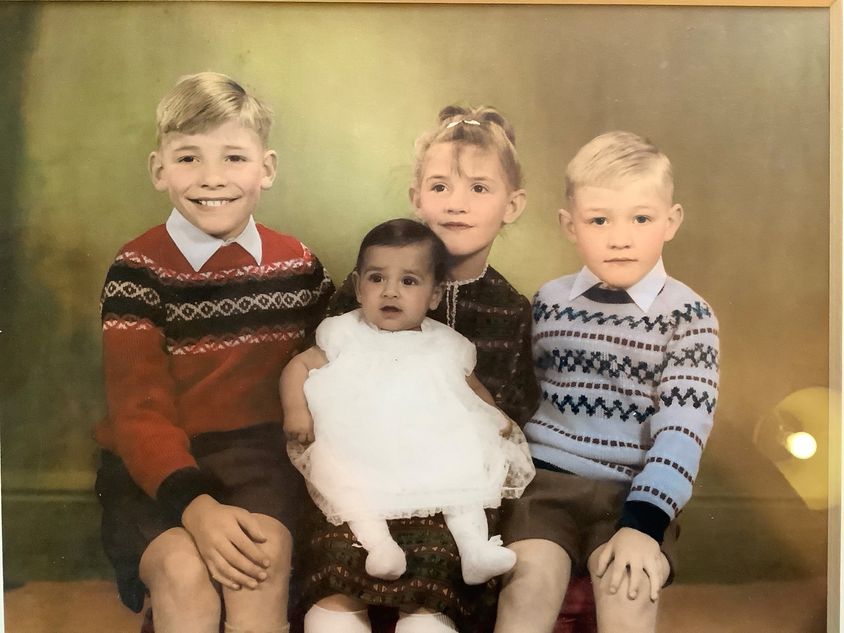
Discussions continued until I was formally freed for adoption. This process of colour watching complemented a practice of “matching”, whereby adoption agencies sought to match skin and eye colour, class and education, both here and in the US. One 1966 handbook for adoption workers stated that if “mixed-race babies” were going to get darker, it would have started by the time they were a few months old, which explains why I and other racially minoritised babies were left waiting for a home. At the same time, the UK was becoming more obviously multicultural, which led to some adoptive parents positively wanting a dual heritage child to complete their family—as my father put it to my adoption officer, “We don’t mind what colour the baby is.”
June Thoburn, a professor emeritus at the University of East Anglia, was one of the social workers who watched those policies unfold. Thoburn tells me that the criteria of deciding whether a baby could be adopted or not still “deeply offended” her. “No child is unadoptable,” she says, adding that her research on transracial adoption shows that “white families can successfully parent children of colour, but it is difficult and it was oversimplified, particularly the whole sort of, ‘it doesn’t matter’, if you are placed in a white community. That really can’t be right.”
Claire Alexander is professor of sociology at the University of Manchester, publishing on race, ethnicity and migration for more than 30 years. Born in 1965 to a student from India studying in Oxford, she was fostered by the family that later adopted her in Oxfordshire, and recalls being the only “person of colour in my family, the village and in the school”. Alexander grew up with white older siblings, aware that she stood out. “I assumed my mother had lots of children and had given me away because she was too poor to keep me, because of Blue Peter appeals. That was my image of being Indian then.”
When the 1981 Brixton riots broke out, she started to reflect on her ethnicity. Her research came from “wanting to understand where I belonged”. But adoption can leave you feeling stranded, especially if you have overseas heritage. “I feel as a sociologist that I am on the outside, not white, so not fully English, but also not Asian,” she says. “I always feel like I’m a fraud.”
The adoption system was built to deliver adoptees to adoptive parents who had been reassured that adoption was the best possible option for that child. Adoptees should in turn feel lucky that they were “rescued” from a life in care. Academic research appeared to support the argument that adoption could improve children’s life chances. Studies conducted in the mid-20th century and beyond, particularly from the US and Europe, often reported positive outcomes for adoptees, including educational achievement and family stability. But research looked at babies rather than older children, and at those adopted into stable families. Many sample sizes were small. In fact, a 2023 review of outcomes by the British adoption organisation CoramBaaf stated that “there is [also] a limited knowledge base with regard to adoption outcomes”.
Subsequent research has revealed a more nuanced picture. While there is evidence that adopted children can fare better than those in longterm care, systematic reviews also show that adoptees remain at increased risk of difficulties compared with the general population. Longitudinal studies have further challenged assumptions. The English and Romanian Adoptee study, for instance, demonstrates that adopted children who seemed to recover well in stable families later experienced mental health and emotional difficulties in adulthood. A systematic review of 76 papers published between 2002 and 2025, on the needs of adoptees and their families, identified key unmet needs including acknowledging grief, loss, contact with birth families and identity.
Sweden’s multi‑decade, population‑wide registers allow researchers to follow adoptees into midlife and old age. In a 2006 cohort study of people who weren’t adopted, domestic adoptees and international adoptees born between 1963 and 1973 and followed up until 2002, international adoptees had an increased risk of death by suicide compared with the rest of the cohort, and domestic adoptees had increased risk compared with non-adoptees.
In Northern Ireland and the Republic of Ireland, horrific issues in mother and baby homes were revealed
In childhood and adolescence, adoptees often resemble non‑adopted peers when it comes to education and health. In adulthood, however, Sweden’s registers reveal persistently higher rates of psychiatric disorders, suicide and an increased uptake of disability benefits, among other heightened areas of risk.
The work of Tobias Hübinette, a Korean-Swedish adoptee and scholar, on the Scandinavian registers is key to the emerging academic field of critical adoption studies. “There are similarities between domestic and transnational adoptees of colour, in the sense that they have similar outcomes when it comes to diagnosis, psychiatric illness and so on,” he tells me, adding that international adoptees are more likely to end up “childless and more often single”.
His work raises questions about indicators of a good or successful life. Many adoptees may flourish educationally and professionally, but why are results like not having children or living alone largely ignored? And why is it that, when adoptees do have problems, those problems are always framed as linking back to pre-adoption trauma in a birth family—not to the lifelong experience of adoption itself?
Joyce Maguire Pavao, an adoption therapist, author and lecturer in psychiatry at Harvard Medical School, was adopted in the 1940s. Her work, most notably her 1998 book The Family of Adoption, argues that adoption is a lifelong experience. She highlights the enduring effects of separation, identity formation and loss in a video call. “Sometimes, when I meet someone for the first time, I say I began my life with the loss of my entire family in one day. They look at me in shock and horror and some of them begin to cry.” But, if she says instead, “I’m adopted, they look at me with a warm and fuzzy look. Little honour is spent on respecting the loss and the devastation. Without full acknowledgement, you don’t get a true self.”
By the early 2000s, inquiries into adoption, both domestic and intercountry, uncovered a truer picture. In Northern Ireland and the Republic of Ireland, horrific issues in mother and baby homes as well as with a complex web of institutions, were revealed, with evidence of coercion, family separation, adoption-related abuses and systemic neglect of unmarried mothers and their children. In Australia, widespread coercion was documented, including the forced removal of children of Aboriginal and Torres Strait Islander descent to white Christian families; in the Netherlands, the Joustra Commission inquiry into systematic illegality around intercountry adoption led to a suspension of the practice in 2021, as well as a separate report investigating domestic coercive practices; and across Scandinavia, inquiries found serious irregularities in intercountry adoption, including falsified origins and weak safeguards. South Korea also looked into past adoption practices with its Truth and Reconcilation Commission, which found widespread forced adoptions, fraud and falsified documents.
These inquiries show that, globally, there have been widespread irregularities, inadequate state oversight and recurring patterns of coerced or improperly documented relinquishment. Hübinette says adoption is now in “the era of reckoning and reconciliation”. Self-advocacy groups such as the Adult Adoptee Movement and How to be Adopted have sprung up around the world.
And yet, however much adoption has changed, most adoptees alive today contend with the effects of historic practices. Even if adoptees do reunite with birth families, there is little or no therapeutic support for reunion. Some make lasting bonds with their first families, but the picture is chequered. Pavao tells me that, while her reunion has been successful, it is not easy to mend something ruptured so long ago. “That piece where you belong, but you don’t belong is always there… It’s very hard to feel the sense of true belonging. That’s gone.”
Defries says that she and many birth families have found it hard, too. “The level of grief for everything I lost was extremely painful,” she says. Alexander explains that the reunion with her birth mother was “a meeting of disappointment on both sides”, although relationships with other birth family members are closer. She never found her birth father.
I found my birth father after decades of searching. Like many naval officers, he was imprisoned and nearly died during the 1979 revolution in Iran, but has since rebuilt his life. Knowing him is a joy. My ever-supportive parents looked after my children on the one occasion I was able to visit him clandestinely in Iran; he sent them back a gift and his thanks.
Experts note a recent—and, formany, troubling—rise in babies being removed into care from birth families and then being adopted
Healthcare is one glaring example of how the adoption system was never designed with adult adoptees in mind. This year, I carried out a survey of 206 UK adult adoptees on healthcare issues as part of a project supported by the Tenacious Journalist awards. Ninety per cent said clinicians either assumed “no relevant family history” or recorded “unknown” without adjusting risk assessment. Just 6 per cent of those surveyed had a full family health history, even after reunion. Adoptees went to desperate lengths to put together a health history—buying death certificates for birth family members and DNA-testing kits. At the moment, a person’s unique NHS number, which allows health and social care staff to match a patient’s details to health records, is changed after adoption (originally intended to stop birth parents from contacting adopted children and to prevent adoptees being able to identify birth family members before records were unsealed in 1975). This means there is no way of tracking adoptee health and linking it back to birth family health, or indeed tracking us as a population cohort.
There is an NHS registration service whereby information about hereditary medical conditions can be passed from birth relatives to adoptees via GPs, but most adoptees and first families are not aware of it. Via a Freedom of Information request, I asked how often it had been used from 2020 to 2025. In the past five years, birth families had requested that information about hereditary health conditions be passed to adoptees’ GPs on only 31 occasions; of those, contact had been made a mere 17 times.
Today, the number of children adopted each year in England and Wales hovers in the low thousands, with many adopted from care. Experts note a recent—and, for many, troubling—rise in babies being removed into care from first families and then being adopted. Some US states have banned or restricted access to abortion, so adoption, fostering and even mother and baby homes are reportedly on the rise again.
Some adoptees remain enthusiastic. Gove, for one, says “adoption deserves credit, recognition and praise”. Emily Frith, CEO of the charity Adoption UK, says that the adoption legislation centenary should bring reflection on what needs to change, and that: “It must also be marked by a collective commitment to learn from the past, to work with others in the UK and beyond, and to build a future where adoption is ethical, compassionate and centred on the people it serves.” Some groups, most notably those founded by intercountry adoptees, are dubious that adoption can or should continue, instead urging far better family support before removal. Others argue that if the system is to survive, then it needs to reform. If babies or children do need to be removed from their first parents for their own safety, kinship care is seen as the favoured option by adoptee advocacy groups, if at all possible.
Ejiwunmi-Le Berre is now in regular contact with her father. She never found her mother and has not spoken to her [adoptive] father since she was 24 years old. “This is an industry and babies are both the product and the oil,” she says of the system. “And somebody needs to stick a frickin’ spanner in the works.”
Writing about adoption is hard. There are so many perspectives to consider, so many people whose feelings I want to spare—common emotions in adoptees. During interviews for this article, I was struck by the defensiveness of many who had worked in adoption, and with reason. The baby scoop adoptees are all grown up now. Our stories are no longer just words in a document; a neat explanation of a huge and enduring loss that adoption organisations could package up for new parents. Without us, adoption does not exist. And so our version of events has to be told. It has to be heard at last.