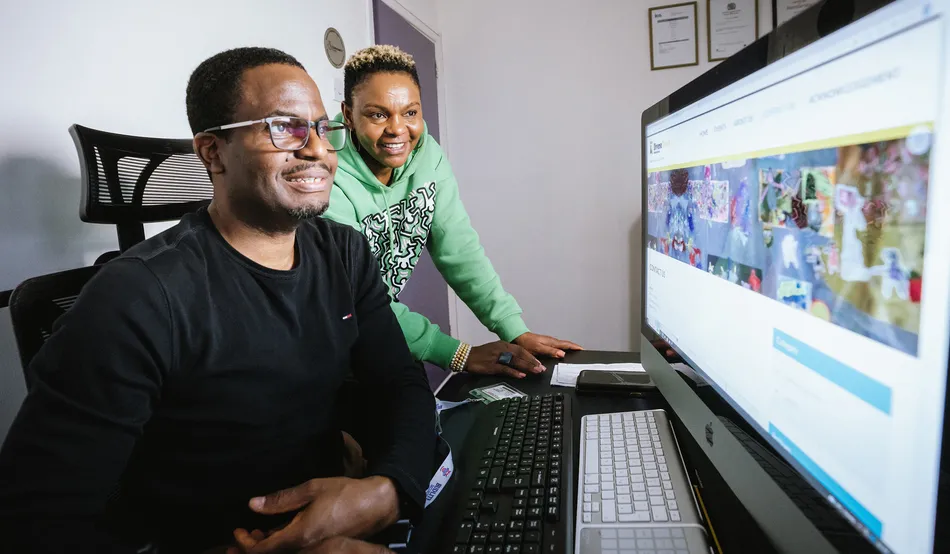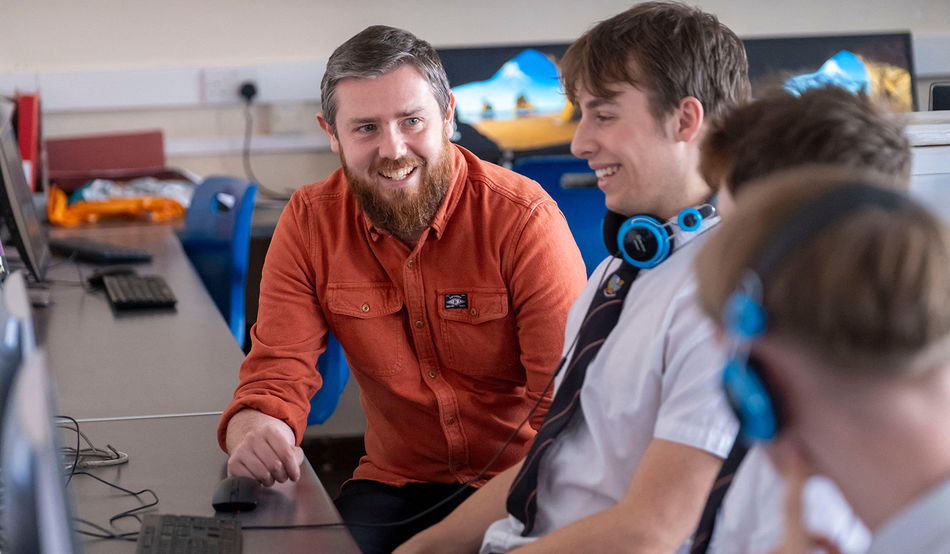
A good mentor—someone who takes an interest, offers encouragement and believes in you when you might not believe in yourself—can change the course of a young person’s life. For young boys, and young men in particular, having a trusted male role model can make all the difference. Yet too many are growing up without one.
There are good reasons to be concerned about their futures. The Centre for Policy Research on Men and Boys has highlighted how many boys fall behind at school and drift out of education and work. And the most painful measure of all is that men are more than twice as likely as women to take their own lives. Suicide remains one of the biggest killers of men under 50.
This work goes hand-in-hand with the government’s mission to halve violence against women and girls within a decade. Helping boys grow into men who are healthy, connected and respectful is good for them, for their families and for everyone around them. And it starts with the people boys have in their lives.
Making sure more boys have positive male role models is an important part of that work. There are more than 2.7m children in the UK who don’t live at home with their father. To put that in context, today, boys are more likely to own a smartphone than they are to live with their dad.
That doesn’t mean all of them lack supportive families, or that fathers who live elsewhere are necessarily absent. But even boys with loving fathers can benefit from knowing other men they trust and look up to, particularly when they become teenagers. For boys without a father at home, those relationships can be even more important.
The government can’t be a substitute, but it can create more opportunities for boys to build strong, lasting relationships with men who will take an interest in them, guide them and be there when it counts. That means backing the local organisations doing this important work and helping them to reach more young people. I’ve been hugely encouraged by the work being done to provide consistent mentoring to vulnerable young boys in all regions of the UK. Grassroots charities, community organisations and philanthropists are all working to provide the relationships and opportunities that boys need.
Inspire 2 Ignite is creating community hubs to match young people—especially those who aren’t in employment education and training (Neet)—with employers. In Scotland, MCR Pathways is building trusted relationships with care leavers through schools and colleges. Football Beyond Borders uses the sport to help thousands of young people stay engaged with school and prepare for working life.
And the GOAT Boys mentoring scheme began with one headteacher, who wanted to make sure that every boy in his school had a trusted adult outside the home they could turn to. Over 80 schools have since signed up to a similar model. I could go on. There are many more, and their work deserves greater recognition and support.
So how do we do that? Some common themes are emerging. There are practical barriers to overcome, including the cost and complexity of the Disclosure and Barring Service (DBS) system, alongside the need to ensure robust safeguarding and consistent standards as mentoring provision grows. There is an opportunity to work with regional mayors to maximise local investment and make sure funding reaches the communities who need it most. And government can play an important role in bringing organisations together, to share what works and help successful approaches reach more people.
There are also important questions around what good mentoring actually looks like, such as how long a relationship should last, how often mentors and young people should meet, and even how a mentoring relationship ends. For a young person who has already experienced people coming in and out of their life, losing another trusted adult can be difficult.
There is no solid consensus, but we shouldn’t let perfect be the enemy of the good. There is a wealth of goodwill and determination to fix this issue. The government’s job is to see how best we can harness it.
We do also need to face facts, however. Over the course of the last 20 years Britain has experienced a substantial erosion of the local institutions that traditionally brought boys into regular contact with adult mentors. Some organisations, like the Scouts and Army Cadets, have maintained substantial volunteer networks and continue to grow.
They are notable exceptions. The UK needs far more male volunteers who can act as mentors to boys and young men. In England alone, since 2010-2011, there has been a 73 percent reduction in spending on youth services, and number of council-run youth centres has more than halved. The proportion of men volunteering formally at least once a month is 19 per cent, according to figures from 2025-2026, but this falls away considerably in areas like the West Midlands, where numbers are as low as one in 100.
To rebuild our communities, create growth in every postcode and recharge and re-energise a new social contract, we need to include everyone. That’s why I want to explore how we can build momentum, encouraging many more men to step forward as mentors, coaches and trusted adults.
The government has made a good start. The National Youth Strategy, announced in December last year, committed more than £500m of new investment in youth services. We also announced more Young Futures Hubs, bringing the total to 50 across England. These hubs combine youth services, mental health support, employment advice and crime prevention under one roof, making it easier for young people to get the help they need. And in June, we announced a further £10m investment, matched by corporate and philanthropic partners, into the King’s Trust’s new youth opportunity initiative, building towards a major expansion of mentoring and support services.
But we also need to invest in people. Our National Youth Strategy includes the ambition for 500,000 more young people to have access to a trusted adult outside the home by 2035. As part of that, we want to encourage more men to volunteer, acting as father figures, to inspire boys to want to become men who demonstrate that true masculinity means responsibility, respect, resilience and care for others. If we don’t, the toxic influencers of the so-called manosphere are only too ready to fill that gap.
In the United States we have seen what can happen when civic leaders ask men directly to step up, making clear what is needed, and giving them the support they need. California Governor Gavin Newsom’s Men’s Service Challenge has recruited 10,000 men in a year to mentor, coach and lead in their communities. In Maryland, Governor Wes Moore’s Young Men and Boys Initiative is also increasing the number of mentors available to young people, particularly boys.
Here in the UK, our regional mayors can play a leading role in making this happen. David Skaith, the mayor of York and North Yorkshire, is doing fantastic work to pull together stakeholders from health, education, employment and community groups as a team to think about the needs of young men and boys. And with high-profile figures like Prince William and Gareth Southgate raising these issues themselves, there is a real opportunity to encourage more men across the country to get involved.
From what I’m hearing, more men are already stepping forward. But we need to make sure their support lasts. Boys and young men need more than a one-off conversation, or a few weeks of encouragement. They need to know that someone is on their side. This can’t be a “skin-deep” commitment, or a series of isolated initiatives. We need a sustained national effort to rekindle purpose in young men’s lives by giving them the right level of support.
Driving up the number of mentors available is one of the ways this government can bring hope back to communities all over the UK. It is essential to delivering the new social contract. My job is to make the case to men that they are needed, and that their time, experience and encouragement can genuinely change a young person’s life. We need more men to step forward and help the next generation of boys become the men they want to be. There’s no time to lose.